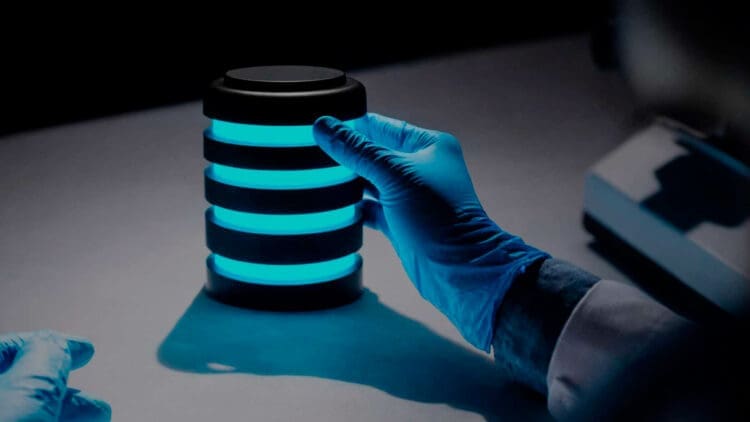

This breakthrough with batteries could put an end to internal combustion engines for good.
Good things truly do take their time, as is clearly evident in the world’s transition away from fossil fuels.
The transportation sector and its consumers are having trouble letting go of the majestic and loud roar of the past.



Could this latest discovery finally help the world leap forward into an electrically powered future once and for all?
How the sector is struggling with friction in the transition
Letting go of the past is hard, especially when it comes to internal combustion engine (ICE) vehicles. For over a century, these vehicles have graced the open roadways and formed part of many core memories.
Their role in history will be lasting, but their environmental impact will be even longer, unless change is embraced.
The transportation sector’s reliance on a model that carries a heavy carbon footprint must end. If not, urban air pollution and global emissions will never cease.
The urgency of the green energy transition is crystal clear. Yet the “reliability gap” remains in the way of an electrically powered future.
This gap is deepened by the efficiency of refueling an ICE vehicle in minutes. It also lasts for decades with minimal, basic maintenance, making it the more convenient choice for most.
In contrast, electric vehicles (EVs) have been plagued by a reputation of being “disposable.”
Breaking free from first impressions for the greater good
At the end of the day, all we are left with are memories. But is nostalgia worth the environmental risk?
Road transportation accounts for nearly half of the global oil use. The sector is also responsible for approximately 20% of the world’s carbon dioxide emissions.
The ICE vehicles that form part of the “core memories” account for almost 60% of all transportation-related greenhouse gas emissions.
These figures are not only concerning for the impact on environmental health, but also on public health.
Worldwide, major city centers are burdened by particulate matter and nitrogen oxides, affecting air quality. These are directly linked to respiratory and cardiovascular diseases.
Yes, some projects have been founded to prevent environmental pollution and preserve our planet. But without investing in an electric future, these projects become moot.
This is why experts in the field are excited about a recent breakthrough with the powerhouse behind EVs.
A battery breakthrough that can finally tip the scales
The study “Faster charging, longer lifespan’: Next-generation battery breakthrough” published in ScienceDaily, describes what could finally benefit EVs.
For too long, EVs have struggled with substantial unpopularity due to battery issues. Now, a dual-fronted technical revolution can finally bridge the “reliability gap.”
Pohang University of Science and Technology scientists are behind the advancement that will finally tip the scales in EVs’ favor.
Identifying and addressing the culprit behind battery chemical fatigue
The POSTECH scientists identified the culprit to be a “quasi-conversion reaction.”
Long-range EVs typically use high-nickel batteries that tend to deep-discharge. This allows oxygen to escape and form lithium oxide on the cathode.
This forms internal gases that make the battery swell and fail prematurely.
The problem was fixed by adjusting the discharge cutoff voltage. As a result, batteries maintained 73.4% capacity after 300 cycles, extending battery life by more than 19 times.
POSTECH made another breakthrough that addresses charge efficiency.
Sub-10-nanometer tin particles were embedded in a hard carbon matrix. This enabled 20-minute fast-charging without sacrificing stability.
Should these advancements be combined, it could ensure that an electric future no longer has to be a compromise.
EVs are finally evolving with greater benefits. This means the “majestic roar” of the past should now make way for new, more sustainable memories on open roadways.