
Expand Energy reports second-quarter profit above analyst estimates on higher natural gas output
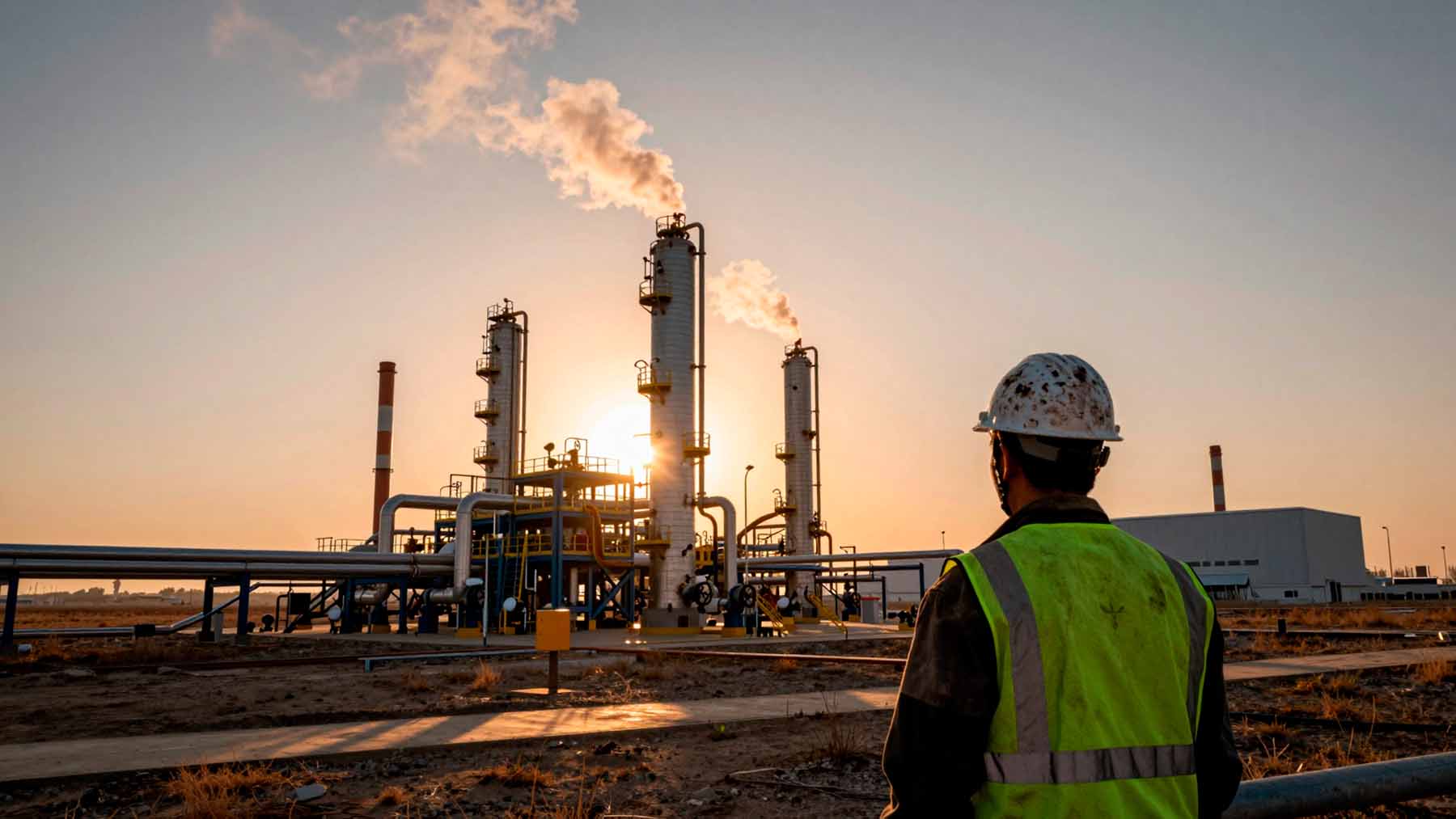 Image generated with artificial intelligence
Expand Energy posted adjusted earnings of $1.33 per share for the April-to-June quarter on Tuesday, beating the Wall Street consensus of $1.12 per share, according to LSEG data. The U.S. natural gas producer cleared expectations by roughly 19%, with higher output doing most of the heavy lifting.
Expand Energy exceeds Q2 profit expectations
That $1.33 figure beat the $1.12 analyst consensus by about 21 cents. In an industry where quarterly beats often land in pennies, that’s a real gap. Expand Energy reported the results Tuesday for the April-to-June period. Management credited higher production volume as the main driver—not pricing, which actually moved the wrong way during the quarter.
When volume gains are big enough, they can cover for softer commodity prices. That’s essentially what happened here. Output growth is doing real work for Expand Energy right now.
One is electricity consumption tied to data centers—facilities that need enormous, continuous power supplies, with AI workloads intensifying that need further.
Rising demand and output growth behind the results
Production averaged 6.9 billion cubic feet equivalent per day (Bcfepd) in Q2, up from roughly 6.6 Bcfepd in the same period a year earlier. That 0.3 Bcfepd increase sounds modest—at scale, though, it translates into a meaningful lift in total output and revenue.
Two structural forces are pushing U.S. natural gas demand higher. One is electricity consumption tied to data centers—facilities that need enormous, continuous power supplies, with AI workloads intensifying that need further. Natural gas remains a primary fuel for the power plants serving those operations.
LNG exports are the other factor. U.S. export capacity has been expanding, pulling more domestically produced gas toward international markets. Both trends together are giving producers like Expand Energy a stronger demand backdrop than the industry has seen in years.
Lower realized prices partially offset production gains
Not everything broke in Expand Energy’s favor. The average realized natural gas price came in at $2.90 per thousand cubic feet (Mcf), down from $2.98 per Mcf a year earlier—modest in percentage terms, but it still works against the top line.
The broader market context makes that decline look worse. Natural gas futures averaged $3.020 per million British thermal units during the quarter, a drop of 17.5% versus a year earlier. Expand Energy’s realized price fell by a smaller margin than that benchmark, which suggests the company managed its exposure reasonably well. Still, lower prices tempered what could’ve been an even stronger quarter. The earnings beat came through volume discipline, not a commodity windfall—and that distinction matters, because operational performance drove the result rather than a lucky price spike.
Expand Energy announces $1.25 billion acquisition of Twin Eagle Holdings
Earlier in July, Expand Energy announced it agreed to acquire Twin Eagle Holdings, a privately held natural gas marketer, from Five Point Infrastructure. The deal is valued at $1.25 billion.
Twin Eagle operates as a natural gas marketing business, and the acquisition is designed to extend Expand Energy’s commercial reach across North America. For a producer of this size, owning more of the infrastructure between wellhead and end customer opens additional revenue streams and gives the company more control over how and where its gas gets sold. Announcing a sizable deal in the same month as a strong earnings report points clearly to where the company is heading: beyond pure production. Marketing operations can help smooth revenue during price volatility—exactly the kind of environment Expand Energy just navigated.
Context: U.S. natural gas sector amid shifting demand landscape
Expand Energy’s results don’t exist in a vacuum. Across the U.S. natural gas sector, producers are broadly benefiting from structural shifts in electricity demand. The rapid buildout of data centers — driven largely by AI infrastructure investment — is creating a sustained, long-term pull on natural gas supplies that analysts expect to continue for years.
LNG export expansion adds another layer. As new terminals come online and existing facilities increase throughput, more domestic gas reaches global markets, diversifying the demand base for U.S. producers and reducing dependence on domestic price swings alone. For Expand Energy specifically, volume growth plus the pending Twin Eagle deal positions the company to compete more aggressively in this evolving market. More output means more product to sell; expanded marketing capabilities mean more ways to sell it.
Acquiring natural gas marketer Twin Eagle Holdings
Expand Energy beat second-quarter profit estimates by roughly 19%, with adjusted earnings of $1.33 per share against a $1.12 consensus. Higher production — averaging 6.9 Bcfepd versus 6.6 Bcfepd a year earlier — drove the outperformance. Average realized natural gas prices declined modestly year-over-year to $2.90 per Mcf, partially offsetting those volume gains. The company also announced a $1.25 billion deal to acquire natural gas marketer Twin Eagle Holdings, aiming to expand its North American marketing operations. Broader tailwinds from data center electricity demand and growing LNG exports continue to support the U.S. natural gas sector.
Kelly is an experienced writer with 15 years of experience exploring the big stories that shape our world, from tech breakthroughs and space exploration to climate, energy, and the fascinating quirks of science. She has a talent for turning complex ideas into sharp, memorable insights that stay with readers long after they’ve finished reading.
