
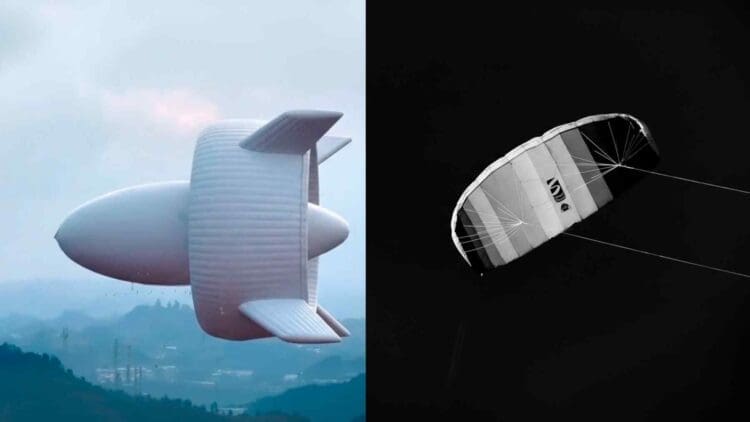

Reaching new heights in wind power production – literally! Onshore and offshore wind power installations have skyrocketed over the past few years. As the world gradually moves forward with the clean energy transition, researchers have sought high and low for new solutions. Enter the era of flying wind turbines, which a few nations are taking a liking to. Yet, not all designs have become a reality, which begs the question: What makes them succeed?
Harnessing wind from the land to the sea to the sky
For too long, fossil fuels such as coal and oil have dominated the energy sector. Now we must deal with the consequences, or risk losing Earth’s unique ecosystems and biodiversity for good. The clean energy transition will help mitigate the effects of climate change by limiting global warming. Wind energy and its associated technologies have rapidly become a key to this goal,
Nevertheless, wind technology must still address some challenges. Conventional wind turbines require significant space for installation and operation. They have the potential to disrupt habitats and surrounding wildlife, among other disadvantages. Offshore installations were introduced to address these issues.
They produce more energy thanks to higher, consistent wind speeds and save valuable land space. Yet, grid connection is complex, and maintenance is challenging. Their potential impact must still be carefully analyzed. Now, flying wind turbines may be the next step. But will they materialize at a commercial scale?
Flying wind turbines – A new era
One of the nations that has shown an innate interest in flying wind power is China. Giant wind kites have been flying at 16,000 feet as part of the country’s capacity expansion. Now, another futuristic wind power system is being explored, and its performance is quite impressive. The S2000 Stratosphere Airborne Wind Energy System (SAWES) is China’s latest innovation.
The S2000 SAWES, which is connected to Sichuan’s grid, is a 3 MW ducted wind turbine system. It utilizes helium-aerostats to fly 6,500 feet in the air. The S2000’s verified grid-connected output is the first step to proving that flying wind turbines have a feasible future. While it remains in the demonstrating phase, it at least managed to move from concept to demonstrator.
Other nations have also explored harnessing wind energy from higher altitudes. While it looked great on paper, some concepts unfortunately never materialized.
The design that never got to spread its wings
Italy is one of the nations that has embraced wind power, with two onshore wind projects planned for completion by the end of 2026. However, for one Italian company, the sky was the limit. The KiteGen project, managed by the company of the same name, is quite an innovative proposal. Two designs were proposed for the project, i.e.:
- KiteGen Stem
- A kite connected to ground-based alternators with cables
- KiteGen Carousel
- A series of kites that circle the skies, attached to a ground-based vertical-axis wind turbine
On paper, a full installation of KiteGen’s design can reportedly generate a peak output of nearly 27 MW. That is nine times more power than China’s S2000 SAWES. Unfortunately, KiteGen’s concepts never moved beyond prototypes. Some issues remained too challenging to address, including, but not limited to:
- Air traffic and safety concerns
- Operational limits
- High costs
The Italian airborne wind energy design was one of several other unlucky concepts that never got to spread its wings. Other significant challenges include local communities’ negative attitudes toward new technologies. This is why the S2000 SAWES design is fortunate, as the Chinese government is especially interested in the technology. As it progresses through the research and development stage, China’s urban regions could benefit from this flying wind power very soon.
Disclaimer: Our coverage of events affecting companies is purely informative and descriptive. Under no circumstances does it seek to promote an opinion or create a trend, nor can it be taken as investment advice or a recommendation of any kind.


