
It was a “crazy” idea in 1900 and the world forgot it — Now Chinese scientists revive it, putting wind turbines to shame generating 3 MW at 6,500 ft
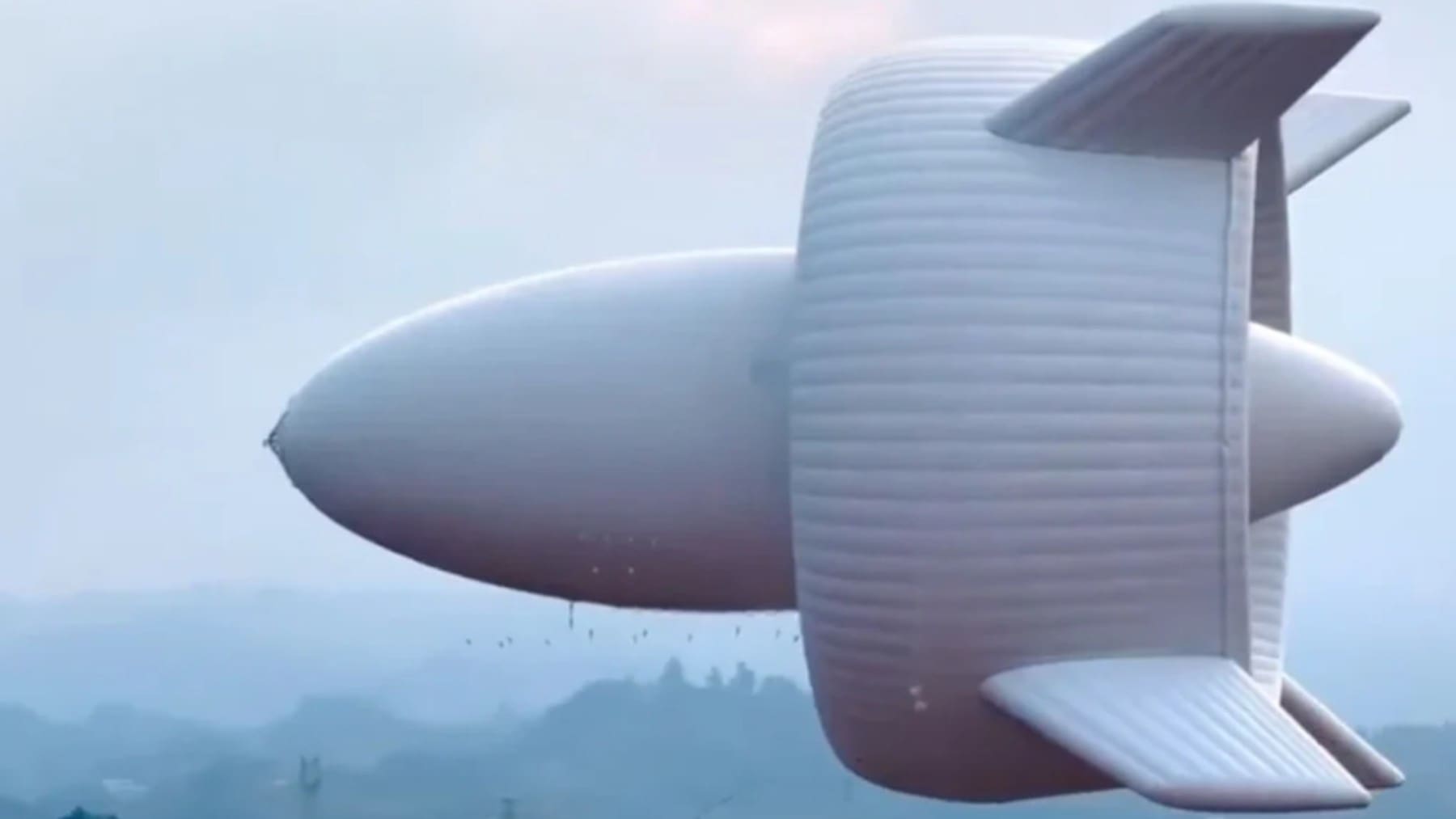 Credits: Weibo/ 爱信阳
A not-so-new technology is gaining traction in the wind energy sector, based on an idea that was deemed crazy in 1900, after which the world forgot about it. Now, Chinese scientists have revived this crazy idea, and it is putting typical wind turbines to shame, as it can reportedly generate 3 MW. While this may not sound out of the ordinary, what is extraordinary is that this power is generated at 6,500 ft above the ground. Discover more about this trending technology below.
It was a crazy idea in 1900, and the world forgot it
The Chinese have been pioneers regarding renewable energy technologies. One of its latest creations is seen as a next-generation energy technology, yet many people may not realise that its design is based on concepts that were perceived as “crazy ideas” in the early 1900s. As the eighteenth century came to an end, the start of the twentieth century marked a new era filled with wondrous and somewhat eccentric concepts and inventions.
A concept known today as Airborne Wind Energy has historical roots that some argue can be traced back to the era of wondrous and eccentric inventions. In the late 1800s, Charles Brush from Cleveland, Ohio, engineered a massive wind turbine. However, even earlier in Denmark, Poul la Cour created wind turbines to produce electricity, and the Danish had 2,500 windmills in use by 1900.
China has significantly expanded its onshore and offshore wind capacity over the past few years, with its latest offshore wind turbine breaking records on the water.
Even crazier for the time, in 1827, George Pocock experimented with the use of kites to drive carriages, afterwhich he published The Aeropleustic Art. Now, it seems Chinese scientists have revived the essence of these crazy ideas, but their creation is seen as ingenious today.
Now, Chinese scientists have revived “outdated” tech
China has significantly expanded its onshore and offshore wind capacity over the past few years, with its latest offshore wind turbine breaking records on the water. Now, the revival of Airborne Wind Energy has become of interest to Chinese scientists. Beijing’s Linyi Yunchuan Energy Technology company created a stratosphere airborne wind power system known as the S2000.
Design and capacity are what make this endeavor so special
The S2000 is 197 feet in length, 131 feet in height, and 131 feet in width. What makes this high-altitude wind energy (HAWE) technology stand out in particular is its design and power capacity. This “alien-like” aircraft is filled with helium and has 12 wind turbines integrated into its ducted design. The wind power generated high in the sky is transmitted to the ground via a tether.
At the beginning of January 2026, the S2000 already concluded its pilot testing in Yibin, Sichuan Province, and this technology is putting typical wind turbines to shame.
Putting wind turbines to shame by generating 3 MW at 6,500 ft
According to Interesting Engineering, the S2000 pilot testing proved that the technology can rise to over 6,500 ft in under half an hour, and then produce nearly 385 kWh over the course of a few hours. That is reportedly enough to provide power for 6 EV charges, or to power an average urban Chinese household for approximately one month.
However, according to Linyi Yunchuan Energy Technology, this is not the S2000’s full potential, which has a reported capacity of up to 3 MW. Its ducted design contributes to an overall increased efficiency compared to typical wind turbines. The Chinese government’s interest in the technology is quite evident, especially for use in urban areas where land use is limited.
Before China proceeds with commercial expansion of the technology, further research and development stages will be essential, as long-term durability, especially during storms, is still a concern. Another concern includes establishing its place in airspace safety regulations, not to mention its maintenance requirements and regulations. China has also been experimenting with other forms of airborne wind energy, such as giant wind kites flying at 16,000 ft that can power 10,000 homes.
Disclaimer: Our coverage of events affecting companies is purely informative and descriptive. Under no circumstances does it seek to promote an opinion or create a trend, nor can it be taken as investment advice or a recommendation of any kind.
Anke Maree is a writer with a clear and engaging editorial style. Her work focuses on making complex topics accessible, informative, and relevant for readers across different areas of interest.
