
GE Vernova selected to replace two generating units at Dinorwig pumped storage plant in North Wales
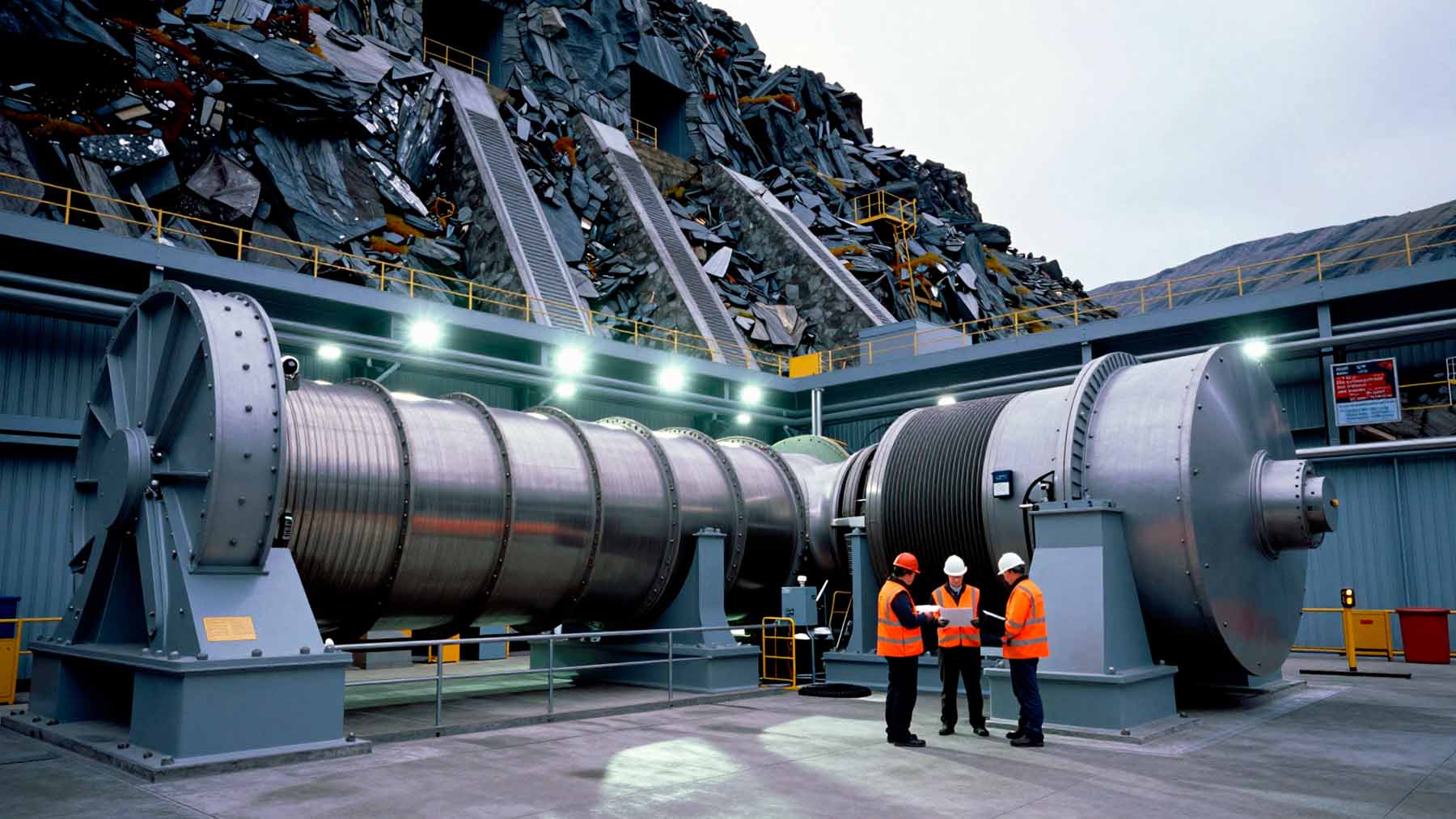 Image generated with artificial intelligence
Tucked into the mountains of North Wales, Dinorwig is one of Europe’s largest pumped-storage hydropower plants—and it just got a major upgrade lined up. First Hydro Company has picked GE Vernova to replace two generating units at the facility, each rated at 315 MW. It’s the next phase of a long-term replanting program at a plant that’s been running for over 40 years.
ENGIE and La Caisse, First Hydro’s parent companies, made the announcement together on July 28, 2026.
GE Vernova awarded a contract for two Dinorwig units
This contract, booked in Q2 2026, goes well beyond swapping out old turbines. GE Vernova is supplying upgraded motor generators and pump turbines, a new station control system, and low-voltage, medium-voltage, and DC power supply systems. The scope also covers refurbishment of embedded parts — the spiral case, stay ring, and draft tube.
The pump turbines were designed at the company’s Center of Excellence in Grenoble, France, while the motor generators were engineered in Birr, Switzerland.
Engineering is already underway across GE Vernova’s European facilities. The pump turbines were designed at the company’s Center of Excellence in Grenoble, France, while the motor generators were engineered in Birr, Switzerland. Before full production kicked off, GE Vernova completed a pumped storage unit model test validation at its Grenoble laboratory — a key technical checkpoint.
Several of GE Vernova’s business units feed into this project. Variable frequency starting equipment comes from its power conversion business in Germany. A protection system is being supplied by Grid Solutions in Spain, and the generator shaft is being manufactured by Gas Power in Switzerland.
Why the modernization is needed: A 40-year-old plant showing its age
Dinorwig opened more than four decades ago. Like any aging infrastructure, it needs serious investment to keep performing at the level the grid demands—leave key components unreplaced, and the risks to reliability, availability, and efficiency only grow.
This isn’t just about two units, either. First Hydro’s long-term plan covers replacement of key components across all six of Dinorwig’s generating units, plus major infrastructure upgrades throughout the facility. It’s one of the largest hydro refurbishment programs currently underway in the UK.
ENGIE holds a 75% stake in First Hydro Company through a 75:25 joint venture with La Caisse, and it’s committing serious long-term capital here. “As majority owner and operator of the plant, ENGIE is committed to ensuring Dinorwig continues to provide the flexibility, resilience, and energy storage capabilities that the UK electricity system increasingly depends upon,” said Delphine Cherel-Sparham, Managing Director of Engie UK.
Expected outcomes: Extended plant life and improved grid support
The full replanting program is projected to extend Dinorwig’s operational life by at least 25 years. For a facility this central to grid stability, that’s a significant return on investment.
Both new units are targeted to be online before the end of the decade. Once operational, they’re expected to lift the plant’s reliability, availability, and overall efficiency—the metrics that matter most for a facility that has to respond to grid emergencies almost instantly.
The modernized units will keep delivering fast, flexible, low-carbon power capable of supplying around one million UK homes at any given moment. That kind of output, available on very short notice, is increasingly valuable as the electricity system absorbs more variable generation from wind and solar. When the wind drops or the sun goes down, pumped storage fills the gap.
Dinorwig’s role in UK energy infrastructure
Dinorwig isn’t just large — it’s fast. The plant can deliver up to 1,320 MW within 12 seconds from standby, then ramp up to 1,800 MW in under a minute. Very few assets on the grid can match that response time at that scale.
Through First Hydro Company, ENGIE and La Caisse also own and operate the nearby Ffestiniog pumped storage station. Together, the two North Wales plants provide 2.1 GW of installed capacity — roughly 74% of the UK’s total pumped storage hydro capacity, a remarkable concentration of grid-balancing capability in a single region.
The technology itself is straightforward: water gets pumped uphill when electricity is cheap and plentiful, then released through turbines when demand spikes. It’s one of the most proven forms of large-scale energy storage available, offering both capacity and fast frequency response.
GE Vernova brings real depth here. The company holds nearly 30% of the global pumped storage installed base and is currently developing more than 3 GW of pumped storage projects worldwide. “Dinorwig is a highly strategic facility for the UK power system, and we are proud to support First Hydro Company in strengthening the reliability and performance of this important plant,” said Emmanuel Mercier, GE Vernova’s Hydro Power EMEA leader.
Both units expected to be operational by 2030
The core facts: First Hydro Company selected GE Vernova on July 28, 2026, to replace two 315 MW generating units at Dinorwig. The contract covers pump turbines, motor generators, a new control system, and associated power supply systems. Engineering is split between GE Vernova’s Grenoble and Birr facilities, with the order booked in Q2 2026.
Both units are expected to be operational before 2030. The wider replanting program—covering all six units and major infrastructure—is projected to extend the plant’s life by at least 25 years, keeping one of Europe’s most strategically important energy storage assets at the heart of the UK grid well into the future.
Kelly is an experienced writer with 15 years of experience exploring the big stories that shape our world, from tech breakthroughs and space exploration to climate, energy, and the fascinating quirks of science. She has a talent for turning complex ideas into sharp, memorable insights that stay with readers long after they’ve finished reading.
