
Germany’s He Dreiht wind farm completes installation of 64 turbines, bringing 774-foot rotors into commercial operation for the first time
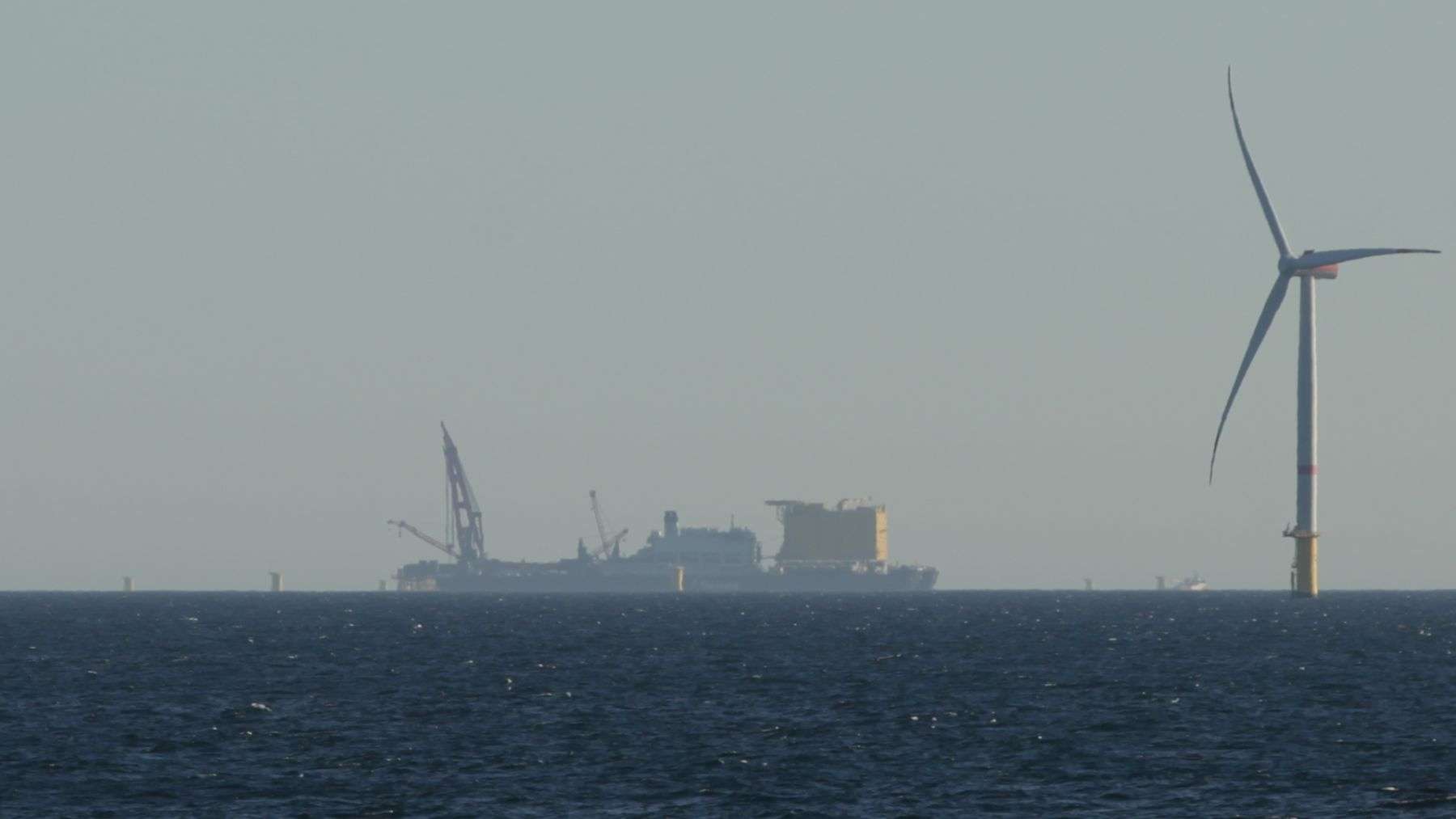
Beneath the seemingly endless stretch of Germany’s North Sea, something extraordinary is taking shape.
With the race to secure cleaner gaining more and more momentum, an increasing number of countries are looking offshore to find new ways generate sustainable power.
But what, exactly, is happening out there? And why might this be a turning point for renewable energy the world over?
With 64 turbines helping to generate cleaner electricity, it shows that larger machines are just as capable at contributing to the energy transition.
Building big, blowing bigger
He Dreiht is an offshore wind farm by EnBW.
And it has reached a milestone, with all 64 of its turbines being installed in the German North Sea, about 53 miles northwest of the island, Borkum.
The project’s inauguration took place on 17 September 2026, which followed the installation of the final turbine on 12 August.
Currently, this wind farm is the biggest one in the North Sea, with over 500 people and 60 vessels working at and supporting it during peak periods.
The power reaches the mainland electricity grid via an extensive cable network – 75 miles of which are underwater and 68 miles on land – that connects to an offshore converter platform to make it ready for use.
TenneT, a Dutch-German grid operator, is the company responsible for the connection.
When bigger really is better
What makes the completion of He Dreiht so significant is that it brings a new generation of high-capacity turbines into a commercial offshore project.
Vestas V236-15.0 MW turbines are the ones that have been installed for this project, each of which have a rotor diameter of 774 feet.
The swept area is an impressive 43,742 square metres, which is about the size of six football fields.
EnBW claims that just one rotation of the rotor is capable of generating enough electricity to supply four homes, with an expected annual output of 3.6 billion kilowatt-hours across the full wind farm.
This output has the ability to power 1.1 million households a year.
Meet the machines that are making history
This wind farm comprises 64 Vestas V236-15.0 MW turbines, with the 960 MW installed capacity being paired with a 900 MW grid connection, plus 60 MW of excess capacity.
When the annoucement was made in September 2023, Vestas said that the V236-15.0 MW was the first 15-megawatt turbine to hit the market.
This makes He Dreiht the first commercial deployment for this modern model.
Why 9291 inches matter
There’s a good reason as to why these rotors are so big.
A larger rotor is able to cover a wider area, which means that more energy can be captured, which supports higher power output.
From prototype to project
The journey actually started before the construction phase of He Dreiht commenced.
Installation of a V236-15.0 MW prototype was completed by Vestas in December 2022 and, during testing, it produced its first kilowatt-hour.
In 2023, this was followed by the commercial order to cover all 64 turbines, as well as include a five-year service agreement and long-term operational support.
No state subsidies necessary
Through its 2017 offshore wind auction, Germany did not grant He Dreiht entitlement to state funding.
The project costs in the region of €2.4 billion, with €600 million in long-term financing secured from the European Investment Bank.
Part of the project’s commercial foundations include long-term electricity agreements with several important companies, including Fraport, Bosch, Deutsche Bahn and Google.
A breath of fresh energy
Projects like He Dreiht show the advancements in offshore wind technology by turning breakthroughs in engineering into infrastructure that has a daily impact on people’s lives.
With 64 turbines helping to generate cleaner electricity, it shows that larger machines are just as capable at contributing to the energy transition.
But generating clean power is only half the battle. How do we make sure that the electricity that is captured is available when consumers need it most?

