An Italian warehouse installs power optimizers on 430 kW of solar panels to reduce losses from power-line shadows
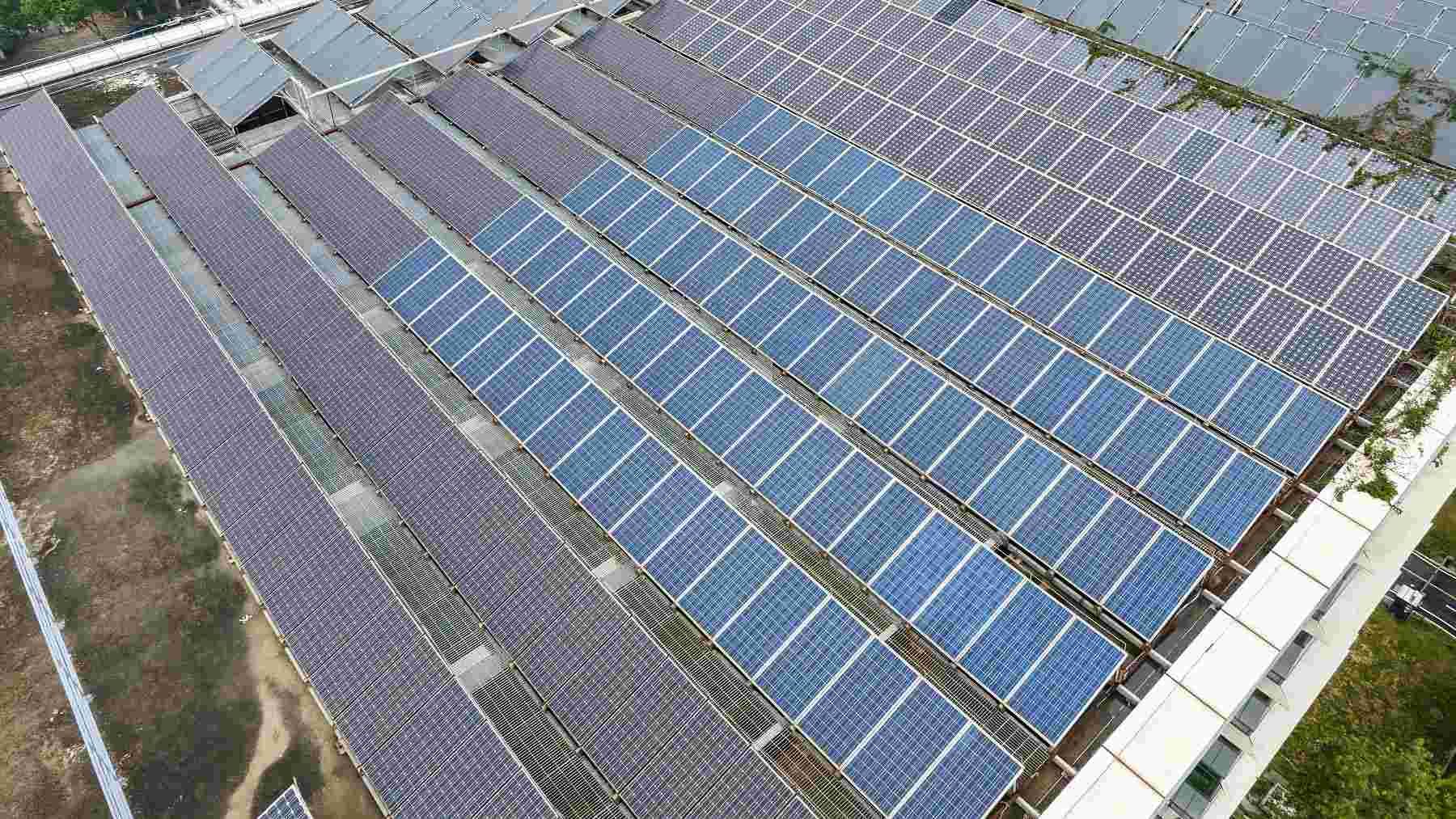
At first glance, a roof might look perfect for solar.
But there is one often overlooked detail that can undermine the investment.
With an increasing number of businesses looking for ways to cut costs and emissions, rooftop panels appear to be the ideal option.
Each pair of modules is monitored by the optimizers in real time, and sends data obtained to SolarEdge’s platform for tracking and remote troubleshooting.
But what can be done if surrounding infrastructure gets in the way?
The roof with a dark side
As a way of addressing high energy costs and improve sustainability, Italian furniture manufacturer, Andrea Bizzotto SPA, thought that solar power might be the solution.
At its logistics hub in Arquà Polesine, Rovigo, it installed a photovoltaic system.
The fact that the roof spans 5,000 square metres also gave the manufacturer space to generate electricity close to where its operations need it.
Munari Group offered a solution tailored to the building’s particular challenges, and the project was designed and installed by it.
But it was noticed that electrical wires nearby cast shadows on the roof – a problem that could lead to less electricity production.
A weak link in the solar chain
This is not a new problem, and it’s something that those with conventional solar systems often deal with.
In a string-inverter setup, panels are connected in groups. And if there is one section that is shaded, it can affect the output of the whole group.
It was these shadows from the powerlines that were a concern to Bizzotto, who needed technology that was able to respond to shade on the spot, without compromising the wider array.
The goal was that this installation would support the energy needs of the manufacturer.
According to SolarEdge, the system was designed to maximize self-consumption, while its monitoring technology would be able to track performance and identify problems remotely.
Small devices doing heavy lifting
The solution was a 430-kilowatt-peak rooftop solar installation fitted with power optimizers.
570 optimizers are attached under pairs of solar modules, which allows those pairs to operate from others on the same line.
Less shade, less lost power
What makes this SolarEdge technology so innovative is that it enables maximum power point tracking at module level.
If one pair of modules is affected by shade from the nearby wires, debris or a mismatch, the others can keep going without being dragged down by the same drop in output.
This means that more of the energy available across the roof can be captured, even when the conditions are less than perfect.
A little solar surveillance
Each pair of modules is monitored by the optimizers in real time, and sends data obtained to SolarEdge’s platform for tracking and remote troubleshooting.
This visibility can mean less downtime and more annual energy yield.
Safety is part of the package
Something else that had to be considered was the workforce, equipment and stored materials at the building.
When the grid or inverter is shut down, SolarEdge’s SafeDC feature automatically reduces the array’s voltage to touch-safe levels.
And, for another layer of protection, the system also includes arc-fault detection.
According to the project estimate, the installation is expected to produce 506.53 megawatt-hours of solar power annnually, as well as avoiding more than 129 tonnes of carbon dioxide emissions each year.
Turning a shady situation around
Bizzotto’s project shows that a rooftop’s obstacles do not have to rule out solar power altogether.
With new technology that has been designed to limit the effects of shade, businesses can now make better use of the space they have available, while also managing energy costs and reducing their impact.
But what if accessing solar power didn’t require a rooftop at all, as one community solar project in Georgia demonstrates?


Helen is based in sunny Cape Town, South Africa, and has been writing for over 12 years, covering a wide range of topics. A lover of animals, she cares deeply about recycling, minimizing her impact on the planet and finding new ways to bring old things to life.