
At Gibson City, 6,000 solar trackers follow Illinois farmland’s contours instead of flattening fields, sharing a neighboring gas plant’s switchyard
 File image
In central Illinois, where McLean and Ford Counties lay sprawling out into the open, agrarian Midwest, the gut response to any big build-out is to grade and ask questions later. That’s not what Gibson City Solar did.
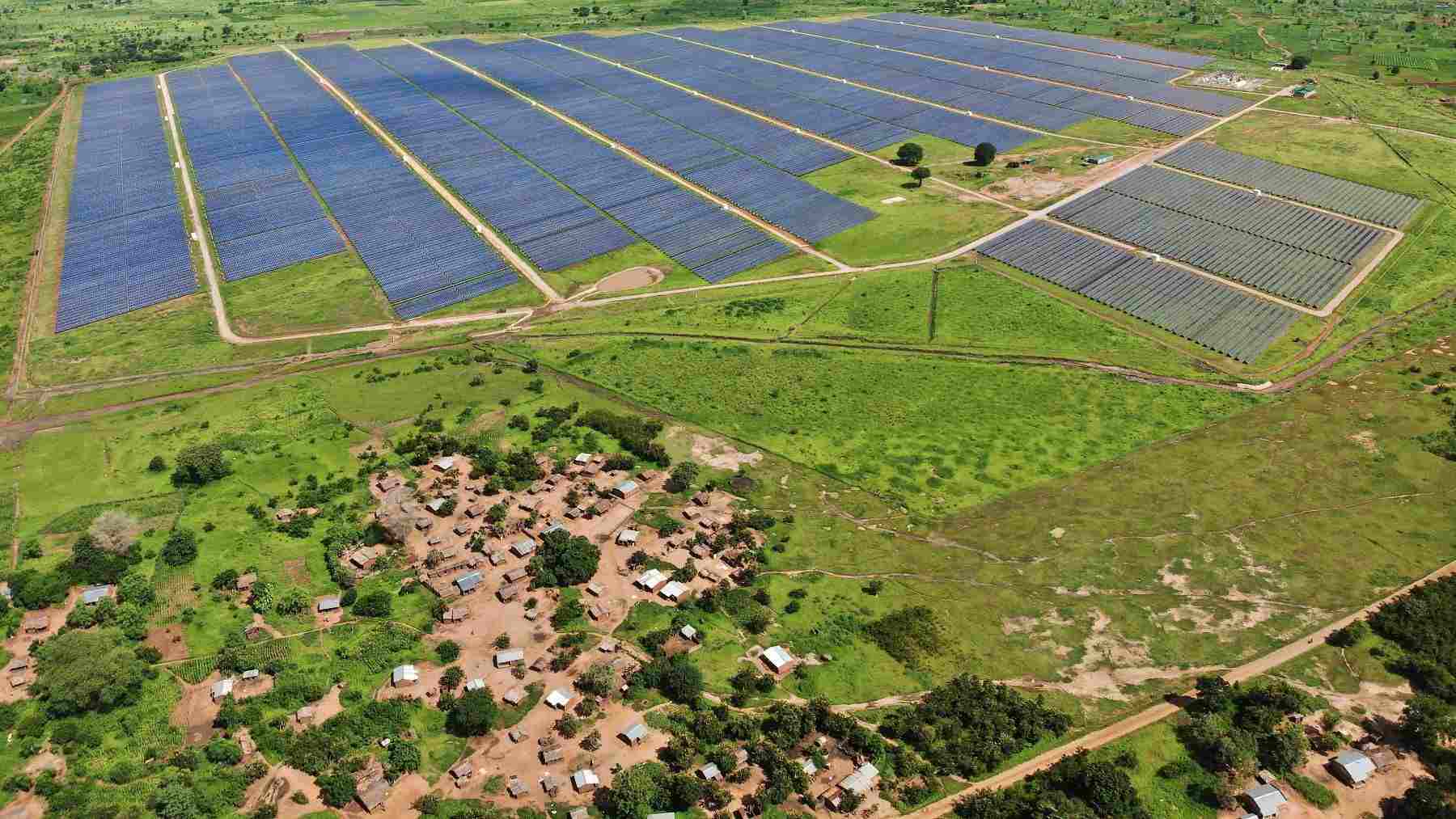
On more than 1,700 acres, almost 6,000 terrain-hugging solar trackers dance with each undulation of the farmland below, as the project connects directly to a neighboring natural gas plant’s switchyard, avoiding the queue that normally takes years off the front end of any new generation. On June 9, 2026, at 12:01 a.m., 270 megawatts slipped onto the grid. How it happened may be just as important as the energy itself.
A solar farm like no other
The Archtop Solar Project, combining Gibson City Solar 1 and 2, occupies 1,700 acres in McLean and Ford counties and generates 270 MW of clean energy. What makes it unique begins right at the ground level.
The territory preserves its agricultural identity, which is important in this part of the country where farmland is an integral element of economy and culture.
Burns & McDonnell, EPC’s contractor, opted for terrain-following NextPower “bendy trackers,” which are designed to mimic natural undulations of the land. Instead of leveling the land to prepare a smooth installation surface, trackers adjust to whatever is there.
Utility-scale solar projects traditionally require significant grading. Leveling the ground is convenient when installing the panels, but it also means removing the topsoil, speeding up erosion, and altering the agricultural use of the land. Gibson City made a different choice.
The outcome is a solar farm that from afar looks like it belongs there. The panels follow rises and dips of the land just like the fields surrounding it.
Grading the land or not grading the land
These statistics are impressive. In total, the grading amount for the entire 1,700 acres did not exceed 40,000 cubic yards of earthwork; on the same project of similar size, the number can be almost 90% higher.
It reduces erosion, soil disturbance, and reseeding efforts required after construction is finished. The territory preserves its agricultural identity, which is important in this part of the country where farmland is an integral element of economy and culture.
None of this made the work on the project any easier. Subsurface issues and unreliable Midwest weather posed difficulties; on the busiest day more than 350 craft professionals were engaged in the process. This project was also a testbed for AI-powered construction automation software developed by Gritt; it was used to assemble a certain part of solar panels, one of the first applications of the technology that might have a huge impact on the future of solar site construction.
Sharing a switchyard: The grid shortcut hiding in plain sight
The terrain-following trackers get all the limelight, but perhaps it is the interconnection technology which carries far greater significance. The natural gas-fired peaking power plant owned by Earthrise Energy is situated adjacent to the solar field and was already interconnected with the grid.
Rather than entering MISO’s traditional interconnection queue—a process that can stretch across multiple years—Earthrise used MISO’s surplus interconnection process to tie the new solar project into that existing switchyard. The queue delay, along with the permitting and infrastructure costs that come with it, was largely avoided.
There were still some engineering challenges to make the link work. A new 34.5/138-kV collector substation was constructed, as well as a gen-tie line connecting the solar plant to the gas plant and six collection circuits running four miles. Advanced controls were also needed to control the multiple power purchase agreements of the project.
The result is a plant that integrates solar and gas in a coordinated fashion: solar generation when there is sun, gas peaker generation when there is peak load demand. Two plants that used to be separate are now working as a team.
What 270 MW looks like on the ground
The facility generates enough electricity to power approximately 46,000 Illinois homes. Commercial operation began at 12:01 a.m. on June 9, 2026 — a quiet moment marking the end of a complex construction and engineering effort.
The Burns & McDonnell subsidiary called AZCO carried out the construction of the facility themselves. The choice was made for the reason that it was necessary to keep up the pace. Hundreds of people, miles of wiring, and almost six thousand tracker assemblies were assembled at the place where now there is a source of clean energy, while the neighboring lands are still untouched farmlands.
A roadmap for Illinois and more
Earthrise is not seeing Gibson City as an isolated case. The company is working on a pipeline of five solar facilities in Illinois with the total capacity of approximately 1.5 gigawatts: Northwest, Glacier Moraine, Plum Valley, Pride of the Prairie, and Tilton Solar.
CEO Jeff Hunter has framed Gibson City as proof that leveraging existing fossil-fuel infrastructure can accelerate clean energy deployment without compromising grid reliability, according to Burns & McDonnell. Illinois needs new generation resources, and MISO’s broader territory faces growing demand that traditional greenfield timelines struggle to meet.
The replicability of the model is dependent on the fulfillment of only one factor: an existing gas generation facility that has excess transmission capacity located in close proximity to unused lands. It turns out that this factor applies far more often than one might expect. In any case where it does, the approach of Gibson City proves more efficient.
Kelly is an experienced writer with 15 years of experience exploring the big stories that shape our world, from tech breakthroughs and space exploration to climate, energy, and the fascinating quirks of science. She has a talent for turning complex ideas into sharp, memorable insights that stay with readers long after they’ve finished reading.
