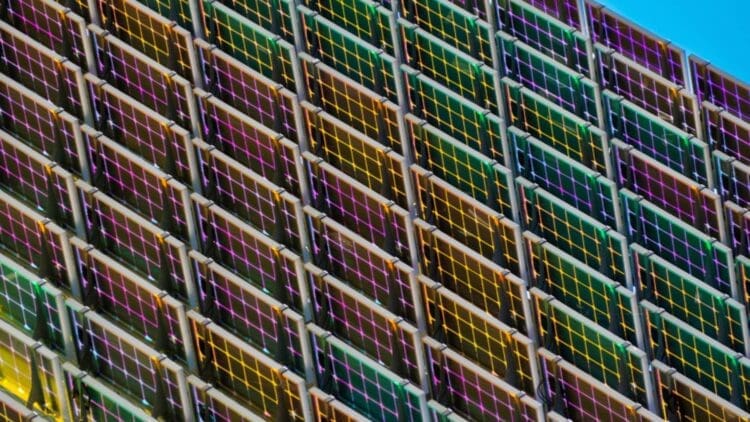
The world is transitioning to renewable energy technologies one step at a time. Fortunately, these technologies have advanced significantly since their initial introduction to the world, especially solar energy technologies. For example, we now have groundbreaking glass solar panels that can produce up to 400 kW thanks to a phenomenon called “hydraulic heat capture.” This technology will make you forget all about silicon or perovskite, as its advantages are through the roof.
Forget about silicon or perovskite
The power of the sun has been utilised for man’s purposes for thousands of years, but the technology has evolved significantly since the release of the modern solar panel. Now, the traditional solar panel (made from silicon cells) we’ve all grown used to has more disadvantages than we would expect. According to a report by Solar LED Light (SLD), some of these disadvantages include, but are not limited to:
- Upfront expenses can be high
- Their production has a big carbon footprint, as production consumes a lot of energy
- They require vast spaces of land
- Low efficiency
- Not suitable for most roof types
- Moving them is difficult and costly
Now, researchers have developed several photovoltaic cells to address many of the issues faced by traditional panels, such as perovskite cells. However, these cell types also face challenges, such as poor stability. Fortunately, glass solar panels could be the answer to all our problems. Find out more below.



Glass solar panels produce up to 400 kW and more
While India has been planting solar-powered trees, a Swiss energy company has developed an innovative solar energy technology offering advanced solar energy production and storage solutions that are also flexible to meet individual needs. The company is called Soltech Energy Sweden AB, or just Soltech, and its technology is called Soltech RooF.
RooF is a solar roof tile that can be easily integrated into any roof to generate up to 400 kW of solar energy. It creates an icy exterior, but a nice, warm, and cosy interior. It also heats your home’s water through a phenomenon called “hydraulic heat capture.”
How it works
Glass tiles are fixed to a black nylon canvas. Under the canvas are air slots. The glass allows more sun to penetrate the tile, which is then absorbed by the black canvas. The air circulates and is then utilised to heat the water or air connected to the house’s heating system. Heat can also be stored under the canvas’s isolating layers (accumulator tank) for later use.
Advantages beyond power and heating
The beauty of these solar tiles goes beyond their aesthetics, as they have several other advantages to make one consider them instead of silicon or perovskite solar panels. According to Soltech’s website, the Soltech RooF has the following advantages:
- The system is flexible and highly customisable
- Can be installed close to the roof edges and corners
- Maximised solar energy absorption due to size and total number of solar cells
- Increased efficiency
- Installation is easy
- Lowers the building’s carbon footprint
- Will save you a lot in heating and energy costs
- Glass solar panels are only transparent enough to allow solar energy to enter, but maintain one’s privacy
- Durable enough to withstand harsh weather conditions
The cost of Soltech RooF is not universally fixed, and the total cost will depend on:
- Location
- Complexity of installation
- Size of system
- Roof area
Building-integrated photovoltaic (BIPV) solutions are becoming more popular by the day, and researchers and designers transitioned their focus to creating both highly efficient and aesthetically pleasing renewable energy technologies. However, some researchers are going above and beyond with their designs, such as this Chinese invention that can produce power with raindrops and thus addresses the weather dependency issue faced by traditional solar panels.
Disclaimer: Our coverage of events affecting companies is purely informative and descriptive. Under no circumstances does it seek to promote an opinion or create a trend, nor can it be taken as investment advice or a recommendation of any kind.