

Google is meeting energy demands with a clean iron fist.
With that much power and authority, constructing a magnificent vault in the U.S. was undoubtedly the next natural step forward.
The proposed project is of great scale, which emphasizes the utmost importance of reinventing key technologies to deliver clean power.


But will this massive shift in infrastructure finally break the industry’s reliance on short-term fixes for a permanent energy crisis?
How conventional systems hit the invisible wall of modern demand
Once upon a time, the American grid was powered by a predictable, rhythmic heartbeat.
This is because times were simpler.
The steady, singular burn of coal and gas fueled communities. Electricity was a “one-way street,” where power was driven from massive, distant smokestacks directly to the kitchen toaster.
The grid did not have to think, nor did it have to remember. It simply reacted to the flick of a switch.
By the 21st century, the pulse had become more chaotic, and the conventional heartbeat struggled to maintain its pace. Slowly but surely, high-density computing and a modern industrial renaissance led to a series of unpredictable spikes.
The digital appetite was getting relentless, and it has not stopped growing since.
America’s aging copper-and-steel infrastructure was never meant to support anything but lighting homes.
Today, these systems have finally hit the wall of modern demand, and the future hangs in the air.
Breaking down the wall of demands in a crisis
In 2026, the U.S. is facing the strongest four-year surge in electricity demand since the turn of the millennium.
In the midst of this infrastructure crisis, Google has emerged as the new protagonist. The company has grown beyond being a mere search engine to become a global power player.
Now, it is trying to juggle achieving continuous clean energy operations by 2030 while fueling the insatiable artificial intelligence (AI).
To do this, Google, as well as several other companies in the industry, requires efficient data-driven capacity planning.
Workload demands from the powerhouses behind AI are expected to increase by four to six times faster than traditional computing. The grid was never intended to handle such pressure.
Critical infrastructure must be protected by leveraging data-driven resiliency solutions.
Google realized that it had to use an iron fist to maintain the balance.
The solution required more than just smarter algorithms; it demanded a physical stronghold capable of anchoring the grid.
Google’s American energy vault: An iron stronghold
Minnesota has been chosen to host Google’s ambitious attempt to anchor a turbulent grid.
The plan is to construct a “giant energy vault” to ensure American consumers do not have to pay the price.
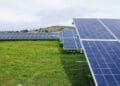
Google already has solar-powered data center operations in Texas. This renewable-supported power vault with the iron-air “time-capsule” will thus add to its impressive carbon-free portfolio.
The iron-air secret weapon to break down the invisible wall for good
Pine Island will be receiving a state-of-the-art data center. The powerhouse will be powered by 1,400 MW of wind and 200 MW of solar energy from Xcel Energy.
The secret weapon to this massive energy vault is Form Energy’s iron-air battery. It delivers 300 MW and stores up to 30 GWh of clean power, storing energy for over 100 hours. It also comes in at a cost efficiency of around $33/kWh compared to traditional lithium at up to $150/kWh.
This long-term storage is accredited to iron-air technology. Oxygen and iron react to store and release energy, which is called “reversible rusting.”
The genius of the Pine Island vault lies in its simple resilience.
The world scrambles for scarce minerals like lithium and cobalt, which lead to more problems. Meanwhile, this stronghold can continue to rule with clean power thanks to abundant iron.
Design and endurance have thus become central to sustainability and energy security. This has become more evident as engineers and designers focus on artistic, smart, and renewable technology designs.