
Halliburton’s foamed spacer technology eliminated sustained casing pressure in deepwater wells off Africa before a single failure occurred
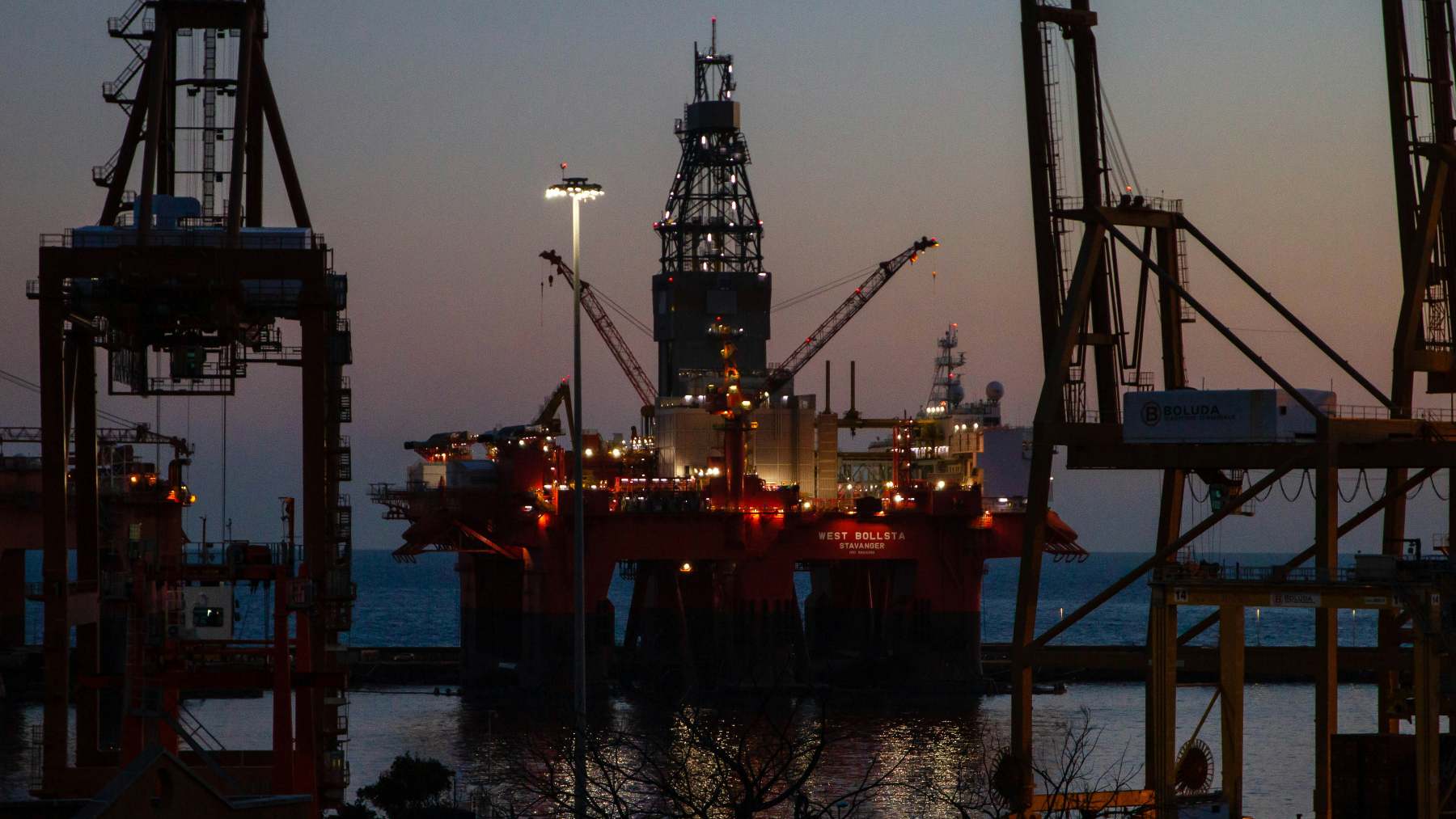
Off the coast of Africa, an operator drilling deepwater wells had long relied on a straightforward safeguard: keep the top of cement below the previous casing shoe, leaving the trapped annular fluid room to behave. It worked — until it didn’t.
New sand formations closer to the surface, combined with tightening regulations requiring those sands to be covered, forced the cement higher. Suddenly, fluid was sealed inside a confined casing-to-casing annulus with nowhere to go — and as temperatures rise when a well comes on production, that trapped incompressible fluid has only one place to put its pressure.
When the rulebook changes mid-campaign
Sustained casing pressure (SCP) — also called annulus pressure buildup (APB) — is one of the more insidious risks in well engineering. It develops when fluid trapped in a sealed annular space has no room to expand as temperatures climb during production. The pressure builds silently, invisibly, inside the casing stack, and the consequences can be severe.
The foamed spacer solution demonstrated here offers a replicable, field-validated answer — and the industry will be watching how broadly it travels.
The operator’s original design kept the top of cement (TOC) below the shoe of the previous casing string. That gap gave trapped annular fluid a path to behave — or at least enough room that a fully confined pressure trap never formed. In earlier operations, the approach held up reliably because the sand formations in the intermediate and production sections sat deeper than the previous casing shoes.
The new campaign changed the geometry entirely. Sand formations had migrated closer to the surface, and updated regulations now required the operator to cover those sands with cement. Meeting that requirement meant pushing the TOC above the previous casing shoe — directly into the casing-to-casing annulus. What had been a manageable design was now a pressure trap waiting to be loaded.
The physics of a pressure trap
A confined annulus forms the moment cement seals both ends of a fluid-filled space with no relief path. Once that geometry exists, the physics are unforgiving. Incompressible fluids can’t absorb volume changes by definition, so when production begins and wellbore temperatures rise, the trapped fluid has nowhere to expand — pressure climbs instead.
That pressure has to go somewhere. If it builds high enough, consequences arrive in one of several forms: internal casing collapse, where pressure crushes the inner string from outside; external casing burst, where the outer string fails under radial stress; or packoff failure, where sealing elements give way under the load. Any one of these outcomes represents a serious structural breach.
Deepwater environments amplify the stakes considerably. Accessing a failed casing string at depth — diagnosing the problem, mobilizing intervention equipment, executing a remediation program — is operationally complex and extraordinarily expensive. Prevention isn’t merely preferable; in practical terms, it’s the only viable strategy.
Introducing compressibility into a rigid system
Halliburton’s proposed fix was conceptually straightforward, even if execution required precision: introduce a compressible fluid into the annulus so that rising pressure during production has somewhere to go. A foamed spacer, with gas bubbles distributed through its structure, can compress where a conventional fluid cannot.
The specific design called for a 14.5-lbm/gal Tuned® Spacer E+™ cement spacer base, foamed down to a density of 10.8 lbm/gal. That foamed spacer would sit in the casing-to-casing annulus as the compressible buffer. To prevent it from contacting the 8.7-lbm/gal NAF mud already in the wellbore — contact that could destabilize the foam — unfoamed 10-lbm/gal Tuned Spacer E+™ was pumped both ahead of and behind it as an isolation buffer.
The configuration also incorporated a VersaFlex® expandable liner hanger, followed by a 10¾-in. × 9⅝-in. tieback in each of the two trial wells. The foamed spacer was designed to occupy the annulus between that tieback and the previous 13⅜-in. casing string — precisely the confined zone where pressure buildup would otherwise develop. Getting the nitrogen volume right was critical. Halliburton used iCem® cementing service to calculate the exact liquid volume of foamed spacer needed to trap a predetermined nitrogen volume under downhole conditions, accounting for the geometry and temperature profile of each well individually.
Execution and outcome in the field
When execution began, the foamed spacer was pumped into the annulus of the 10¾-in. × 9⅝-in. tieback at planned liquid and nitrogen rates. Placement proceeded as designed. Following spacer placement, the tieback hanger seals were activated, completing the annular isolation.
The result was unambiguous. Sustained casing pressure did not develop in either well. No structural intervention was needed after the wells came on production, and no costly remediation program followed. The foamed spacer had absorbed what the incompressible fluid could not.
The operator’s response was decisive — rather than treating the foamed spacer approach as a trial technique to be re-evaluated case by case, they designated it the standard method for future deepwater campaigns in the region. A solution born from a regulatory constraint and a shifted geological reality became the new baseline expectation.
That shift carries weight beyond this single operator. As deepwater campaigns in Africa and elsewhere continue pushing into formations with tighter regulatory requirements and more complex casing geometries, the pressure trap problem is unlikely to become less common. The foamed spacer solution demonstrated here offers a replicable, field-validated answer — and the industry will be watching how broadly it travels.
Daniel García is an Editor-in-Chief with strong expertise in structural work and engineering principles. He combines this technical foundation with deep knowledge of energy, spatial design, and emerging technologies, bringing a forward-thinking and analytical approach to editorial leadership.
