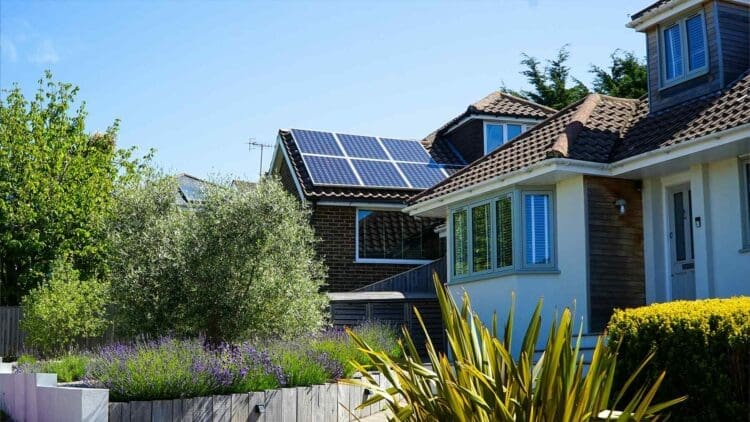

This community no longer has to worry about the lights staying on.
Houston has long been the successful global capital of oil and gas, but now the city is seeking greener pastures.
Massive industrial parks are evolving in Houston, thanks to substantial investment in energy, but not everyone is truly benefiting equally.

With the region’s frequent climate disasters, wouldn’t it make sense to invest in the soul and heart of the city?
How this prior oil and gas capital is going green to stay afloat
In an ever-changing world, we must quickly learn to “sink or swim.”
Global financial markets have made it very clear that traditional fossil fuels have anchored us for too long.
Among those trying to keep their head above water is Houston, Texas. The city has realized that billions in capital are now flowing toward low-carbon technology.
The next natural move was thus to put oil and gas behind it, and start paddling towards green investments.
Soon, some yelled “Land ho!”
This land was to become the greener pastures, hosting the city’s next generation of energy.
Ambitious projects included transforming old industrial land, most notably a 240-acre landfill, into the nation’s largest urban solar farms.
These massive projects promise to keep the city’s economy buoyant, but the benefits often struggle to reach the street level.
In the shadows of these industrial giants, some locals continued struggling to keep the lights on.
Riding out the storm without solar energy investment
The transition to renewable energy is not always smooth sailing.
Solar investment remains stagnant in many neighborhoods due to high upfront costs.
Traditional financing often sails past energy-burdened communities. This traps them in a cycle of rising utility costs and aging infrastructure.
“Split incentive” is also an obstacle, where landlords are unmotivated to upgrade properties they do not live in.
A lack of investment is particularly dangerous given the region’s hostile climate.
Houston is known for its turbulent weather, from catastrophic hurricanes and flooding to humid heat waves and lethal winter freezes.
Lest we forget that the 2021 freeze damaged the Texas power grid.
These extreme events leave the most vulnerable residents to ride out the storm in the dark.
For them, a power outage is not just an inconvenience, but a life-threatening failure of the system.
Fortunately, there is light at the end of the tunnel for one community.
Throwing a “Hub House” lifeline and the woman behind it
A collaboration of Solar United Neighbors (SUN) and West Street Recovery (WSR) cast the spotlight on a new program.
The pilot program is called the Northeast Houston Solar Equity Project. It brought one resident and her community into the light.
The woman who represents bridging the gap between industrial investment and human necessity
Doris Brown lives with COPD and asthma, so her life depends on breathing treatments and uninterrupted power.
The program installed a 5.2 kW solar system paired with battery storage at her home, but with a community-focused twist.
While Texas is becoming a solar hub, Doris’ home is her neighborhood’s “Hub House.”
During a blackout, it is a refuge for neighbors who need to charge medical devices, for example.
Once, Doris may have feared the next storm. Now, thanks to targeted investment, she is the person who helps the community weather the storm.
SUN’s two-year pilot program launched in 2022. Each year, ten single-occupant homeowners in northeast Houston would get a fully-funded solar energy system.
These programs are essential for these often overlooked communities, as they become lifesaving in more ways than one.
Increasing energy independence inevitably increases safety and security. Perhaps more programs should start investing in solar panel systems for homes in these communities.
Who knows where and when it could save a life next?