
A forgotten 1901 time-capsule house in Michigan becomes a net-zero home after one environmentalist’s bold experiment
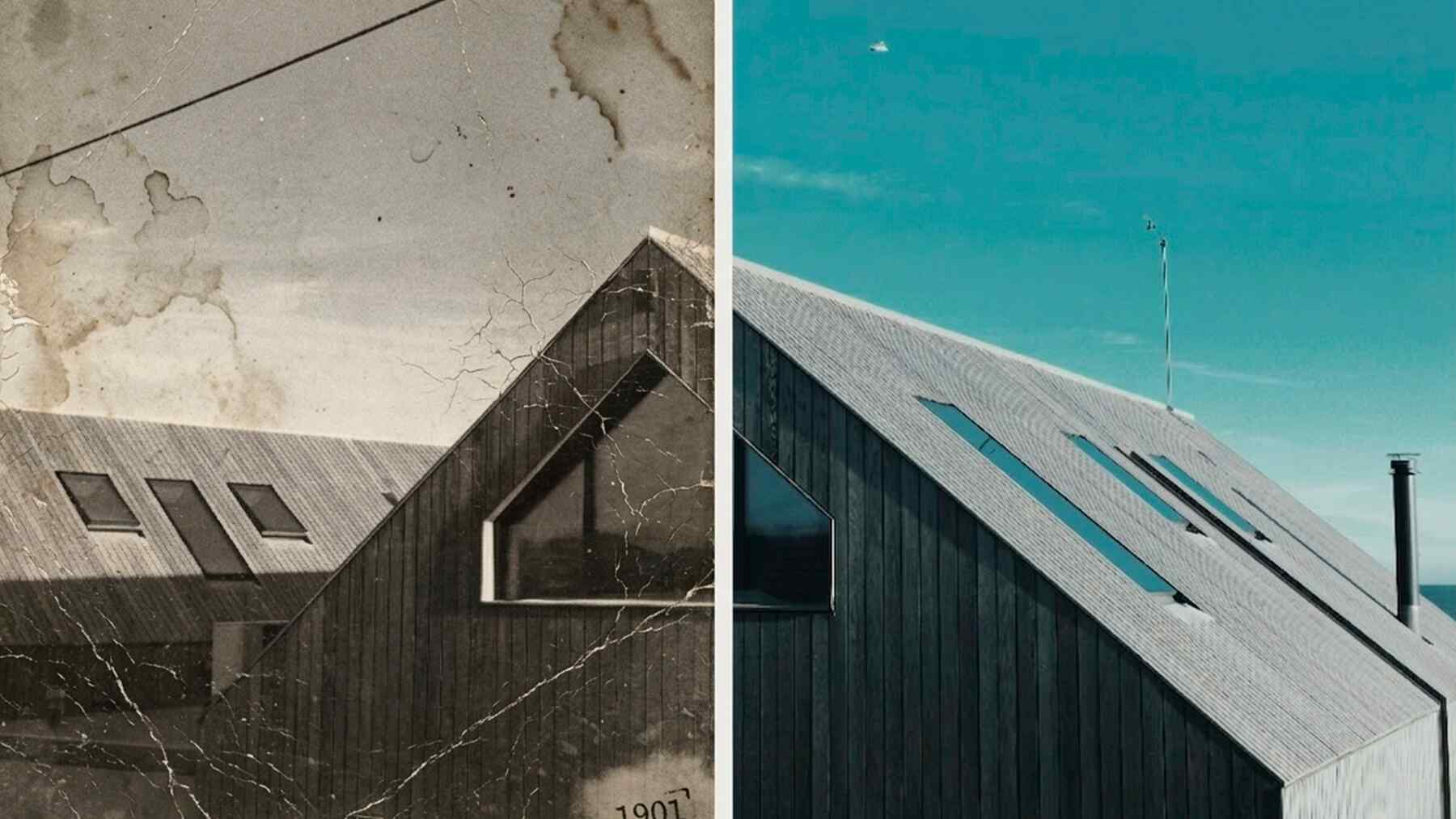 Credits: Oliur, Energies Media Internal edition
You can teach an old dog new tricks with this extreme home makeover.
Some people wish that they could turn back time, but a radical environmentalist has shown that timelines can collide.
A structural experiment in Michigan shows a property seemingly frozen in time, but behind closed doors, a sustainable revolution is occurring.
Many perceive these homes as “energy sinks.” The maintenance costs and heating prices outweigh the desire to save a piece of history.
If aged architecture could survive harsh elements without a traditional lifeline, would it change everything we know about modern living?
How the legacy of the American home is becoming more fragile
There is a significant contrast between buildings from the past and the present.
Many aged architectural structures have stood the test of time. Across the United States, these buildings are a testament to true craftsmanship.
But now, they are struggling to keep pace with the modern world.
Preserving heritage homes has become challenging. The drafty frames and uninsulated walls are meant for an era filled with cheap, abundant fuel.
Today’s volatile climate is now their greatest threat.
Many perceive these homes as “energy sinks.” The maintenance costs and heating prices outweigh the desire to save a piece of history.
In some historic districts, preservation laws also create a difficult paradox. The original aesthetic must be maintained, but adding modern, sustainable modifications is prohibited.
Fortunately, some have begun to realize the true solution.
A fragile architectural legacy isn’t maintained by hiding the future, but by weaving it into the past.
Changing perspectives on architectural masterpieces and sustainability
Architects and engineers from decades ago never truly considered the future global energy production and consumption.
Presently, it has become a significant obstacle. The building sector accounts for approximately 40% of global energy consumption.
Heritage and old-world buildings constitute up to 40% of the current building stock. Many of these structures have high “embodied carbon,” but operational efficiency is misrepresented.
We do not have to treat preserving heritage buildings and the environment as two separate entities.
Instead, these buildings should be perceived and treated as architectural reservoirs.
Typical renewable technologies fail “old-world” designs, because they are created for “thin-skinned” glass and steel. Building-integrated photovoltaics (BIPVs) also fall short, as BIPVs create a sleeker, more modern look.
In the end, these superficial layers end up masking inefficiency rather than solving it.
Fortunately, all hope is not lost for America’s legacy buildings.
THRIVE Collaborative shows how a “living building” can be achieved.
Michigan’s legacy: The “mission zero” deep-green experiment
Zero-energy homes are real, and Michigan’s “Mission Zero House” in Ann Arbor proves it.
This 1901 structure did not just undergo basic renovation. It became a radical experiment in deep-green historic preservation.
The founder of THRIVE Collaborative, Matt Grocoff, led the restoration. He wanted to complete the “Living Building Challenge” with a home never designed for power, let alone net-zero autonomy.
Mission Zero House’s stealth energy engineering
Grocoff and the THRIVE team used a “fabric-first” approach. An 8.4 kW solar array was to respect the roofline’s original profile.
Vacuum Insulated Glazing was added to the original window frames to achieve modern thermal resistance and seal the structure. This makes energy leaks impossible.
The dense interior materials were enhanced to absorb heat during the day and release it at night. This turned the structure into a thermal mass battery.
The Mission Zero House is proof that choosing between architectural heritage and a sustainable future is no longer necessary.
By treating this 1901 structure as a living laboratory, Grocoff showed that we can indeed teach old dogs new tricks. In this case, fragile homes can adopt total autonomy.
This way, old-world charm does not have to be forgotten to ensure survival in harsh climates. Innovative, stealthy, sustainable designs are key to helping America embrace net-zero.
Anke Maree is a writer with a clear and engaging editorial style. Her work focuses on making complex topics accessible, informative, and relevant for readers across different areas of interest.
