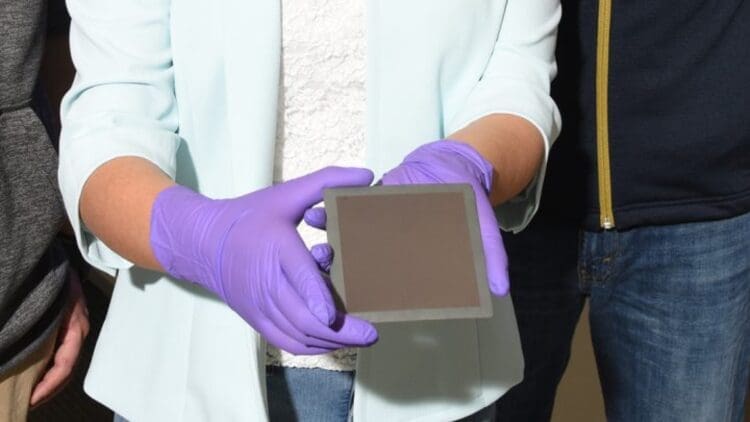
The greatest challenges impacting global energy security are intermittency and the storage of excess energy. While there are solutions, some present their own set of challenges, such as durability, efficiency, and cost-effectiveness. Now, advanced ceramic cells, developed by Idaho scientists, could solve these challenges as they produce hydrogen and electricity through the process known as electrolysis. By changing the material composition from black to blue, they’ve struck gold.
Changing the future of global energy security
The world is forevermore in need of durable, efficient, and cost-effective energy, as global energy security not only ensures the transition to clean energy, but it also plays a key role in:
- National security due to decreased reliance on other nations
- Political stability, as there is no need to compete for resources
- Increased resilience to threats, such as extreme weather and geopolitical tensions
- Boosting economic stability by maintaining businesses and fostering growth
Unfortunately, a significant global energy security crisis exists, which is why nations worldwide are researching ways to increase their energy security. The key challenges to address are intermittency and storage, which are closely associated. Finding solutions to these key challenges has proven even more challenging – until now.



Idaho scientists have developed advanced ceramic cells, which could be the answer to several nations’ energy security problems. The research was supported by the protonic ceramic electrochemical cells program, which was funded by the U.S. Department of Energy’s Hydrogen and Fuel Cell Technologies Office. The study was published in the scientific journal Nature Synthesis.
Idaho scientists develop advanced ceramic cells
A team of scientists, Wei Tang, Dong Ding, and Wenjuan Bian, along with their colleagues from the Idaho National Laboratory, has created a technology that could reshape the nation, and potentially the world’s, future in energy security. This technology is known as advanced ceramic cells, which operate as an “electrochemical energy conversion device.”
The device has two fuel cell modes, namely:
- Protonic ceramic fuel cell (PCFC), and
- Protonic ceramic electrolysis cell (PCEC)
In the first mode, water is formed from hydrogen and oxygen to produce electricity, and in the second mode, hydrogen and oxygen are produced from electrolysis. According to the Idaho National Laboratory website, the electrochemical energy conversion device is made from perovskite, a material used in tandem with silicon solar panels to achieve commercial efficiency of 25%.
Producing more than just hydrogen and electricity
The team introduced significant changes to produce four layers for the device, which increased performance efficiency and durability. These four layers consist of:
- A porous steam electrode
- A thin perovskite oxide electrolyte (barium, zirconium, and yttrium [BZY])
- A functional BZY electrolyte and nickel-oxide layer (BZY + NiO)
- A support barium, cerium, zirconium, yttrium, and NiO layer (BCZY + NiO)
The device’s two modes have substantial potential, especially for utilities that require energy flexibility. The device can convert the grid’s excess electricity into hydrogen for storage or usage in industrial chemical manufacturing. Additionally, when the grid experiences increased demand, the hydrogen can be reconverted into electricity.
According to the Idaho Business Review, the device’s advantages for industrial processes include avoiding expensive fuel circulation and costly hydrogen purification stages. Other device applications include:
- Upgrading natural gas
- Conversion of carbon monoxide
- Synthesis of ammonia
Ding added in a statement that the team is working with various industrial partners at varying scales. As the team continues its research and development stage to find advanced techniques to scale up the advanced ceramic cells, the nation, as well as the world’s energy security crisis, could soon become a thing of the past. For now, the nation’s hope rests in super-hot white rocks that have millennia-worth of energy, while Japan and Europe continue to race for hydrogen.