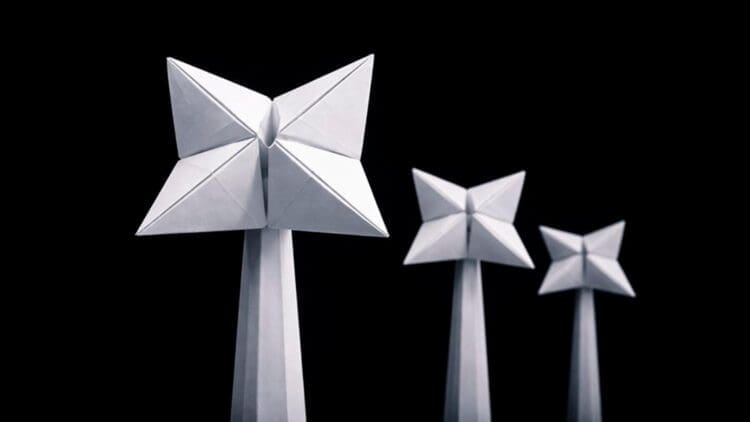

We live in a day and age where access to advanced, sustainable technology is readily available. Yet, most urban regions still face challenges in adopting these technologies. Now, all of that could change, as a recently published study shows that a 1,000-year-old artistic solution could reshape wind power. Origami turbines could be the future of energy, presenting great potential to save us much more than money, as each fold increases their power and their aesthetic appeal.
The challenges of clean power production in urban regions
The first image that comes to mind when someone mentions wind power is of those giant farms with several towering turbines. Naturally, they work wonders in areas with vast spaces of land, but urban regions with their concentrated buildings require small-scale clean energy solutions. Fortunately, several small wind turbines are available on the market.
However, despite this availability, a study published in the scientific journal Energy Systems found that urban regions still face challenges in adopting wind power as a clean energy solution. Researchers from the Australian University, California State University, and the Université Côte d’Azur collaborated on the study. In general, the lack of support for small wind turbines in urban areas can be attributed to:



- Aesthetics
- Vibration and noise pollution
- Impact on wildlife
- Societal objections (high costs, poor return on investments, safety concerns, etc.)
Now, thanks to this particular study, the end of this lack of support could be in sight, as the researchers have found that a 1,000-year-old artistic solution could reshape wind power in urban regions.
An artistic solution for wind power: Origami turbines
A Chinese tradition known as “origami”, that entails the folding of paper, has inspired yet another innovative renewable technology design. A brief history: Japan adopted this art in the 6th century and used it for religious ceremonies and formal gift wrapping, known as “Kirigami.” Fast-forward to the present day, and “kirigami” solar cells have become a new powerful trend.
Now, it is the wind energy sector’s turn to be artistically reshaped. The research team engineered a bladeless wind turbine inspired by origami by using 3D printing. These turbines feature seven sinuous, folded rotors with four internal tube-shaped nozzles. The origami turbines work by using these nozzles to convert wind moving perpendicularly (or vertically) to the turbine into a drag force that spins the rotors.
A design that’s as powerful as it is aesthetic
According to the study, two prototypes with this unique design were tested in a wind tunnel with varying wind speeds under three conditions:
- With a micro-3-phase electric generator and a load
- With the generator only
- Without the generator
The results were intriguing. The cut-in speed with the generator was 3.5 m/s, and without it, 8 m/s. Rotation ranged between 25 and 3,300 rpm. With the generator only, the maximum voltage was 27.6 V. It was concluded that these turbines have great potential in hybrid systems and remote applications, for the following reasons:
- Higher aesthetic appeal
- Easy integration into existing urban architecture
- Decreased noise levels
- Effective operation in low wind speed conditions
- Decreased impact on wildlife
- Quick and low-cost production
- Minimal maintenance
- Potentially increased turbine lifespan (due to simple structure)
The researchers will test scaled-up versions of their design, and once field testing has been concluded, they plan to conduct in-depth research on life-cycle costs. For now, the conclusion can be made that origami turbines hold tremendous potential to become a feasible option to boost access to clean wind power solutions in urban regions. Soon, cities worldwide could integrate these powerful, aesthetic designs, bringing us one step closer to net-zero. Another turbine design to keep an eye on is the 4 kW vertical home turbine called “Pegasus.”