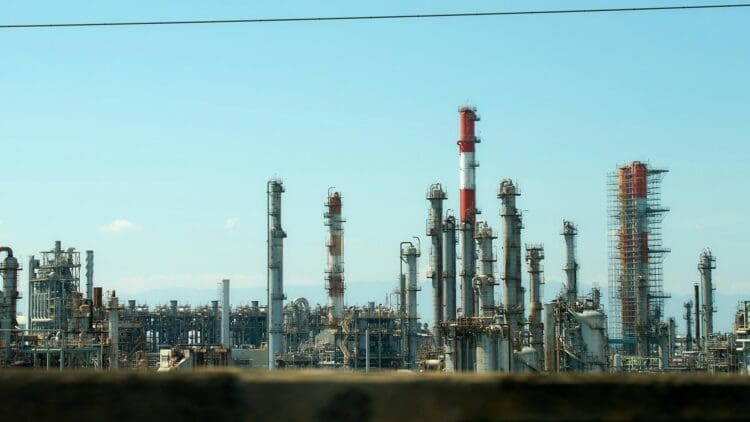

Indonesia has become the latest nation to drastically upgrade one of its largest refineries to meet an anticipated increase in energy demand. With the new year bringing with it a surge in new opportunities for large-scale oil and gas production, the reality is that upgrading and modernizing refineries to handle more and more crude has become a top priority for the nations of the world. Indonesia stands at the precipice of a surge in new gas and oil production thanks to the substantial upgrades at the Balikpapan refinery.
A new year comes pre-loaded with a surge of oil and gas production
2026 is set to see dramatic increases in gas and oil production, not only in the Asian market, but across the world as well. Indonesia is a tightly controlled nation with serious laws and penalties, so a vicegrip on the energy market is a natural expectation for most.
However, the reality is that the Balikpapan refinery has been in dire need of a substantial upgrade for a long time. In a recent inauguration ceremony presided over by the nation’s President, Prabowo Subianto, the upgraded Balikpapan refinery in East Kalimantan province is set to bring the annual oil production for Indonesia into a new era.

The eye-watering $7.4 billion upgrades at the refinery were implemented and managed by the developer, Kilang Pertamina Internasional, and aim to strengthen the nation’s energy independence and drastically reduce the reliance on imports.
The upgraded Balikpapan refinery will now provide a much-needed boost to Indonesia’s output capacity
For an exceedingly long time, Indonesia has relied on imports of essential crude to meet oil production demand as the nation grows. New refineries often take years, or even decades, to be built and pass all the relevant safety and operational checks, so upgrading an existing refinery can save a lot of money and heartache for investors.
The modernised refinery has become a strategically important asset for Indonesia
As noted by the developer, state-owned Pertamina’s subsidiary Kilang Pertamina Internasional, the refinery has increased its capacity from 260,000 bpd to 360,000 bpd, making it the largest refinery in the Asian nation. The project has become of extreme importance to the President and his administration.
Expectations are for the refinery to produce upwards of 5.8 billion litres of gasoline every year, thanks in no small part to the significant upgrades at the facility. Among the new enhancements and modern processing units are:
- Euro V-standard processing units
- Expanded LPG output from 48,000 to 384,000 tonnes
- A new petrochemicals unit that boasts a 283,000-tonne-per-year capacity
- Newly operational residual fluid catalytic cracking complex that has been designed to convert residual oil into fuels and petrochemicals
Indonesia’s President has noted that his administration’s top priority is energy security, and thanks to the upgraded refinery, he is one small step closer to achieving his goal. While nearby nations, such as the Kingdom of Brunei revealing their own upgrades to refineries, the Asian market is set to reach new heights this year as more energy production is set to become a reality.
Indonesia’s Energy Minister Bahlil Lahadalia has noted that the nation is aiming to end importing of jet fuel by 2027, which the upgraded refinery will certainly assist with.
The new year is set to bring several new and upgraded refineries online
Building on the President of Indonesia’s inauguration of the Balikpapan refinery, India has revealed that HPCL Rajasthan Refinery is advancing with the Pachpadra mega-refinery and petrochemical complex, so the picture has become clear. The Asian market is set to experience rapid growth this year, and thanks to nations like Indonesia investing in energy independence, the market is wide open and welcoming for domestic production.