
Ivanpah built 173,500 mirrors that tracked the sun with near-perfect precision and still ended up on California’s energy naughty list
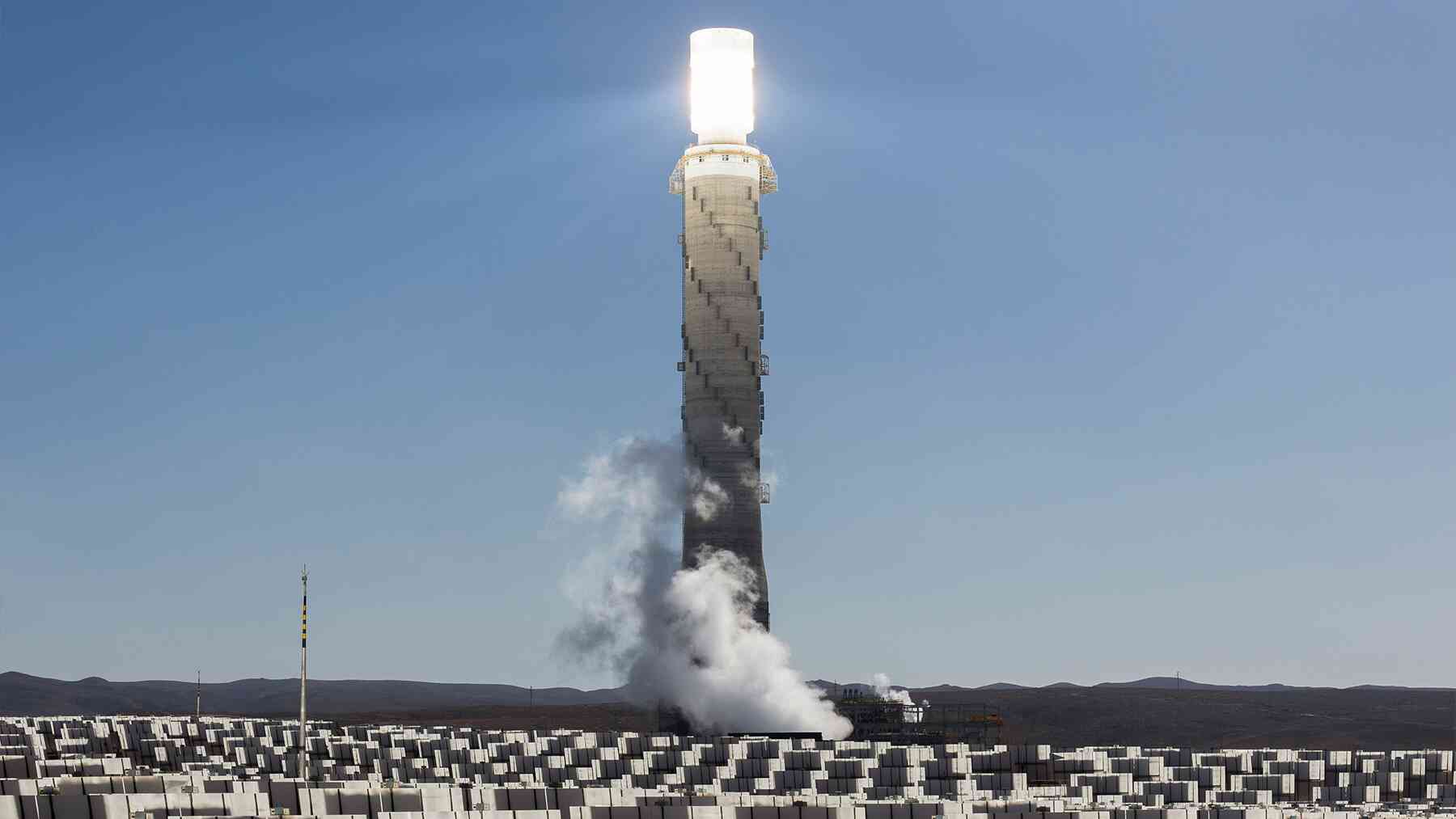
In California’s Mojave Desert, 173,500 mirrors track the sun with near-mechanical perfection — achieving 92–94% field availability, day after day. By that measure, Ivanpah should be a triumph. Instead, its utilities want out of their contracts, regulators blocked the exit, and the plant has quietly become a symbol of clean-energy hubris.
But was Ivanpah actually a failed technology — or a sound machine undone by a single design choice made before California’s grid looked anything like it does today?
A solar giant on the chopping block
PG&E and Southern California Edison want out. Both utilities are seeking to terminate their long-term power purchase agreements with Ivanpah years before the contracts expire in 2039, citing persistent underperformance and high costs. Since coming online in 2014, the 392 MW facility has delivered only 70–80% of its projected annual generation — a gap that’s grown harder to absorb.
This is the key distinction: Ivanpah’s commercial failure was a market-timing and design mismatch — not a verdict on concentrated solar power as a technology.
The California Public Utilities Commission isn’t letting them walk away that easily. Regulators rejected the termination proposals, pointing to rising electricity demand, the state’s 60% renewable target by 2030, and the sunk cost of hundreds of millions of dollars in transmission infrastructure built specifically to serve the plant.
Federal policy adds another layer of complication. Tariff uncertainty, tax credit instability, and tighter land-use rules for large-scale solar have made replacing Ivanpah with a new project far less straightforward than it looks on paper. For regulators, keeping an existing asset online — even an underperforming one — may simply be the more practical path forward.
What actually went wrong — and what didn’t
Here’s the part the headlines usually miss: the mirrors worked. Ivanpah’s heliostat field — tens of thousands of individually controlled mirrors tracking the sun autonomously — achieved 92–94% field availability over years of operation. According to researchers at the National Laboratory of the Rockies, that’s a genuine technical achievement and real proof that heliostat technology scales.
The problem wasn’t solar collection. It was what happened to the heat afterward.
Ivanpah was built using direct steam generation, which produces no meaningful thermal storage. Output was tied directly to instantaneous solar conditions, so a passing cloud could force the power cycle to shut down entirely. Natural gas had to be burned at startup and during standby to compensate — an irony that drew considerable criticism. Frequent thermal cycling created operational stress, drove up maintenance costs, and left the plant with no mechanism to shift output toward higher-value hours.
Selling cheap power at the worst possible time
California’s grid changed fast after 2014. Midday solar became abundant — sometimes so abundant that wholesale prices went negative. Evening flexibility, by contrast, became the premium commodity grid operators were willing to pay for.
Ivanpah couldn’t adapt. Structurally locked into selling during the cheapest hours of the day while carrying high fixed capital costs, the plant had nowhere to go. As the National Laboratory of the Rockies researchers put it, Ivanpah became “an expensive source of electricity during the lowest-cost — or in some cases, negative-cost — time of day in California.”
The simultaneous collapse in photovoltaic panel prices made things worse. Simpler, cheaper solar technology flooded the same midday window where Ivanpah was already struggling to compete. This is the key distinction: Ivanpah’s commercial failure was a market-timing and design mismatch — not a verdict on concentrated solar power as a technology.
The retrofit that could change the math
Four current and former senior solar researchers at the National Laboratory of the Rockies modeled a specific solution: keep Ivanpah’s high-performing heliostat field, but replace the steam receiver with a molten-salt receiver connected to 12 hours of thermal energy storage.
The economics are striking. Under today’s market conditions, the modeled retrofit shows an internal rate of return 30% higher than Ivanpah’s original economics at 2014 grid prices. With the existing tower and heliostat infrastructure treated as sunk costs, a power purchase agreement price as low as 6.99 cents/kWh could be achievable.
That number matters. It would satisfy the CPUC’s requirement to keep clean generation online while giving Google and its utility partners something they don’t currently have: a commercially viable asset.
Where the expertise to do it already exists
The global CSP industry didn’t repeat Ivanpah’s mistake. Virtually every commercial CSP plant built since — domestically and internationally — has incorporated molten-salt thermal storage as standard. The industry learned and moved on.
China moved quickly. State-owned firms like Power China and China Three Gorges Renewables now have years of commercial experience building and operating standardized 100 MW molten-salt tower CSP plants. A subsidiary of China’s National Nuclear Corporation is currently building a 2 GWh standalone molten-salt thermal storage project in Gansu Province.
The expertise needed to retrofit Ivanpah exists, at scale, and it’s proven. Whether Google and its partners choose to pursue it is now the more interesting question — and the one worth watching.
Disclaimer: Our coverage of events affecting companies or institutions is purely informative and descriptive. Under no circumstances does it seek to promote an opinion or create a trend, nor can it be taken as investment advice or a recommendation of any kind.
Kelly is an experienced writer with 15 years of experience exploring the big stories that shape our world, from tech breakthroughs and space exploration to climate, energy, and the fascinating quirks of science. She has a talent for turning complex ideas into sharp, memorable insights that stay with readers long after they’ve finished reading.
