
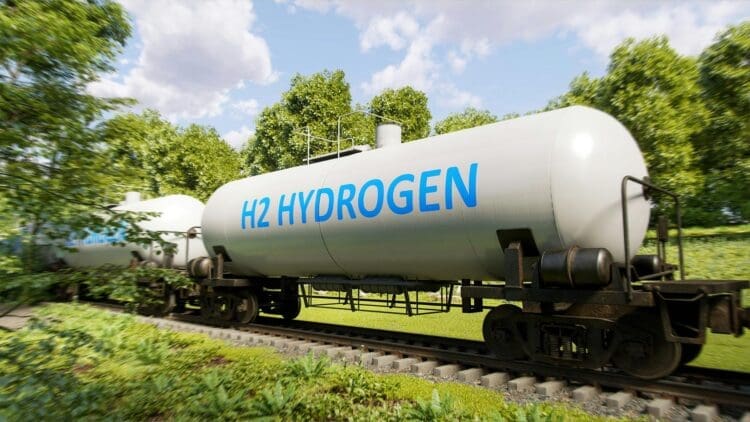
One of the most technologically advanced countries in the world is facing significant challenges in reducing its carbon footprint. Japan has set a ‘linear pathway’ to achieving its 2035 climate goals, but reliance on fossil fuels remains an obstacle. This is why Japan is turning to America for hydrogen, hoping that a 15-year, 500,000-ton bet will help the country move past coal and gas as primary fuels for power. Discover how these two countries’ collaboration will help Japan go green.
Japan is seeking greener pastures with a 15-year, 500,000-ton bet
Just like the world, Japan is also seeking greener pastures, especially as the deadline for its climate goals is looming around the corner. The country is aiming to achieve the following:
- A 60% reduction in greenhouse gas emissions compared to 2013 levels by 2035, and
- By 2040, a 73% reduction in greenhouse gas emissions compared to 2013 levels
Convinced that these specific goals will help the country meet the global mission of achieving net-zero by 2050, Japan is now actively investing in alternative fuels and energies to decrease its coal and gas dependency. According to Reuters, over 50% of Japan’s power was generated by fossil fuels during 2024/2025, of which coal and gas were the primary sources.


Fortunately, Japan is turning to America for hydrogen in its venture to greener pastures, which will play a significant role in the country’s transition away from fossil fuels.
Japan turns to America for hydrogen
All eyes have been on Japan since the 2025 Japan Summit & Exhibition, where Japan’s Energy for a New Era (JERA) hinted at new LNG Agreements.
The biggest power-producing company in Japan, JERA, has made a 15-year government-supported bet on ammonia imports from America. This subsidy will help cover the difference between coal and ammonia expenses, as imports are planned to commence by 2029. Earlier this year, JERA partnered with CF Industries and Mitsui for the Blue Point project.
The Blue Point project is a nearly $4 billion project, which will boast one of the biggest low-carbon ammonia facilities in the world. The Blue Point project is situated in Louisiana, and Mitsui will be responsible for supplying the project’s partners, which is planned to commence by 2030. The project will provide 280,000 tons of ammonia each year to the following partners (among others):
- Hokkaido Electric Power
- Mitsubishi UBE Cement
- Tosoh
This is how Japan will benefit from U.S. imports
JERA itself plans on benefitting from nearly 500,000 tons annually from the Blue Point project, as ammonia and hydrogen are key to the country’s venture into greener pastures. According to Anri Nakamura, principal hydrogen research analyst at S&P Global Energy Horizons, the decision is an exciting development for the country’s hydrogen policy, which has remained quiet until now. Nakamura added:
“These agreements also strengthen ammonia cofiring plans at power plants supported by long-term decarbonized power auctions. While burning ammonia in coal plants is costly, we expect this volume can be supported by the CFD budget, especially if higher-value industrial applications are also developed.”
According to a JERA spokesperson, the ammonia imports will be extremely vital for Japan, as JERA will commence 20% ammonia cofiring at the 1 GW No. 4 Hekinan coal-fired unit starting 2029/2030. The ammonia will also be used at the Tomata-Atsume thermal power plant, as well as a fuel for Mitsubishi UBE Cement. Tosoh will use it as raw material.
This project is only the first step towards Japan’s better, greener future, a step that will significantly lower the country’s carbon footprint while helping it achieve its climate goals in no time. Ammonia is exceptional as a low-carbon fuel or feedstock, which is most likely why Japan has also been focusing on ammonia-powered ship engines. The country has completed its first factory trials, proving how valuable its U.S. ammonia import investment is for the future.
Disclaimer: Our coverage of events affecting companies is purely informative and descriptive. Under no circumstances does it seek to promote an opinion or create a trend, nor can it be taken as investment advice or a recommendation of any kind.

