
At first glance, 2026 might look like just another year on the calendar. No big countdowns, no dramatic switches being flipped overnight. But behind the scenes, something important is building momentum.
Energy experts say the way the world produces electricity is shifting again — and this time, the change isn’t loud. It’s steady, spread out, and already taking shape in places you might not expect.
Solar and wind continue to dominate global power growth
Over the past few years, wind and solar have become the backbone of new electricity generation worldwide. According to the International Energy Agency (IEA), renewable energy is expected to provide around 36% of global electricity in 2026, making it the single largest power source.
Solar power remains the biggest driver of this growth. While experts say expansion may slow slightly in 2026, it is far from stopping. The IEA estimates that global solar capacity will still grow by about 540 gigawatts, even after record-breaking growth in previous years.


Some of the slowdown is linked to policy changes, supply chain issues, grid limits, and stronger industrial competition. Still, analysts expect growth to pick up again in 2027 — especially with many large projects already prepared to go live.
A quiet shift begins in an unexpected place
This is where the story becomes more concrete.
When people think of Michigan, solar energy is rarely the first thing that comes to mind. The state is better known for cars than clean power. But that image is starting to change.
Earlier this year, a major new solar project began operating in Muskegon County, turning a former industrial site into a new energy hub. The project was developed by Consumers Energy, which says it represents the future of Michigan’s power grid.
A new high-voltage transmission line, nearly 0.75 miles long, now connects the site to existing infrastructure — allowing large amounts of clean electricity to flow directly into the grid.
Half a million panels, built to follow the sun
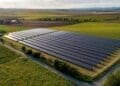
The Muskegon Solar Plant is a 250-megawatt project spread across 1,900 acres. Once fully running, it will use up to 500,000 sun-tracking solar panels, arranged in long rows across the site.
Unlike traditional fixed panels, these panels move with the sun throughout the day. This simple motion helps them capture more light, boost efficiency, and increase total power output.
The result is significant: the plant is expected to generate enough electricity to power nearly 40,000 homes in Michigan.
Project partners say the site shows what happens when local expertise, modern technology, and long-term planning come together. Beyond clean power, the project also strengthens regional energy security and reduces dependence on older systems.
While solar growth may slow slightly this year, projects like Muskegon show the bigger picture. Solar isn’t fading — it’s spreading, adapting, and quietly becoming a central part of how electricity is made.
And as more plants like this come online around the world, 2026 may be remembered as the year solar power truly stepped into the spotlight.