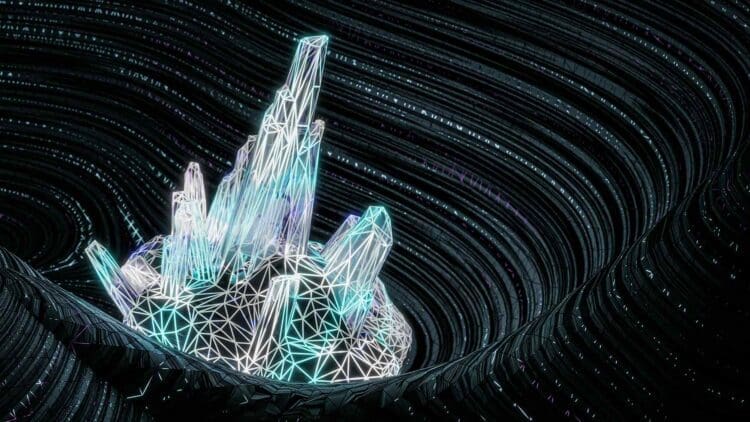

Innovative renewable energy technology is progressing in leaps and bounds as the world finds ways to undo the harm that humans have done. The more traditional forms of clean power generation, like wind, hydropower, and solar, may be set aside in pursuit of newer methods. Recently, scientists in the United Kingdom discovered new potential in diamonds.
What’s the current state of the solar and wind energy sectors, and how far away are solutions to shortcomings?
Years of research have gone into improving solar and wind technology, the two most popular forms of clean energy generation. In some ways, these systems have reached a plateau in development. The problem with solar is maintaining a steady, 24-hour supply. The issue with wind is its tendency to be intermittent and unreliable.
One of the major focuses in these two sectors is on energy storage solutions. There’s a massive drive towards developing large-scale battery set-ups that could, for example, store solar energy during the day for release at night. However, this direction of development is not progressing as fast as we would like, and there’s still a long way to go until energy storage is adequate for the demand.




A new age in power production: A British marvel in the form of diamonds
The energy sector is ripe for a solution to the shortcomings of any of the currently-used clean power options, and this may arrive in the unexpected form of diamonds. These aren’t the standard kind that are mined from the ground, though. These are lab-grown specimens with specific, interesting, electrical qualities.
There’s another aspect to the University of Bristol scientists’ research. These man-made stones are intended to work in conjunction with a nuclear system, which is increasingly becoming a more attractive option for renewable power worldwide.
Going further in making this an attractive concept is that the nuclear material required is carbon-14, which is a waste product. Seeing as the disposal of nuclear waste is one of the problems with generating electricity from nuclear power, using the waste to instead create more clean energy is a major motivation to pursue this line of experimentation.
How could laboratory-made diamonds and carbon-14 solve current problems in the energy sector?
The research team created a lab-grown diamond that generates electricity when placed near a radiation source, effectively making this creation a “diamond-battery.” Nickel-63 served as the radiation source in their prototype, and their next source of interest was carbon-14. Fortunately, this radioactive source is located at the surface of graphite blocks, which are plentiful in the UK.
Nuclear systems still face significant challenges in expanding capacity, especially regarding safety concerns about nuclear waste. According to Dr Neil Fox from the University of Bristol’s School of Chemistry, carbon-14 encapsulated in diamonds presents the following benefits:
- Diamonds quickly absorb carbon-14’s short-range radiation.
- The radiation cannot escape the diamond.
- A minuscule amount of carbon-14 generates a disproportionately larger amount of energy.
- The lifetime of the “diamond-battery” is exceptionally longer compared to standard alkaline AA batteries
Professor Tom Scott from the University of Bristol’s Interface Analysis Centre, who is also a Cabot Institute member, confirmed the benefits of this breakthrough:
“There are no moving parts involved, no emissions generated, and no maintenance required, just direct electricity generation. By encapsulating radioactive material inside diamonds, we turn a long-term problem of nuclear waste into a nuclear-powered battery and a long-term supply of clean energy.”
While “diamond batteries” may not be the end of conventional renewable energy technologies on a large scale, their significant long-term energy storage capabilities open new doors for low-power electrical devices. For now, the world will have to make do with the typical nuclear power plants, and it seems the global nuclear expansion may happen faster than initially anticipated.
Disclaimer: Our coverage of events affecting companies is purely informative and descriptive. Under no circumstances does it seek to promote an opinion or create a trend, nor can it be taken as investment advice or a recommendation of any kind.
Anke Maree is a writer with a clear and engaging editorial style. Her work focuses on making complex topics accessible, informative, and relevant for readers across different areas of interest.