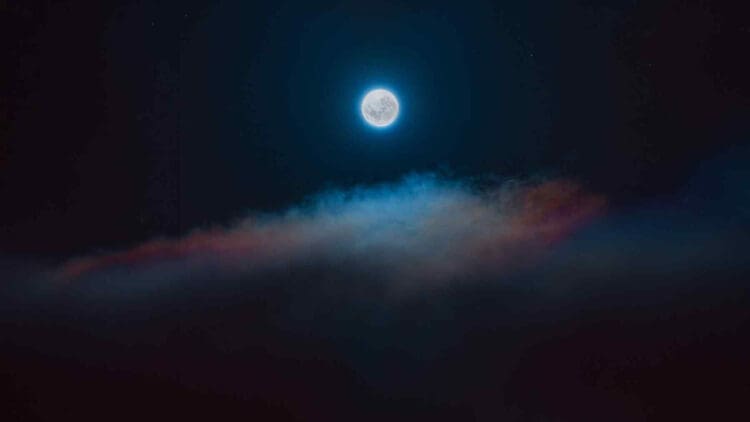

Many people view rainbows as simply daytime occurrences after a storm. However, the number of people witnessing “rainbows” at night is on the rise. These are called “moonbows,” which are created by the same process as daylight rainbows; however, the light comes from the Moon instead of the Sun.
It is as if the sky is revealing a secret only to the occasional observer
Moonbows are created when the Moon is full, low in the sky, and unobstructed. There also needs to be sufficient moisture in the air, such as a nearby rain shower, mist from a waterfall, or sea spray. A dark sky is required for the moonbow to be visible. When all of these factors occur simultaneously, a moonbow forms.
This combination of requirements is why each moonbow sighting seems like a rare occurrence
There are only a few locations around the world that are known to produce moonbows on a regular basis. These include Yosemite National Park in California, Cumberland Falls in Kentucky, and Waimea Canyon in Hawaii. All of these locations contain large waterfalls, which generate massive amounts of mist during the night. These waterfalls then act as prisms, bending the light emitted by the full Moon, thus creating the moonbow.



One of the reasons that these locations are so well-known is that they are predictable. While moonbows may seem to be a magical and spontaneous event, they follow a very specific pattern related to the lunar cycle. Around the time of the full Moon, the mist from these waterfalls will bend and reflect the light emitted by the Moon, forming the arc that creates a moonbow. Visitors frequently travel to these locations specifically to try to observe one of these rare alignments.
Local adventurer offers information on viewing times and optimal observation points for moonbows
For example, visitors to Yosemite National Park can best observe the moonbow at the footbridge located below the falls. This illustrates that moonbows are not random events, but rather a result of specific natural conditions that occur on a predictable schedule.
The reason why moonbows are receiving so much attention recently relates to the fact that they are viewed as somewhat bizarre by many observers. Since moonbows are typically observed as white arcs, their rainbow nature is not apparent at first sight.
Experts state that moonbows are produced using the exact same physical processes that create daytime rainbows; however, the difference lies in that moonbows use the light from the Moon instead of the Sun.
Capturing the moonbow phenomenon
One of the aspects that makes moonbows particularly interesting at this time is the increased knowledge regarding moonbows due to photography. Photographs taken using long exposure periods show the true colors of the moonbows that cannot be seen by the naked eye.
Once viewed solely as monochromatic curves, moonbows now display their full range of colors, including blue, green, and red. This clearly shows that the Moon has always been capable of producing rainbows; however, until recently, we were unable to capture the full extent of these colors.
Moonbows demonstrate to us that the night sky is still capable of displaying its own unique beauty. Their visibility is dependent upon the convergence of several atmospheric factors (including the presence of moisture, lack of cloud cover, and suitable lunar illumination) and requires an observant person to find them. As more photographs of moonbows become available and the general public becomes more aware of these nighttime rainbows, moonbows continue to serve as a reminder that the beauty of nature is sometimes displayed in ways that go unnoticed when the world is at its darkest.