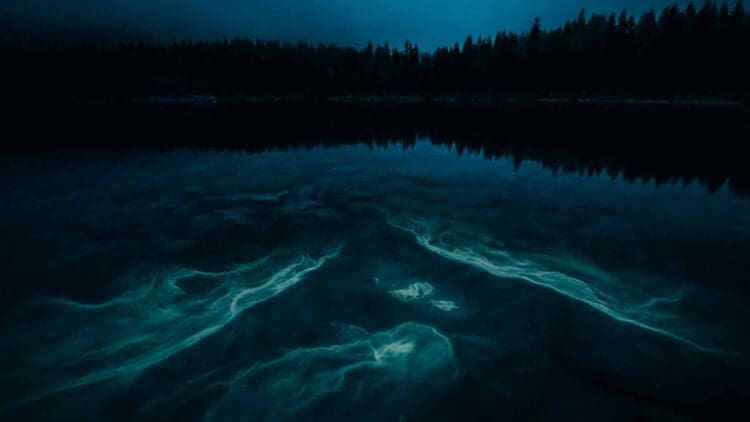

It is one of those once-in-a-lifetime phenomena. Fortunately, the chance to see it more than once this year is quite high. Locals from a certain community in Texas have confirmed a sighting similar to the awe-striking “aurora borealis” in the bayou. Those who have lived in the area note they have never witnessed something like this before. Many are hopeful that it will continue in March, but why risk wasting the chance to see it?
From lighting up the sky to the water
Long before electricity, lamps, or candles lit up the streets and homes of citizens, nature had ways to break the darkness. It is these very natural lighting phenomena that continue to elicit feelings of wonderment, regardless of when they are spotted. Sunrises and sunsets bring peace as the red light scatters, coloring the sky shades of pink and red.
Rainbows create a colorful spectacle in the sky, symbolizing hope and renewal after a storm. In the northern hemisphere, some regions have Northern Lights, or “Aurora Borealis,” lighting up the night sky. However, nature’s lighting techniques are not limited to the sky. Across the world, some coastal regions are fortunate to witness a rare sparkling phenomenon in the water.



Now, a region in Texas is experiencing this once-in-a-lifetime phenomenon. While this occurrence is rare, some believe that it will continue amaze locals in March. Will you be fortunate to witness it?
A rare sparkling phenomenon in Texas
Texas is renowned for several reasons, but especially for its natural mysteries. Experts may have solved the 200-year-old Texan lighting mystery, but another mysterious phenomenon has struck the state. In Southeast Texas, near the coast, lies the Dickinson Bayou. This bayou is over 20 miles long, starting in Alvin, flowing all the way to Dickinson and Galveston Bay.
The bayou is popular for recreational activities such as fishing and watersports, and is thus vital to the region’s tourism. However, a rare neon-blue sparkling phenomenon in Dickinson Bayou may lead to renewed attraction to the region. Clint Trueheart lives along the bayou and was intrigued when his friends informed him of this phenomenon. He decided to investigate and was amazed.
“The coolest part was when we took the boat out Sunday after the sun went down, and we left a light trail in the bayou, and the waves hitting the bank were lighting up.” – Trueheart
The odds of witnessing the sparkle in March
Nature has a way to catch us by surprise, but this rare phenomenon is not unheard of. The neon-blue glow caused by Noctiluca scintillans (a plankton), or more commonly known as “bioluminescent sea sparkle.” The plankton emits neon light when disturbed. The Galveston and Bolivar Peninsula coast has plentiful plankton blooms at the start of spring.
However, as seen in February, when conditions are optimal, i.e., warm temperatures and calm waters, the “sea sparkle” can bloom early. Changes in tides then bring this “sea sparkle” into the Dickinson Bayou, and its glow can last from days to a few weeks. Experts predict that the start of spring in March may have prolonged optimal conditions. The warmer spring temperatures can be attributed to the changes in atmospheric patterns to ENSO-neutral.
Anke Maree is a writer with a clear and engaging editorial style. Her work focuses on making complex topics accessible, informative, and relevant for readers across different areas of interest.