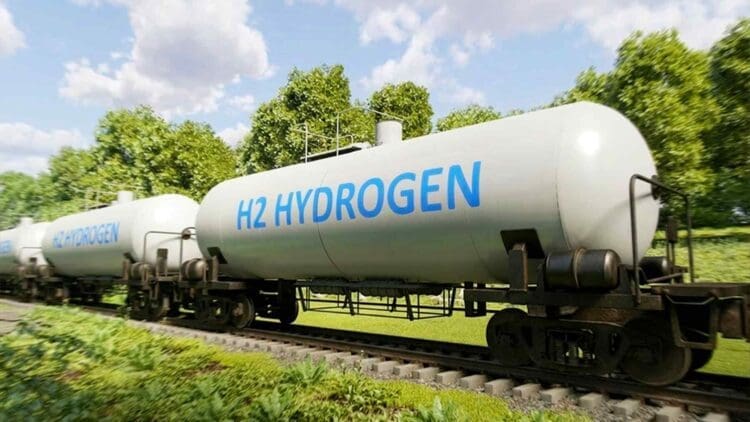

Companies have established that an essential component to gaining profit in the energy industry is striking while the iron is hot and capitalizing on moments when demand for a particular energy source is high. It is equally important for companies to perfectly position themselves in anticipation or preparation for the inevitable rise in demand for an energy source. As hydrogen is gaining more and more appreciation, MorGen Energy, backed by Trafigura, took FID on a 20 MW green hydrogen development in Wales.
European firm set to bring a 20 MW green hydrogen development to Wales
European countries are showing great solidarity in how they are approaching the global transition towards clean energy. There are companies from different nations that have the freedom to expand elsewhere within Europe and bring large-scale initiatives that will benefit the general population.
MorGen Energy is one of the lesser-known entities in the energy industry because it was only founded in 2021, at a time when the industry was heavily saturated. Trafigura usually supports it as a majority owner and focuses on producing, distributing, and consuming green hydrogen.



Essentially, MorGen Energy is a subsidiary of Trafigura. The firm has achieved a major milestone in Europe’s clean energy transition by approving the final investment decision (FID) for a 20 MW green hydrogen project in Wales. The development is known as the West Wales Hydrogen project. It will be situated in Milford Haven and is projected to begin construction in 2026.
Unpacking the significance of the West Wales Hydrogen project to Europe’s landscape
The initiative is supported by the government and private financing, just like many of the initiatives that have been successful in 2026. The willingness of nations to invest in hydrogen displays a growing confidence in the energy source becoming a scalable, low-carbon solution. So what exactly does the final investment decision (FID) mean?
The FID signifies the official approval for the construction of a 20 MW electrolyzer-based hydrogen production facility in Milford Haven, Wales. Interestingly, the project is among the first supported under the U.K. Government’s Hydrogen Allocation Round (HAR1). Developers will be observant and understanding that the government now has a lenient demeanor toward approving and supporting initiatives.
The facility is particularly important because when it becomes operational, its plant is expected to produce roughly 2,000 tons of low-carbon hydrogen each year. This amount aligns with the U.K.’s Low Carbon Hydrogen Standard, which intends to lower carbon emissions. Following the FID, developers of the initiative decided that its construction would start in 2026.
Reviewing the government’s strategy for approving the project
When a government gives the green light for an initiative to move forward, one can safely assume that it is bound to materialize without any regulatory complications. In this instance, executives revealed that supportive policy frameworks were crucial in progressing the project.
The U.K. government’s hydrogen incentives, for example, revenue support mechanisms, assisted in reducing the cost gap between hydrogen and fossil fuels. The U.K. is not the first nation to foster a collaboration between public policy and private capital. This is a strategy that is increasingly becoming essential for scaling emerging clean technologies.
Understanding the importance of the hydrogen facility’s location and advantages
Projects do not just become randomly located because governments understand which region is good for what energy source. This particular facility will be built on the site of a former oil refinery within the Celtic Freeport. This conveys the developers’ effort to reuse fossil fuel infrastructure for clean energy production.
The hydrogen generated at the site will serve multiple sectors such as port operations, industrial heating, and manufacturing. The project is also expected to create skilled jobs during the construction phase. It is predicted to reduce emissions by over 15,000 tons of CO₂ equivalent per year.
European nations continue to make rapid progress in their clean hydrogen portfolio. What is most commendable is that different governments are remaining supportive.