
North Dakota oil output climbs to 1,153,000 bpd in June, up 28,000 bpd from May, state regulator reports
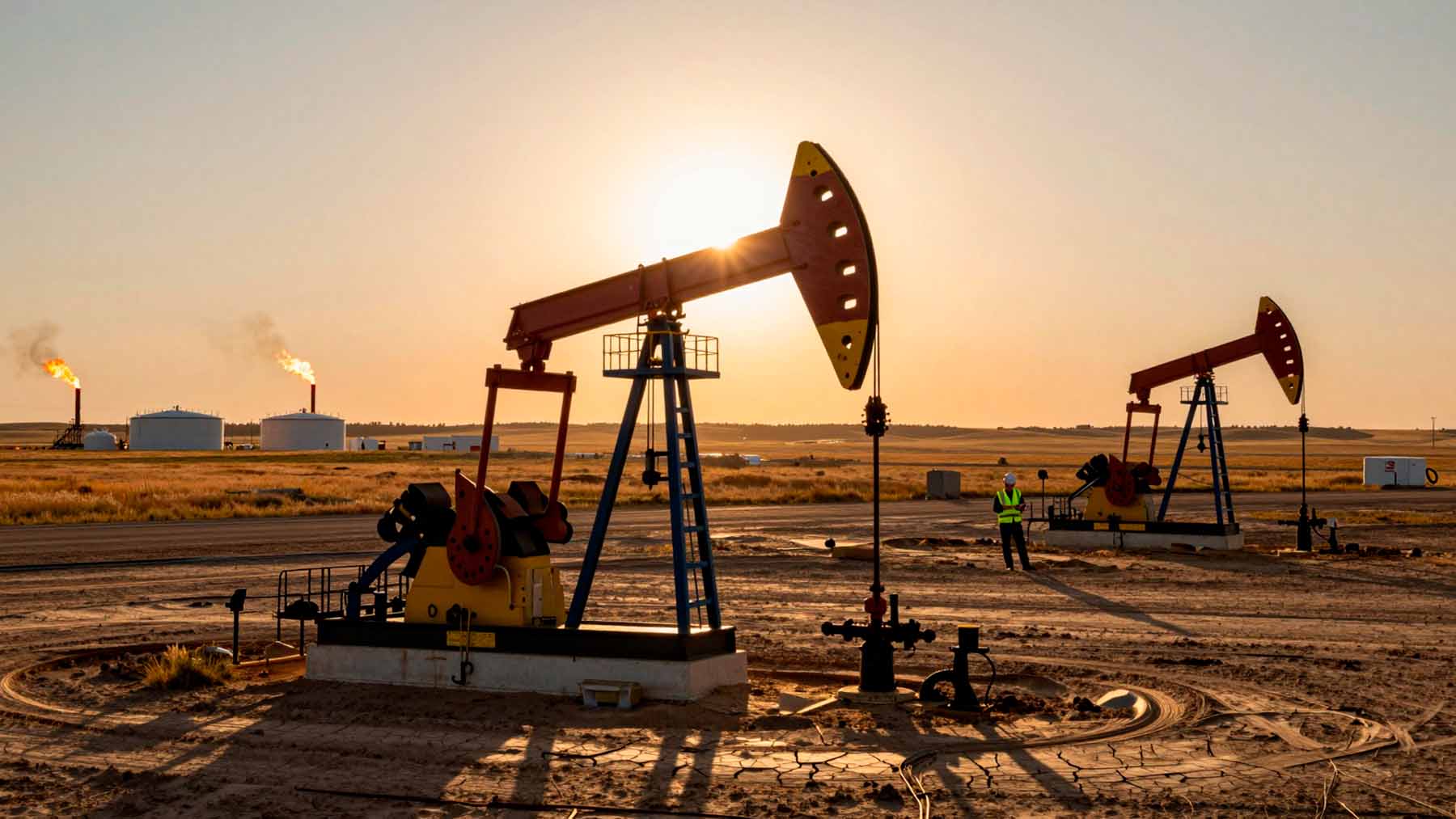 Image generated with artificial intelligence
North Dakota pumped 1,153,000 barrels of oil per day in June 2026, up 28,000 bpd from May, according to the North Dakota Industrial Commission. For one of the country’s top oil-producing states, that kind of month-over-month jump is worth paying attention to.
June production figures
North Dakota’s statewide oil output hit 1,153,000 barrels per day in June 2026—28,000 bpd more than May, a solid single-month gain for a state that already ranks among the biggest crude producers in the nation.
The data comes straight from the North Dakota Industrial Commission, the state agency overseeing oil and gas activity. They published it on their general statistics webpage, where analysts, operators, and market watchers can access it directly.
The state consistently ranks among the top oil producers in the country, trailing only Texas by a significant margin but regularly outpacing other major producers.
One thing worth noting: the numbers are rounded to the nearest 5,000 barrels. That’s standard practice for this dataset, so the actual figure could land a bit above or below what’s reported.
Bakken and Three Forks formations drive output
Production wasn’t spread evenly across the state. The Bakken and Three Forks formations together accounted for 1,126,000 bpd in June—the overwhelming majority of North Dakota’s total output.
Those two formations represent about 97.7% of statewide production. Everything else contributed only a thin slice of the remaining volume.
That dominance isn’t new. The Bakken has been one of the most productive tight-oil plays in the U.S. for well over a decade, and paired with the Three Forks—which sits just below it in the same basin—the two formations have reshaped North Dakota’s energy landscape since the shale boom of the late 2000s. Sustaining output at this scale reflects both the maturity of the play and the efficiency gains operators have built over time: longer laterals, improved completion techniques, better well spacing.
Data sourcing and reporting methodology
It’s worth knowing where these numbers originate. The North Dakota Industrial Commission publishes production data through two channels: its general statistics webpage and its monthly index report.
The figures here—the 1,153,000 bpd total and the 1,126,000 bpd from the Bakken and Three Forks—come from the general statistics webpage, rounded to the nearest 5,000 barrels.
That rounding means the general statistics figures may differ slightly from what appears in the monthly index report. Both datasets are publicly available on the commission’s official website. For most market-tracking purposes, the general statistics page delivers a reliable, timely snapshot, while the monthly index report tends to offer more granular detail. Neither is more authoritative—they just serve different purposes.
North Dakota’s role in U.S. oil production
North Dakota’s June number doesn’t exist in isolation. The state consistently ranks among the top oil producers in the country, trailing only Texas by a significant margin but regularly outpacing other major producers.
That standing traces back to the Williston Basin, the geological formation underlying much of western North Dakota and extending into Montana and parts of Canada. The basin hosts both the Bakken and Three Forks plays and became a central hub of American oil production during the shale revolution of the late 2000s and early 2010s.
Monthly data from the North Dakota Industrial Commission has since become a closely watched indicator for energy markets. Analysts track the figures to gauge domestic supply trends and get a read on how the broader U.S. shale sector is holding up. A 28,000 bpd gain in a single month signals active drilling and completion activity—and can factor into broader assessments of U.S. crude supply at a time when global oil markets remain sensitive to production shifts.
North Dakota’s output has fluctuated over the years, hitting record highs, pulling back during downturns, and recovering as prices and technology improved. The June 2026 figure of 1,153,000 bpd is another data point on that longer trajectory.
A key reference point
North Dakota produced 1,153,000 barrels of oil per day in June 2026, up 28,000 bpd from May. The Bakken and Three Forks formations drove the vast majority of that output, contributing 1,126,000 bpd between them.
The North Dakota Industrial Commission published these figures on its general statistics webpage, rounded to the nearest 5,000 barrels. A separate monthly index report—also available on the commission’s website—may show slightly different numbers due to rounding differences. North Dakota remains one of the most significant oil-producing states in the U.S., and its monthly production data continues to serve as a key reference point for anyone tracking domestic supply.
Kelly is an experienced writer with 15 years of experience exploring the big stories that shape our world, from tech breakthroughs and space exploration to climate, energy, and the fascinating quirks of science. She has a talent for turning complex ideas into sharp, memorable insights that stay with readers long after they’ve finished reading.
