
The U.S. Nuclear Regulatory Commission dropped two proposed rules on July 1, 2026, that would reshape some of the most fundamental pieces of nuclear regulation in the country. One would eliminate the longstanding “as low as reasonably achievable” radiation protection standard from agency rules. The other would overhaul how reactors get licensed, monitored, and sited—the NRC’s biggest licensing reform push in years.
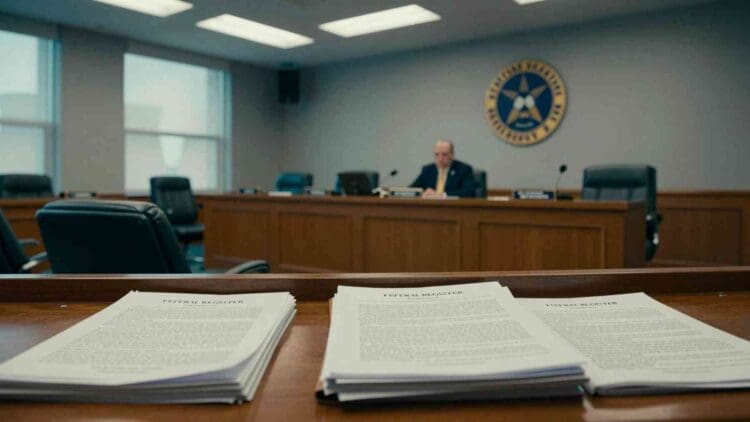
Both rules landed in the agency’s public document library the same day. Once they’re published in the Federal Register, each opens a 45-day window for public comment.
NRC unveils two proposed rules on July 1
NRC Chairman Ho Nieh called these two actions among the most significant the agency has taken in years. Both rules hit the ADAMS public document library on July 1, 2026—the same day the NRC announced them. Neither had reached the Federal Register yet at announcement, and that publication is what kicks off the 45-day public comment period for each rule.

The NRC plans to hold a public meeting during the comment period for the ALARA rule. Nieh said the agency will take every comment into account and make adjustments where appropriate. “There has been a lot of buildup to this rule,” he acknowledged.
Why the NRC is acting: Executive order and policy pressure
The immediate trigger was Executive Order 14300, issued in May 2025, which directed the NRC to reconsider its reliance on the linear no-threshold model and the ALARA standard, calling both “flawed” and pushing for reform.
A July 2025 report from Idaho National Laboratory backed that up, making the case for eliminating ALARA and raising dose limits. The American Nuclear Society had already flagged low-dose radiation regulation as a “Nuclear Grand Challenge” back in 2017, so pressure for change was building long before the executive order arrived.
The debate isn’t settled. Some experts saw the EO as a chance to establish a unified, scientifically grounded “below regulatory concern” threshold across federal agencies. Others warned against weakening existing protections. That tension will almost certainly surface during the public comment periods.
What the ALARA proposed rule would change
The proposed rule would pull the term “ALARA” out of NRC regulations entirely, replacing it with requirements the agency describes as clearer, more objective, and tied to established dose limits. The actual numerical exposure limits—based on the LNT model—wouldn’t change.
“This rulemaking is raising the bar on clarity in our regulations; it is not lowering the bar on our safety standards,” Nieh said.
The rule would also introduce a graded approach to dose management based on risk and operational context. Licensees would get more flexibility to use modern methods for evaluating radiation doses, along with expanded options for managing occupational exposure. One notable provision: caregivers of patients receiving radioactive-material treatments could voluntarily accept higher doses, a change the NRC framed as a way to improve patient care while keeping appropriate protections in place.
Facilities with established operational controls already in place—operating reactors, fuel cycle facilities, and hospitals—aren’t expected to face major disruptions. The biggest impact is likely at new reactor and technology designs, where designers currently have to hit what amounts to a moving target. “These new reactor designers are trying to hit a moving target,” Nieh said. “What we’re doing is putting in place structure that does not currently exist today.”
What the reactor licensing proposed rule would change
The second proposed rule touches almost every stage of a reactor’s life—from early design approvals and construction through operations, license renewals, and decommissioning.
During early construction, NRC oversight would shift toward safety-significant systems. Some early site activities would fall under a more general licensing process once an application is docketed, and the rule leans into risk-informed, flexible options for safety analyses and model updates.
One of the most concrete changes involves license renewal terms. The proposed rule opens a path to 40-year renewals — up from the current 20-year terms — and ultimately supports up to 100 years of operation. Mike Franovich, incoming director of the Office of Nuclear Reactor Research, said accumulated knowledge in areas like reactor fuels makes longer terms scientifically defensible. The rule also covers emergency preparedness modernization, updated quality-assurance standards, expanded siting flexibility, and support for advanced reactor fuels.
Background: Decades of debate and operating experience
ALARA has been embedded in U.S. radiation protection regulations since the 1970s. Over those decades, it’s drawn both strong support and persistent criticism from within the nuclear community. At the center of the debate is the LNT model, which assumes any radiation exposure carries some level of risk—a position that remains scientifically contested.
The reactor licensing rule, meanwhile, is explicitly built on lessons learned. The NRC said it is “informed by decades of operating experience” and by the friction that emerged when licensing new reactor designs that push against the edges of existing rules. Regulating by exemptions under Part 50 has been a common workaround, but Franovich called it “inherently inefficient.”
You can weigh in during the comment windows
These two proposed rules represent a broad push to modernize NRC regulations on two separate but connected fronts. The ALARA rule removes a term the agency now considers open-ended and unpredictable, without touching the underlying dose limits. The reactor licensing rule applies decades of operational knowledge to streamline the full reactor life cycle, from construction through decommissioning.
Neither rule is final. Both go through a 45-day public comment period after Federal Register publication, and the NRC has committed to reviewing all input before finalizing anything. If you have a stake in nuclear energy, radiation safety, or energy policy, those comment windows are your first real chance to weigh in.
Kelly is an experienced writer with 15 years of experience exploring the big stories that shape our world, from tech breakthroughs and space exploration to climate, energy, and the fascinating quirks of science. She has a talent for turning complex ideas into sharp, memorable insights that stay with readers long after they’ve finished reading.