
AI needs so much electricity that tech giants are moving data centers onto the ocean and borrowing Big Oil’s playbook to keep them running
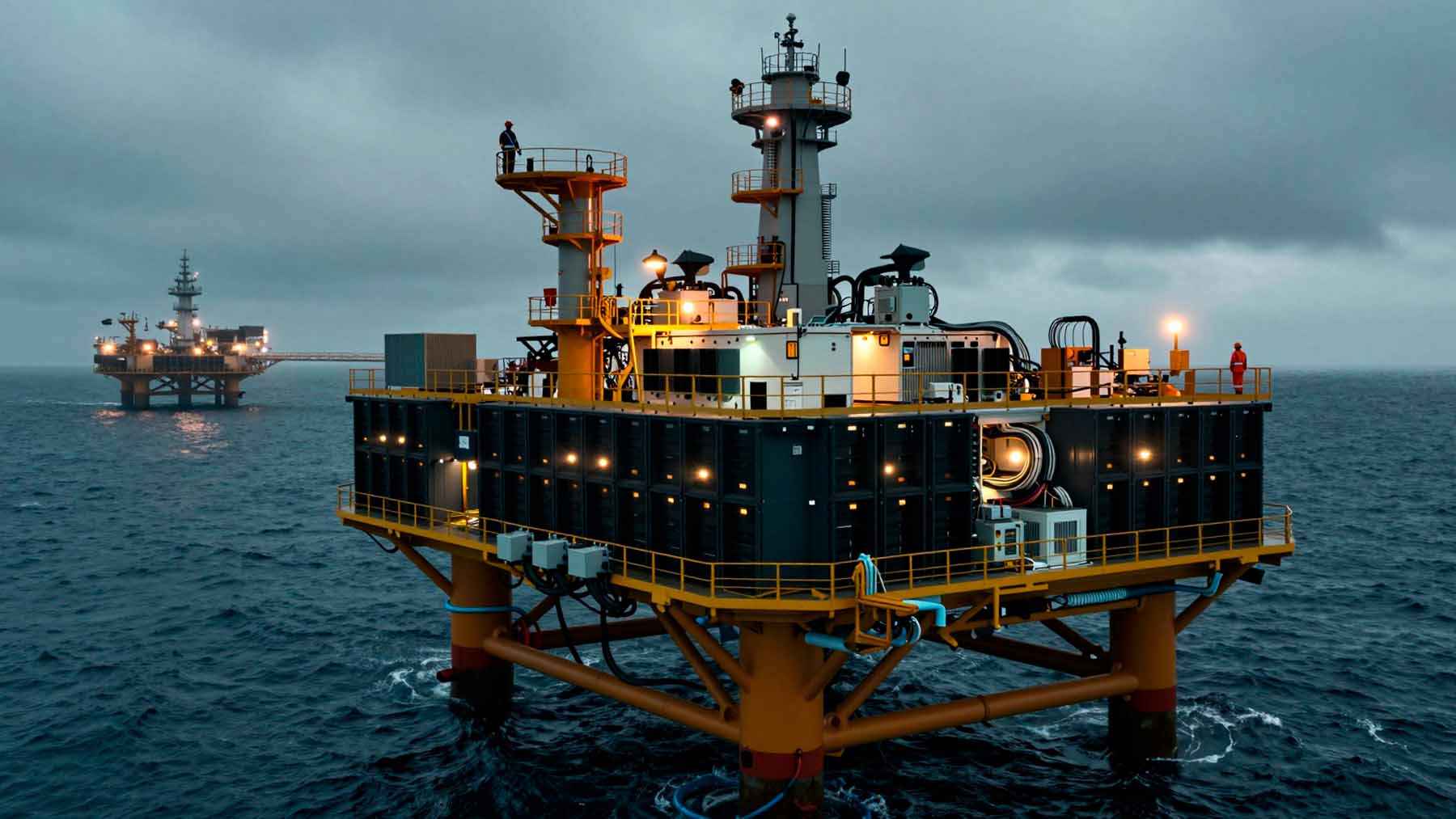
The artificial intelligence boom is running out of space on solid ground.
Data centers are expanding at a record-shattering pace. Local power grids cannot keep up with the massive electrical demands. Freshwater supplies are running dry, and local communities are actively fighting against the noise, heat, and ugly concrete buildings.
To survive, tech giants are looking toward open ocean waters.
Yet, operating at sea introduces a massive threat: in a business where every minute offline costs millions, the ocean is an unforgiving place to keep the lights on.
Placing server farms on floating sea platforms fixes almost every physical limit at once. Yet, operating at sea introduces a massive threat: in a business where every minute offline costs millions, the ocean is an unforgiving place to keep the lights on.
Why land is running out of room for AI
Data centers are the sprawling factories driving modern AI. Today, their extreme growth is hitting a hard brick wall on land.
Power grids take years to build extra capacity. Clean water supplies are vanishing in drought-prone areas. Neighbors living near existing server parks are pushing back harder than ever against environmental strains.
Moving offshore solves those land-based headaches immediately. Open ocean waters offer endless room to expand without facing local zoning battles.
The deep sea also provides a massive pool of natural cooling water, far away from overcrowded city grids. The need for a new solution is urgent. Training a single large language model causes sudden power spikes. Energy demands can violently swing by 30 to 60 percent within milliseconds, frying hardware that standard land centers were never built to handle.
Floating platforms are not new, but floating data centers are
Engineers are not starting from scratch here. The offshore energy industry has safely operated complex industrial hardware on the ocean for decades.
Floating Production, Storage, and Offloading vessels—known as FPSOs—have processed volatile oil and gas in brutal storms for half a century. The core marine technology is fully proven.
The real challenge is not surviving the water. It is maintaining absolute uptime.
Land-based hyperscale servers run on a strict “five nines” standard. That means they guarantee 99.999% uptime, allowing less than six minutes of total downtime per year.
Hitting that perfection on a floating barge exposed to salt spray, tossing waves, and high humidity is a brutal challenge. Still, using ocean water instead of air conditioning slashes total power use dramatically, helping offset the extra hassle of ocean life.
What a million-dollar outage looks like
In the tech industry, unexpected downtime is financially catastrophic.
Recent industry surveys show that one in five data center operators experienced an outage costing over $1,000,000. One in ten reported total operational chaos.
For AI training, an outage compounds costs fast. A brief glitch can erase weeks of complex calculations, forcing engineers to start over. Real-time chatbots and AI search engines face immediate revenue losses every second they go dark.
Offshore oil operators know this pain intimately. A stopped oil platform costs millions per day. That intense pressure created decades of safety disciplines, continuous backups, and rigorous technical standards.
Now, those exact same marine safety rules are being adapted for sea-based servers.
Predicting failure before it happens
Installing backup generators is necessary, but it is not enough on its own.
True operational survival requires finding rusted or degraded equipment before it snaps. The offshore oil industry mastered this art years ago using advanced “digital twins.”
A digital twin creates a live, identical virtual model of the ocean platform on a computer screen. Smart sensors monitor electrical health continuously, letting AI analytics spot microscopic stress before a physical breakdown occurs.
Organizations like the American Bureau of Shipping (ABS) already use these real-time digital twins to inspect oil rigs.
By applying this exact condition-monitoring tech to floating server parks, operators can fix a cooling pump or power line weeks before it snaps.
Designing for recovery, not just resilience
When something breaks at sea, the difference between success and disaster comes down to repair speed. Quick recoveries require meticulous advance planning.
Top offshore maintenance teams stock critical replacement parts right on the vessel before setting sail. They plot fast supply routes and train crew members to fix complex faults using live satellite links with land experts.
Floating data centers must adopt this exact same design mindset.
Server racks must be built with wide access pathways from the start. Mechanics cannot be stuck crawling through tiny spaces to swap a broken processor. Spare parts strategies must be drawn into the blueprints long before the platform ever hits the water.
What comes next
Merging ocean engineering with digital infrastructure is just beginning. The core technical tools already exist.
Major marine groups like ABS are officially updating maritime regulations to cover floating computer farms. The missing piece is building a clear, shared playbook between software engineers and sea captains.
As these ocean concepts move toward real construction, the ultimate test will not be whether a computer can float.
It will be whether tech companies can deliver flawless service year after year in the planet’s harshest environment. Oil companies spent fifty years figuring out how to conquer the sea. The AI industry must now learn those lessons at lightning speed.
And here is the hidden secret that makes this offshore gamble work.
Data centers burn millions of gallons of drinking water daily just to cool their supercomputers. By dropping these platforms directly into freezing ocean currents, operators get infinite, naturally chilled seawater for free.
The ocean instantly absorbs the extreme heat, slashing cooling energy costs to nearly zero while leaving precious water on land untouched.
Kelly is an experienced writer with 15 years of experience exploring the big stories that shape our world, from tech breakthroughs and space exploration to climate, energy, and the fascinating quirks of science. She has a talent for turning complex ideas into sharp, memorable insights that stay with readers long after they’ve finished reading.
