
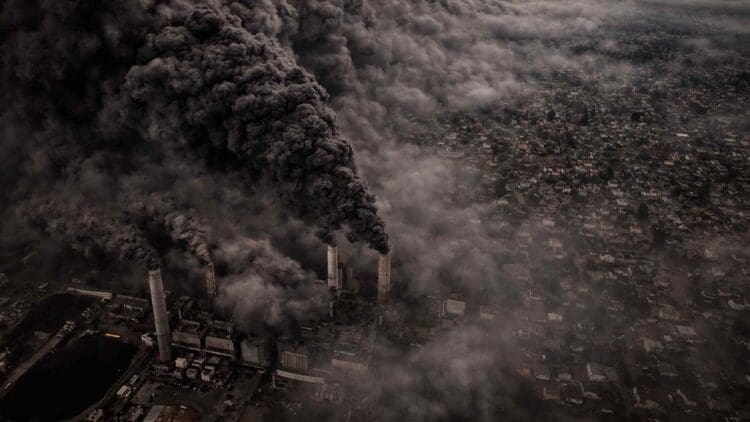

The moment that coal suddenly became vastly all-consuming.
Sometimes, small towns and communities do not survive for several reasons, and some of them are gloomier than others.
In one particular case, when the going gets tough, the tough was asked to go, leaving behind nothing but darkness.



How many communities must we lose before we finally put an end to the impact of fossil fuels like coal for good?
How the energy tug-of-war has set high stakes
The legacy of fossil fuels is a tough one to beat in today’s modern energy landscape.
At present, the global power sector is experiencing a significant tug-of-war between fossil fuels and renewable alternatives.
Massive fossil fuel-burning power plants were the steadfast titans of the grid. For decades, they were considered “too big to fail.”
Fast-forward to 2026, during which the green energy transition has become a mechanical necessity. With this need for clean power, a volatile tension has grown.
The global push for sustainability is now at odds with the financial and physical weight of aging giants.
However, it is about more than carbon emissions, as it entails the battle over the “footprint” of power.
Communities are in the middle of this tug-of-war, and nearly always have to pay the consequences.
When the stakes are high, a community’s survival depends on which side of the energy rope is pulled hardest.
It is not over until the fat lady sings
Despite the clear urgency of transitioning to renewable energy, some fossil fuels just do not know when to quit.
The era of coal-fired power has remained remarkably resilient in the age where green power is supposed to reign. In early 2025, China’s coal power expansion achieved a nine-year peak.
This proves that these aging giants are not fading away just yet, but rather are treated like valuable chess pieces.
Some federal regulators have approved the sale of these facilities to private equity firms to squeeze every last possible profit.
Even just keeping coal plants running under emergency powers creates friction with modern sustainability goals.
One particular plant is now fighting a legal battle against federal EPA mandates. No one is sure how long this final, volatile struggle will last.
As for the community in the middle, well, that one is unfortunately already long gone.
The all-consumed ghost town in Ohio is lost to maps everywhere
Some coal plants are being repurposed for green energy facilities, and others are trying to “scrub down.”
However, in the early 2000s, “something went terribly wrong” for the village of Cheshire, Ohio.
This is why Cheshire disappeared from maps
The General James M. Gavin Power Plant installed $600 million in “scrubbers” to meet environmental standards.
A chemical failure resulted in a technical byproduct. This caused sulfuric acid mist to condense into thick, “blue plumes” that refused to dissipate.
The air became a physical adversary, burning residents’ throats and scarring the paint on cars. By 2002, American Electric Power decided it was more cost-effective to “erase” the town rather than fix the atmosphere.
Residents were paid to leave and sign waivers not to sue for future health damages. $20 million and years later, Cheshire is a desolate ghost town in the shadow of 800-foot-tall smokestacks.
Today, the plant’s particulate pollution and leaking coal ash ponds continue to pose threats beyond the empty village.
Cheshire’s disappearance proves the fossil fuel footprint cannot be contained by a buyout. Instead, the mountain of environmental debt continues to grow despite legal battles.
The music is starting to fade for these giants, as hydrogen power plants replace coal generation. But change takes time, so how many communities will be erased in this seemingly endless tug-of-war?
Disclaimer: Our coverage of events affecting companies is purely informative and descriptive. Under no circumstances does it seek to promote an opinion or create a trend, nor can it be taken as investment advice or a recommendation of any kind.


