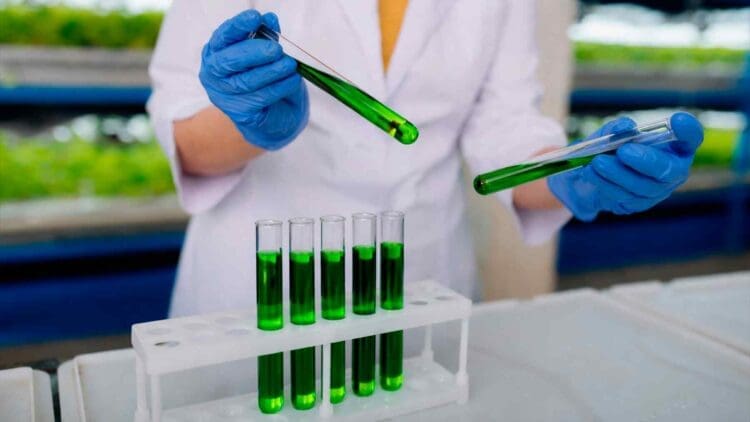

Nature’s photosynthesis walked for an in-lab experimental breakthrough to run.
In the race to achieve zero carbon emissions worldwide, global innovators have been seeking a “top athlete” with multiple abilities.
For some, it has been quite the marathon, with some experiments drafting behind, but one just hit a new PB.


Will this season’s “best performance” help achieve global energy goals in the long run, or will it hit a wall?
How fossil fuels remain the bandit in the green race
For years, gas, coal, and oil were the top-tier power producers globally, ensuring that the lights stayed on and more.
These sources had a good run, but when they started pushing too hard, “over-breathing” became a problem.
The world then got stuck with too much carbon dioxide, leaving everyone feeling breathless.
As the problem worsened over time, with several new global symptoms rising every few years, a new race began.
The push toward green energies and climate goals is the end goal, yet the “seasoned bandits” remain on track.
Several worthy opponents have been approached to overtake and beat fossil fuels once and for all. However, none have been entirely successful.
Most renewable energy technologies do not have the stamina to keep up with energy demands.
To prevent complete global exhaustion, what could finally set the pace and complete the race once and for all?
New entries that are gaining traction globally
Several nations have entered new contestants into the green race that are showing tremendous potential.
Among these entries are unique solar designs that change how the world harnesses this source.
In cities, space is extremely limited, which means more flexible athletes are needed to participate.
In Germany, highly colorful building-integrated photovoltaics (BIPVs) are giving black solar panels a run for their money.
This particular design proves brains, beauty, and brawn can be combined to present a feasible contender.
Meanwhile, others are more interested in a relay, where technology and mankind work together to win. Simply put, a floor could convert power walking into clean electricity, but this is still under development.
These building-integrated solutions will help prevent more overhyperventilation.
However, they do not help remove the residual carbon dioxide in the air.
This is why a science team from Julius-Maximilians-Universität (JMU) Würzburg and Yonsei University experimented with something else entirely.
The scientific breakthrough that could help the world sprint to the finish
The only way to disqualify fossil fuels from the global race is by entering athletes who remove them. The scientists turned to nature’s photosynthesis for this particular experiment.
The details are in the study “Photoinduced stepwise charge hopping in π-stacked perylene bisimide donor–bridge–acceptor arrays,” published in Nature.
Removing carbon dioxide from the atmosphere is one thing, but advancing it to “move” energy efficiently is another entirely.
This photosynthesis approach could become the new track star in the green race
Stacking dye molecules in a quadruple, known as pi-stacking, is the secret breakthrough.
This enables electrons to “hop” from the donor molecule over the “bridge” to the next, until they reach the “acceptor.” This is called “stepwise charge hopping.”
The layout itself directs the flow of energy forward, preventing power “leakage” prone to artificial photosynthesis.
The charge thus reaches the finish line, splitting water into hydrogen while eliminating carbon dioxide.
This particular approach is still in its infancy. However, it does make mastering the “internal breathing” of electrons easier.
This new personal best in photofunctional materials will soon be trained to perform with supramolecular wires. Its clean power will thus be transported over longer distances with great stamina.
It may not beat the seasoned bandits yet. But it does bring us one step closer to a true pollution harvester to win the race.