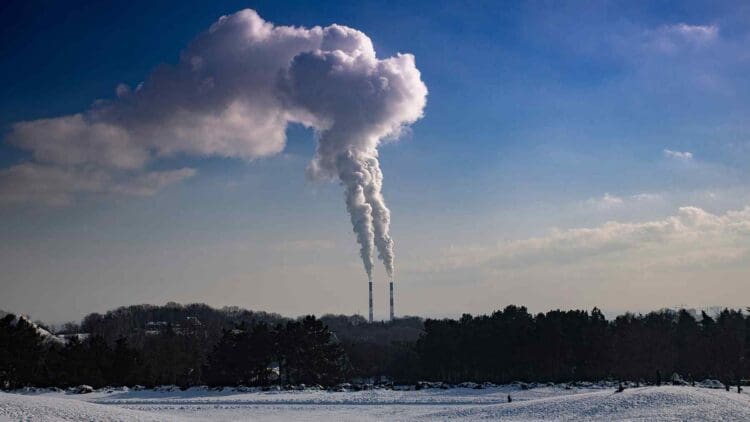

The Lone Star State has proven once again why it is known for “everything being bigger.” A billion-dollar mega-project will set the state and the U.S. on the right track to achieving net-zero emissions. Thanks to the project’s “pollution harvester,” a substantial amount of carbon will be removed from the atmosphere, showing what can be achieved when a little innovation is used. Could this be the solution to secure a clean future?
Pollution: An ongoing concern in the U.S.
Climate change is an ongoing global crisis, affecting nations worldwide. While we have long established the main causes of climate change, addressing them has proven challenging. One of the greatest contributors remains pollution, specifically air pollution. The burning of fossil fuels increases air pollution, and while several nations are transitioning to clean energy solutions, it remains an issue, even in the U.S.
Beyond worsening the effects of climate change, air pollution also significantly impacts air quality, which in turn affects human health. Increased ozone and particle levels in the air are detrimental, and while several measures have been taken to increase air quality in the U.S., millions of people continue to reside in areas with “F” grade air pollution levels.



Fortunately, the Lone Star State has invested in a project that harvests pollution, showing great potential to boost America’s air quality once and for all.
The Lone Star State is capturing pollution from the air
Several companies face challenges when it comes to pollution concerns, with some activities being deemed unlawful, as seen with Apache Corporation’s multi-million dollar pollution settlement. Now, the Lone Star State’s Occidental Petroleum has taken unique and somewhat costly steps to ensure operations meet the requirements of the Clean Air Act.
Ector County in Texas is the new home to a $1.3 billion direct air capture (DAC) project, formally known as the Stratos Project. OnePointFive is behind the development of the project, and it may be Texas’s smartest move yet, especially after the Trump Administration confirmed that the 45Q tax incentive would continue for carbon capture and private projects. However, the Stratos Project will be about more than mere carbon capture.
Capturing, storing, and repurposing 1,000,000 tons of carbon
Carbon capture is an innovative method for decreasing carbon emissions, especially as nations try to achieve their respective climate targets. Occidental Petroleum’s DAC project stands out, however, as it will reportedly capture 500,000 tons of carbon dioxide from the air, which will either be stored underground or repurposed for enhanced oil recovery.
Another DAC project could be in store for South Texas, as Occidental Petroleum is in negotiations with Abu Dhabi National Oil Company’s investment arm, XRG. The U.S. Department of Energy has already designated up to $650 million for such a project, and should the two companies become partners, the DAC project will initially be responsible for another 500,000 tons of carbon capture. This means Texas alone will be responsible for removing 1,000,000 tons of carbon dioxide emissions!
Occidental Petroleum’s CEO and president, Vicki Hollub, is particularly proud of the Stratos Project, as it is set to become the biggest DAC facility in the world. Hollub commented that:
“We believe that carbon capture and DAC, in particular, will be instrumental in shaping the future energy landscape.”
The Stratos Project was to commence commercial operations at the end of 2025, but official updates on its status have not been released to date. Nonetheless, the DAC project will play a vital contributing role in decarbonizing the carbon-heavy industry while boosting the local economy. In 2025, Wood Mackenzie hosted the third Carbon Capture, Utilization, and Storage Conference in Houston, showing that industry leaders, and Texas in particular, are set to reshape our future.
Disclaimer: Our coverage of events affecting companies is purely informative and descriptive. Under no circumstances does it seek to promote an opinion or create a trend, nor can it be taken as investment advice or a recommendation of any kind.