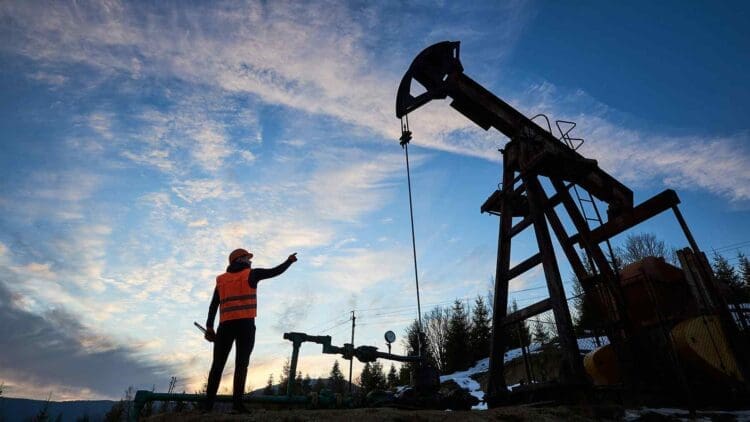

China’s shale oil production activities have accelerated in recent years as development efforts continue to evolve across several basins. When this occurs in a mature basin like Sinopec’s Bohai Bay, it tends to attract closer attention.
Bohai Bay’s role in Sinopec’s upstream portfolio
China’s crude oil production has relied heavily on the Bohai Bay basin for decades, where numerous offshore and onshore properties have provided a significant portion of the country’s oil production. Beyond fields like Shengli, many other existing producing areas in the basin make it a key area for redevelopment instead of new frontier exploration.
Because of this long production history, development activity in the Bohai Bay basin has increasingly focused on extending the productive life of existing assets rather than identifying entirely new producing regions. This has encouraged a gradual shift toward optimization‑driven development strategies within the basin.




In this context, technical focus has increasingly shifted toward shale oil development within mature hydrocarbon systems that also contain conventional reservoirs. These resources require drilling and completion methods that differ from conventional practices, making extensive testing and engineering refinement necessary before larger‑scale use.
Technical complexity shapes development decisions
There are several technical differences in extracting shale oil in China relative to the U.S. Specifically, greater depth, varying reservoir characteristics, and higher‑pressure regimes create greater technical risks and cost variability. According to analysts, full‑cycle costs associated with extracting shale oil in China are higher and more variable than comparable developments in the United States.
Innovation in the design and application of engineering processes has played a major role in advancing shale oil development in China. Drilling horizontally, placing wells across multiple layers, and applying three‑dimensional development technologies have all become essential tools for enhancing hydrocarbon recovery rates.
Each of these technological applications typically requires repeated validation under local geologic conditions, reinforcing the importance of pilot studies in mature basins such as Bohai Bay and the need for disciplined sequencing before larger‑scale development activities are pursued.
Evaluation programs in mature basins tend to prioritize data integration and performance benchmarking across wells. These efforts help operators better understand reservoir behavior while limiting long‑term exposure to technical and cost risks.
Pilot study results define shale oil’s role
The increase in Sinopec’s shale oil development activity in the Bohai Bay basin followed a successful pilot project in the Jiyang depression of the mature Shengli field. Reports indicated that the pilot confirmed the technical feasibility of shale oil production in the basin, leading Sinopec to plan further assessment and development.
At present, Sinopec’s efforts do not reflect a definitive commitment to large‑scale shale oil development. Instead, they are intended to expand internal assessments to determine whether previous successes can be technically repeated and integrated within its portfolio of mature producing fields.
During the pilot project, Sinopec extracted roughly one million metric tons of oil. The positive results led the company to plan expanded horizontal drilling and further development of multi‑layer and three‑dimensional technologies for the Bohai Bay basin. Sinopec officials have also indicated that the basin’s shale oil resource base is similar in scale to that of the Permian Basin in Texas.
Sinopec has indicated that further advances in engineering technology will be required to improve efficiency and reduce extraction costs. The company’s actions, therefore, reflect a staged approach to integrating shale oil into overall production planning rather than a rapid increase in shale oil output.
Shale oil’s role in sustaining output in mature basins
Increased shale oil–related activities by Sinopec in the Bohai Bay basin represent a shift away from pilot validation toward a more systematic development plan within a mature producing region. Shale oil is therefore being positioned as a stabilizing resource to help sustain production as conventional reservoirs continue to decline.