
Sitting idle on Lake Ontario’s shore for more than 40 years after one energy dream collapsed, a 1,300-acre site just accepted $4.5 million and a promise that rewrites what “world’s largest” has ever meant for a Canadian town
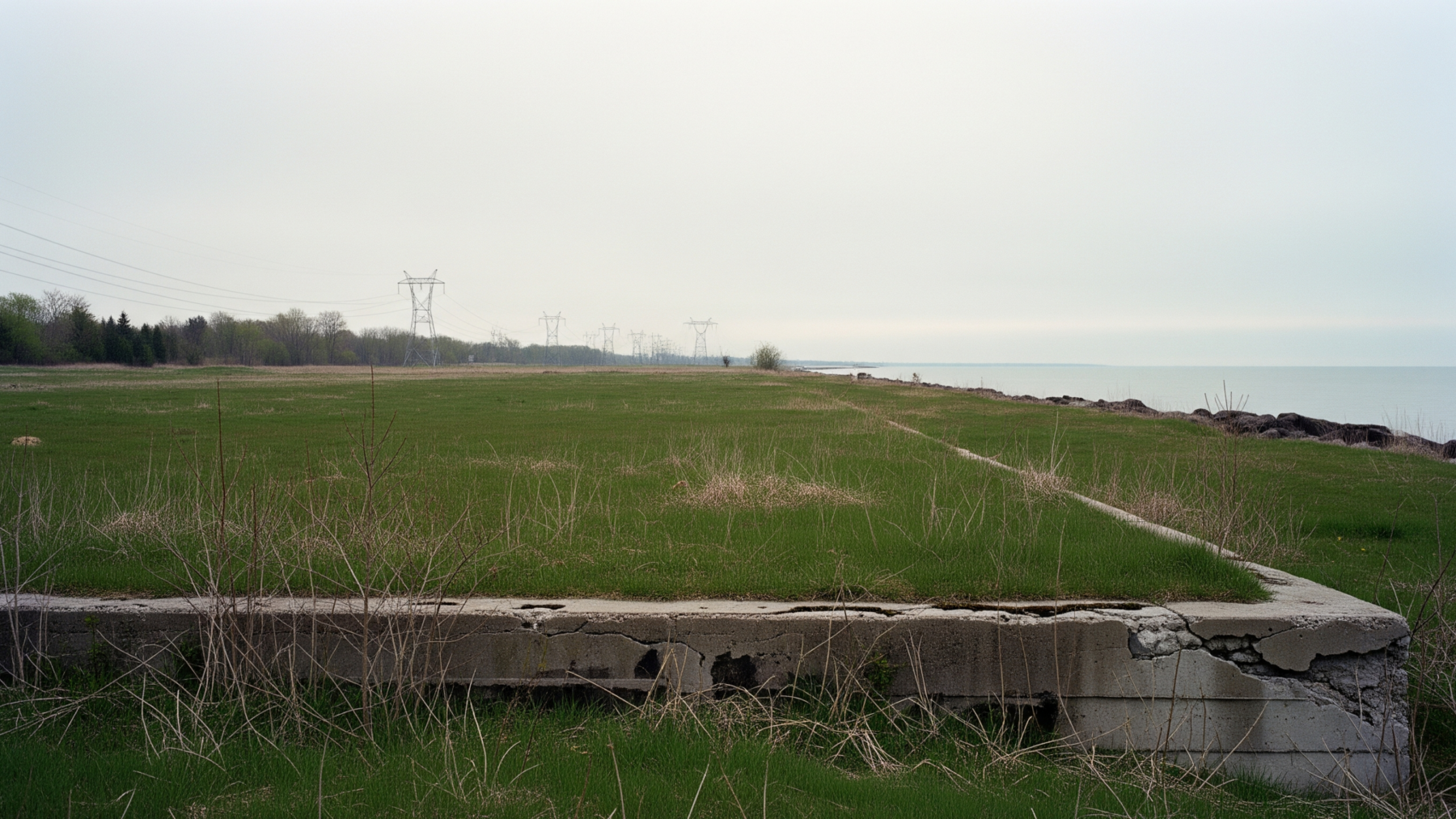
On the grey shore of Lake Ontario, about 75 miles east of Toronto, a stretch of flat ground has been waiting since the 1970s for something to happen to it. Forty years of empty. Forty years of pylons going nowhere and a concrete foundation that never became a power plant. Then, on a February morning in 2026, a mayor and a utility executive sat down at a table in a town called Port Hope and signed their names.
A site that has been ready since before most engineers were born
The Wesleyville site was originally set to host an oil fired station in the 1970s, built but never made operational as energy economics shifted and the province’s appetite for that kind of plant evaporated. The land sits near existing transmission, road and railway infrastructure and is already zoned for new electricity generation, meaning the bones of an industrial future have been in place for half a century.
Ontario Power Generation maintained the 1,300-acre property through all four idle decades. Property taxes kept flowing, security fences kept standing, and the utility held the land classified as a potential generation site even as every nearby community forgot what it was originally for. The site also has direct access to Lake Ontario for cooling water, a practical detail that quietly kept it near the top of every shortlist for large scale generation.
The concrete went in, the pylons went up, and then the economics of oil fired generation shifted and the project died before a single megawatt reached the grid.
What a town accepts when the energy industry comes calling twice
Port Hope is not a large place. Its roughly 17,000 residents know their municipality’s name from a different chapter of nuclear history: the town spent decades managing low level radioactive waste left over from early uranium processing, a cleanup that cost billions and defined a generation of local politics. Accepting another nuclear proposition required a careful calculation about jobs and future tax revenue.
Ontario’s agreement includes $4.5 million in growth readiness funding to support the community’s preparation as a potential host municipality. That money covers hiring staff, navigating the federal impact assessment process, and engaging residents. The town is not saying yes to a reactor; it is saying yes to the process of deciding whether to say yes, which on that particular shore is not a small thing.
The number that stopped every conversation in the room
The 1,300-acre site has the potential to host up to 10,000 megawatts of nuclear generation, enough to power about 10 million homes. That figure requires a pause. Ten gigawatts on a single site would make Wesleyville roughly twice the capacity of the Bruce Nuclear Generating Station on Lake Huron, currently the largest operating nuclear plant in North America.
The project is expected to support 10,500 jobs across Ontario while contributing CAD $235 billion to the province’s GDP over its lifespan. For a municipality that has spent decades managing the legacy costs of one industrial era, that projection lands differently than it might elsewhere. The town has seen what a broken promise from the energy industry looks like, up close, in contaminated soil.
What Wesleyville really is, and why the ground beneath it carries a double meaning
The deeper story at Wesleyville is that the land itself is already a monument to an abandoned energy ambition. The concrete went in, the pylons went up, and then the economics of oil fired generation shifted and the project died before a single megawatt reached the grid. What OPG is now proposing for the site is its precise opposite: a station designed to operate for 78 years and anchor Ontario’s grid for generations.
OPG CEO Nicolle Butcher said the milestone was “a testament to the strength of our relationship with this community,” adding that working with Port Hope would ensure the municipality could “engage fully on behalf of its residents” in what she called a multi year process. Much as Linn County secured its own voice before agreeing to host a restarting reactor, Port Hope is using readiness funding to negotiate from knowledge rather than need.
The long regulatory runway ahead is not trivial. Ontario’s broader nuclear expansion already includes refurbishments at existing stations and four small modular reactors at Darlington, and Wesleyville sits at the far end of that queue, the most ambitious item on a list that is already the most ambitious nuclear building program in North America.
A 1,300-acre field, a signed page, and what comes next for Port Hope
Ontario Energy Minister Stephen Lecce said the agreement was “an important step forward as we build the world’s largest nuclear station, creating over 10,000 good paying jobs and reliable power for up to 10 million homes.” The language is present tense and declarative, the language of a government that has decided.
The reality on the ground is more measured. No reactor type has been chosen, no federal approval granted, and the impact assessment process has only just begun. For Port Hope, $4.5 million is a preparation fee for a conversation that may last a decade. The town accepted that fee knowing exactly what empty ground looks like after an energy company changes its mind, because that ground is still there, west of the town limits, right where the oil plant used to almost be. If Wesleyville’s second chance arrives, it will be the largest nuclear station the world has ever built, and on that shore, that may be the most honest thing an energy agreement has ever offered.
Hugo is an engineer with strong technical expertise. Multilingual from an early age, his writing combines technical clarity with a strong interest in science and energy.
