
When countries step back from a technology, it rarely happens quietly. There are speeches, debates, and strong opinions. But sometimes the loudest move is simply saying “we don’t need this” and walking away.
That is exactly what seems to be happening right now. While one major player is pulling the brakes, others are not slowing down at all. In fact, they are speeding up. And the gap between them is growing faster than many expected.
A growing energy source caught in politics
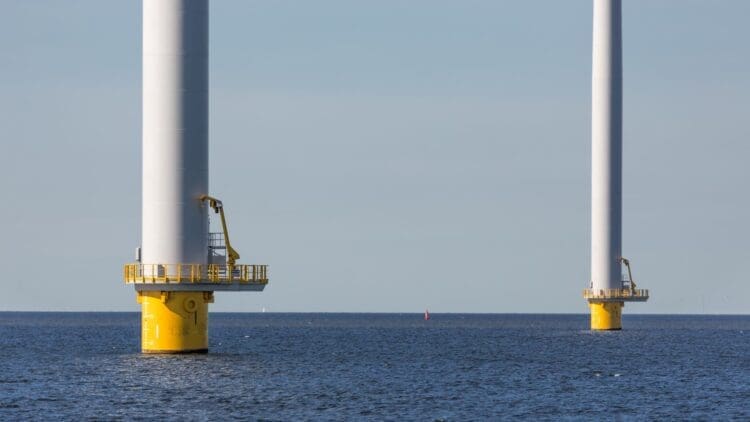
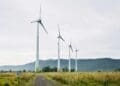
Around the world, wind power is expanding rapidly. New projects are planned, old ones are upgraded, and capacity keeps climbing. According to global forecasts, wind energy is set to add massive new capacity in the coming years.
In the United States, however, the story looks very different. Wind power has become politically charged. Projects are delayed. Permits are paused. And uncertainty hangs over an industry that was once seen as a key part of the clean energy transition.
Instead of growth, the focus has shifted to resistance.
When ideology slows momentum
The Trump administration has made its position clear. Offshore wind projects were paused, citing national security concerns, high costs, and visual impact. More projects now face the risk of cancellation.
This has created tension inside the country. Several U.S. states still support wind energy and are pushing back legally. They see wind not as a threat, but as an opportunity for jobs, energy security, and long-term stability.
But while the debate continues, something important is happening elsewhere.
Others move ahead while the U.S. hesitates
Outside the United States, the question is no longer whether to build wind power, but how fast and how big. Energy companies and governments are making long-term plans, signing contracts, and locking in supply chains.
This is not about symbolism. It is about control of future energy systems, industrial leadership, and economic influence. And one region, in particular, is making a bold move.
Europe quietly forms a united front
A major European renewable energy company has joined forces with partners across six countries to expand wind capacity on a large scale. Together with a leading turbine manufacturer, the plan includes hundreds of new turbines and hundreds of megawatts of new capacity.
The target countries include Austria, Germany, Spain, Italy, Romania, and Albania. One country is notably missing from the list.
The United States.
Even though the turbine supplier has manufacturing operations in America, the expansion strategy points elsewhere. The message is subtle, but clear. Europe is moving forward without waiting.
This is where China enters the picture
As Europe accelerates, attention is now turning east. China is the world’s largest wind power producer and manufacturer, with hundreds of gigawatts already installed.
European energy companies are actively deepening partnerships with Chinese firms, not only in wind, but also in solar and grid technology. Deals are being signed. Capacity is being secured. Long-term cooperation is expanding.
While the U.S. debates whether wind power belongs in its future, China is being invited to help shape it.
A decision that may echo for decades
Energy transitions are not just about electricity. They decide who builds, who supplies, and who leads. By stepping back, the U.S. risks losing influence over a technology that could dominate Europe’s energy mix by the end of the decade.
Analysts already predict that wind power could overtake solar as Europe’s main clean energy source by 2030. If that happens without American participation, the consequences may extend far beyond power generation.
America said “without us.”
The world did not wait.
And that choice may prove far more costly than expected.