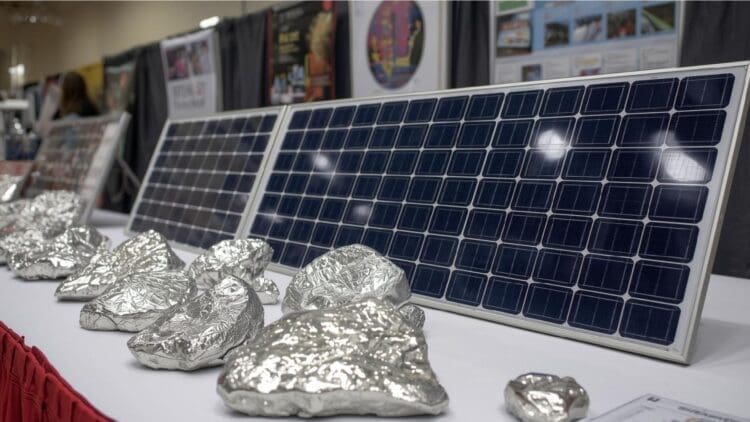

One renewable source has become a standout success in the clean-energy transition, with rapid deployment and strong public support. Yet a significant constraint is emerging: this metal is becoming increasingly scarce, as it is a crucial component in most modern solar panels. Electricity demand continues to rise, and older installations are approaching the end-of-life. As a result, securing and recovering silver is now a strategic priority across production and recycling.
Silver’s role in photovoltaic and the rising materials constraint
Fine threads inside solar cells rely on this silver because it carries current while resisting rust. With more panels being installed on rooftops and fields, the demand for the shiny metal is increasing – driven by its quiet role under glass. As panels multiply, so does the thirst for silver.
Now, suppliers are feeling pressure as solar panel manufacturers, gadget builders, jewelers, and financiers all compete for the limited silver supplies. As a result, buying plans are shifting rapidly, while prices fluctuate and shortages emerge unexpectedly.

The problem, however, extends beyond manufacturing new panels. In the coming years, tons of outdated solar units will wear out quickly, resulting in waste rich in silver – yet today’s methods cannot recover it easily or affordably. Often, silver is lost when old systems are scrapped, despite efforts to reclaim it. Pulling out the remaining silver usually requires costly chemical processes that harm the environment. Researchers at the University of Newcastle may have a promising solution that could relieve this bottleneck.
Newcastle’s physical recovery pathway for disused solar panels
Finding new life in old solar panels might be simpler than expected. Not far from the coast in Australia, a team digs into trash to pull out treasure. Silver hides in the waste that has been discarded from panels that have been tossed aside when their power fades. Instead of harsh liquids, they shake and sort materials quickly.
This approach grabs nearly all the silver without chemical help
Speed meets low cost here. The work originates from minds at the University of Newcastle. Associate Professor Mahshid Firouzi guides the effort where waste turns into worth. Most silver escapes recycling today. Their technique changes that quietly. Panels give up metal through movement alone.
Breaking things down comes first – crushing old waste into dust through grinding machines. This method skips chemicals entirely, relying instead on tools already used in mining work. Once ground up, the mixture goes into water, turning into a thick liquid soup. Air seeps in below, forming bubbles that carry certain bits upward. What sticks to those rising bubbles tends to be useful stuff; everything else drops. Floating layers get skimmed off later, leaving behind what is not needed.
Advancing circularity through high-yield silver recovery
Speed improves when waste reduction increases. Less harm shows up where it counts. Efficiency rises without the usual cost. Cleaner results happen by design, not chance. Froth flotation works fast, pulling metals out in minutes instead of taking hours like chemical methods. Without needing harsh substances, it eases harm to nature and cuts expenses at recycling sites too.
A single solar panel usually holds about 20 grams of silver
Recovered silver strengthens circular supply chains and reduces mining dependency. Multiply that by the massive amount of panels due to retire in twenty or thirty years, and you’ve got a serious volume of metal ready for recycling into new solar equipment.
With solar power spreading worldwide, getting back key parts like silver matters more every year for lasting growth. A study out of Newcastle shows it is possible to pull useful stuff from old solar panels efficiently. This method points to a smarter way of reusing what we already have instead of always needing new resources. Scaling this solution safeguards solar sustainability and stabilizes material costs.