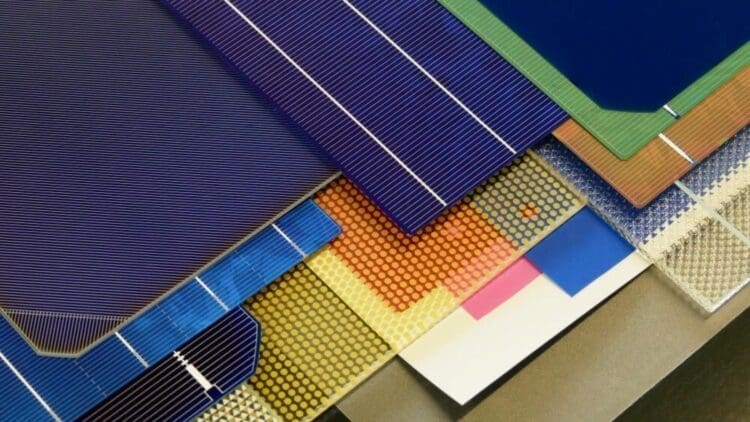

Sustainable technologies have become highly sought-after in recent years. Solar energy, in particular, is a popular clean power source. However, as black solar panels spread across the globe, more people are becoming concerned about visual impact. Now, Germany has decided to rethink photovoltaics, proving that we have been wasting our time and that red, green, blue, and even purple solar panels are the future. Their inspiration? Why, nature, of course!
We are wasting our time with black solar panels
German experts believe that we are wasting our time with black solar panels, as they no longer fit the picture of what consumers truly desire when it comes to photovoltaics. For years, researchers and engineers have focused on achieving the highest possible solar panel efficiency, and some of the more advanced designs led to quite remarkable achievements.
However, very few have considered rethinking how these black solar panels impact buildings and onlookers visually. Many argue that black panels integrate perfectly into modern buildings, opting for the sleeker, more futuristic look. Nonetheless, just as people have different personalities, their personal tastes also differ. For some, the traditional black panels are just an eyesore, standing out like a sore thumb, despite their contribution to lowering carbon footprints.

Now, Germany is looking towards the future, and after rethinking the possibilities of photovoltaics, that future is bright and colorful.
Germany proves it and rethinks photovoltaics
A German company, the Fraunhofer Institute for Solar Energy Systems (ISE), has proven that people are no longer merely interested in high efficiency when it comes to choosing solar technology, but also value aesthetics. That is why Fraunhofer has created photovoltaics that offer us the best of both worlds, as its Building Integrated Photovoltaics (BIPVs) literally disappear into any building without compromising output.
BIPVs were a niche market, but since the release of several innovative designs, such as “rainbow” solar glass that prevents noise and creates heat, it has become increasingly popular, particularly in urban regions. The greatest challenge in urban regions is the lack of adequate space to install the big, traditional solar panel technologies. Now, thanks to BIPVs, clean power production is more accessible and aesthetic.
Fraunhofer’s Dr. Thomas Kroyer, Dr. Oliver Höhn, and Andreas Wessels developed a colorful photovoltaic technology inspired by nature, and their technology features several colors, including red, green, blue, and even purple.
Featuring red, green, blue, and even purple
It is not uncommon for researchers and engineers to draw inspiration from nature. Morpho butterflies served as Fraunhofer’s muse when it came to creating its pioneering MorphoColor Technology. According to Dr. Kroyer:
“The 3D photonic structures on a morpho butterfly’s wings allow for an intensive, angularly stable colored impression thanks to a fundamentally low-loss interference effect.”
Thanks to this muse, they developed a vacuum coating method, during which a related surface structure is added to the back of the solar panels’ glass cover, and several colors are achieved. Furthermore, according to Wessels, the MorphoColor Technology coating can produce 95% of the power of a similar uncoated panel. Other benefits of the technology include:
- Low-cost production
- Plug-in solution that can be integrated with all other commercial solar technologies
- Complete visual integration
Fraunhofer’s MorphoColor Technology has been made available in several countries, including the U.S., and Megasol Energie AG received a license in 2023 to establish the pioneering German technology in the market. Fraunhofer has been focused on developing its photovoltaic technology for application in vehicles, integrating these colorful solar panels into car roofs and hoods. Other unique BIPV designs to keep an eye on include the Swiss glass solar roof design that produces up to 400 kW with “hydraulic heat capture.”
Disclaimer: Our coverage of events affecting companies is purely informative and descriptive. Under no circumstances does it seek to promote an opinion or create a trend, nor can it be taken as investment advice or a recommendation of any kind.