
Not all superheroes wear capes, and they may even come forth when you least expect them.
In the world of solar energy, a new solar panel technology has emerged with super solar power.
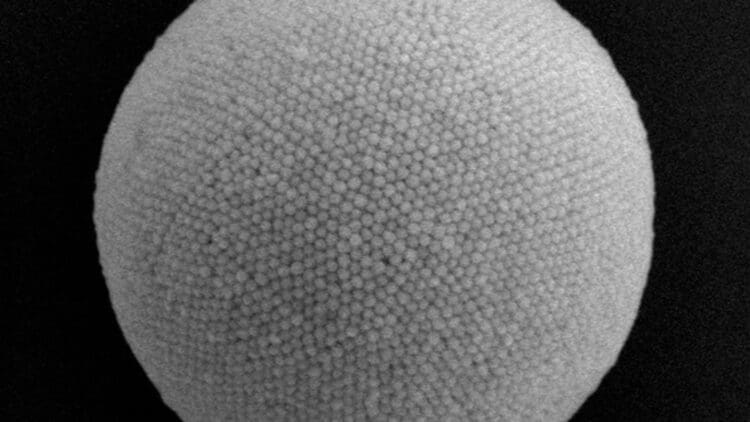
Thanks to the superhero plasmonic “superballs,” the challenges often faced by most conventional solar panels can be defeated.



It is not just super new, but is also nano-sized, golden, and has entirely unexpected properties beyond all measure.
How solar power is evolving to save the world
The solar energy industry has become climate change’s ultimate rival. It is the number one installed global capacity, and thus the popular choice among most consumers.
However, solar energy’s journey to where it is today was a wild one.
Nearly two centuries ago, the first spark was created by a young Edmond Becquerel during electrolytic cell experimentation. A few decades later, Charles Fritz combined selenium and gold to manufacture the first solar cell ever.
This cell’s efficiency did not even reach 1%, but it opened the door to a solar evolution.
Slowly but surely, solar cells evolved to become more efficient and powerful than ever before.
Today, solar power is significantly more powerful, but its evolution is far from over. A new technology has emerged to do what no other design has done before.
It used to be impossible, but now, various spectrums of light, visible and invisible, can be absorbed. This has become the ultimate superpower in the solar industry.
The future of solar panels looks slightly different
The most common solar cell design on the planet is silicon-based solar cells. These cells, or photovoltaics (PVs), are central to the flat solar panels found at most solar farms.
Ever since the “Silicon Revolution” in 1954, scientists have developed a growing obsession with increasing solar efficiency. Fraunhofer is even nearing the theoretical limit of solar panels.
So what exactly does the future of solar panels look like?
Some believe that using tandem materials is key to achieving higher and more stable efficiencies. Perovskite-silicon tandem panels are already at 25% efficiency.
Others believe that exploring other solar materials is the true answer for solar’s future. Australian researchers have unveiled kesterite as the game-changing solar material.
Yet, an even stronger, more “super” contender has been revealed as the future of solar power.
The study “Tiny gold spheres could improve solar energy harvesting,” published in the American Chemical Society, unveiled this contender.
Golden plasmonic “superballs” and their unique superpower
Solar absorption is fundamental to solar efficiency. Typical PVs can only absorb and convert visible and some of the near-infrared wavelengths in the light spectrum.
Some experts have explored using GDPT, a metamaterial, to absorb four times more solar energy.
However, this study’s research team used gold nanoparticles in self-assembling superballs to capture additional wavelengths. Predictions from computer simulations indicated that these gold superballs should absorb 90% solar wavelengths.
The next step was creating this super PV cell.
The gold superballs were contained in a liquid and then added to a thermoelectric generator (TEG) in ambient conditions. An LED solar demonstrator was added, and together, the solar absorption was averaged at 89%.
“Ultimately, this coating technology could significantly lower the barrier for high-efficiency solar-thermal and photothermal systems in real-world energy applications” – Seungwoo Lee, research team member
These nano-scaled PVs give a completely new definition to “dynamite that comes in small packages.”
By increasing absorption across the solar spectrum, power output becomes nearly 2.4 times higher.
This proves that superheroes do come in all shapes and sizes, and do not require a cape.
While the design may only be limited to thermal-based systems, its potential impact is profound nonetheless.
From solar glass panels in all colors of the rainbow, to the super power of golden superballs. What will they think of next?