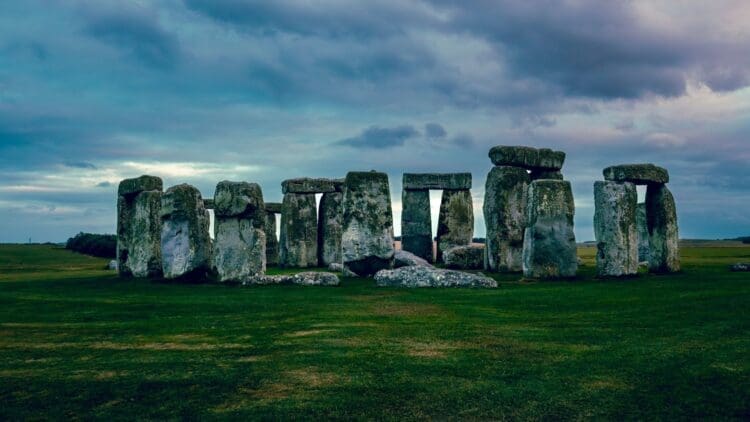

When people hear the word Stonehenge, they usually picture fog, green fields, and ancient stones standing quietly in England. Something old. Something serious. Something frozen in time.
Now imagine saying goodbye to that image — and replacing it with sunlight, sound, and glowing stones in the middle of nowhere. It sounds unreal at first. Almost like someone mixed history with science fiction.
Humans have always chased the sun
Long before electricity, humans watched the sun closely. It guided seasons, rituals, and architecture. Ancient structures were built to track light, shadows, and time. Stone circles weren’t random. They were tools, symbols, and stories carved into the landscape.
That obsession never really disappeared. It just changed shape. Instead of stones and shadows, we now use panels and batteries. The goal, however, is still the same: understanding and using the sun.



When ancient ideas meet modern curiosity
Most ancient stone circles were silent. They stood still and let people interpret them. Modern versions don’t have to stay quiet.
Artists today ask different questions. What if stones could react? What if sunlight didn’t just mark time, but created an experience? What if an ancient concept could be reimagined using modern energy?
Those questions led to something unexpected.
A strange circle that wakes up at night
Somewhere far from crowded cities, a group of dark stones sits in a perfect circle. During the day, they look calm and still. Nothing moves. Nothing glows.
Then the full moon arrives.
Light appears. Sound follows. The stones seem to wake up, responding to energy collected earlier. Visitors don’t just look — they listen, feel, and pause. It feels less like an exhibit and more like a quiet ritual.
This isn’t England — this is Texas
This modern “Stonehenge” stands outside Marfa, Texas, in open desert land. The artwork is called Stone Circle, created by British artist Haroon Mirza.
The installation includes eight black marble stones arranged in a circle and one larger “mother” stone placed nearby. That mother stone hides solar panels and batteries, which store energy during the day.
The energy powers LED lights and speakers embedded in the stones, activating them during the full moon.
Why this solar Stonehenge matters
This isn’t about replacing the original Stonehenge. It’s about reimagining its spirit. Instead of tracking the sun silently, this circle responds to it.
The artwork was commissioned in 2018 by Ballroom Marfa and is part of Mirza’s Solar Symphonies series. Its goal isn’t electricity production, but awareness. It turns renewable energy into something people can experience, not just measure.
Solar power becomes light. Light becomes sound. And technology becomes art.
A future where energy feels human again
Stone Circle shows that renewable energy doesn’t have to be hidden on rooftops or locked inside machines. It can be visible, emotional, and shared.
By blending ancient inspiration with modern solar power, this Texas Stonehenge invites people to rethink what clean energy can be. Not just efficient. Not just necessary. But meaningful.
So yes — say goodbye to England’s Stonehenge.
Something different has appeared under the Texas sun, and it feels strangely alive.