
Spain and Portugal lost power for nearly an entire day, and now they are turning water into a giant battery to stop it happening again
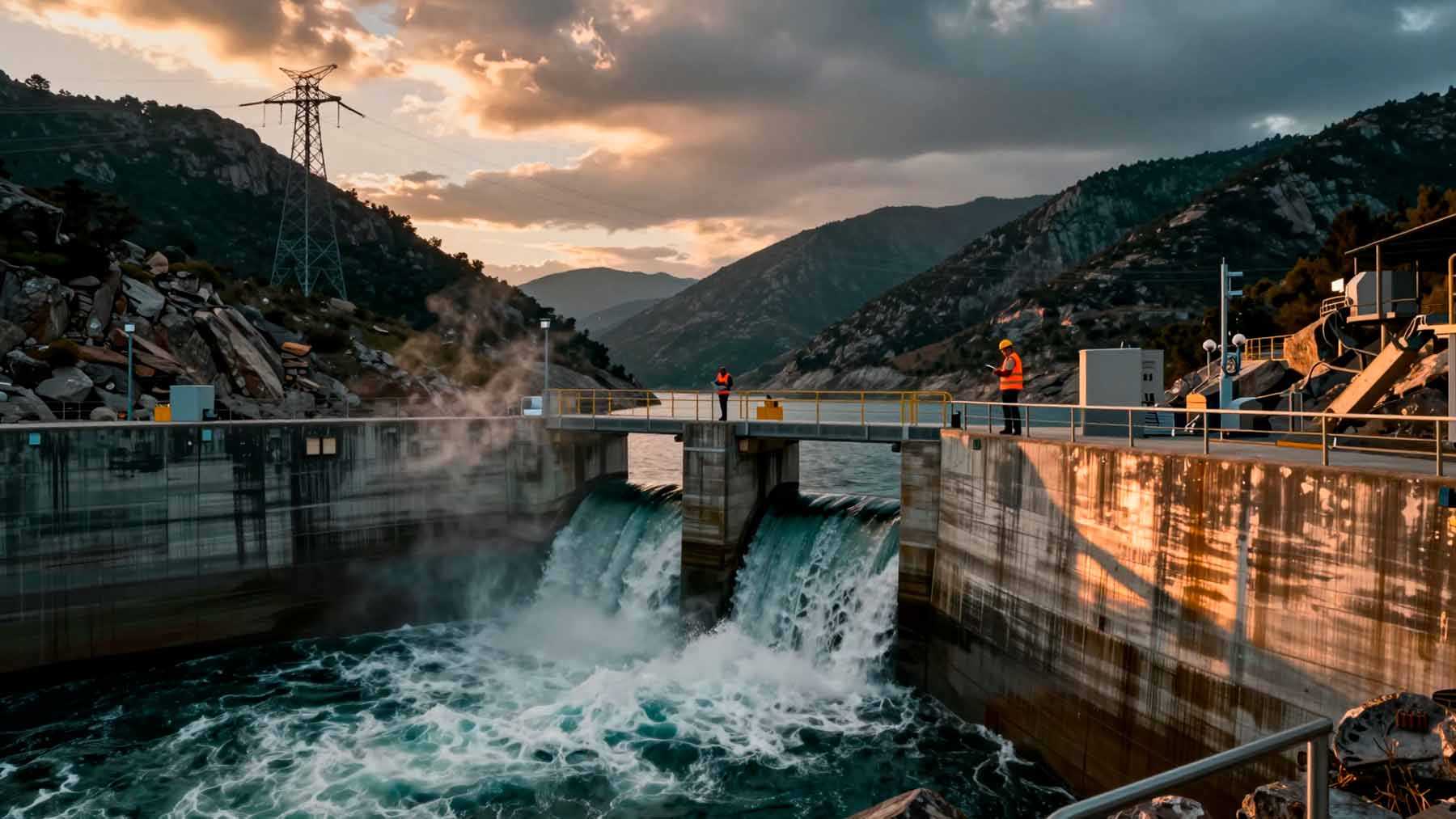
In late April 2025, the lights went out across Spain and Portugal at once. The blackout — abrupt, widespread, and lasting the better part of a day — exposed just how fragile an interconnected grid can be when something goes wrong at scale.
Since then, both governments have moved faster than most expected. Their latest announcements, totaling 3.5GW of new pumped hydro storage capacity, signal something larger than emergency response: a coordinated, long-term bet on water as the backbone of Iberian grid resilience.
A blackout that changed the policy calculus
The April 2025 blackout wasn’t just an inconvenience. It was a stress test the Iberian grid failed publicly, cutting power to millions and forcing both governments to confront a hard truth: high renewable penetration without adequate storage is a liability.
Combined, they account for 3.5GW of new long-duration capacity — a number that would have seemed unlikely to materialize this fast before the lights went out.
The policy response came quickly. Spain passed a grid resilience decree, accelerated EU-backed battery grants, and launched a new capacity market. Portugal committed to major grid management investment. Both countries made clear that storage — at every timescale — would move from background priority to front-line policy.
The new pumped hydro commitments are the latest, and most ambitious, step in that accelerated timeline. Combined, they account for 3.5GW of new long-duration capacity — a number that would have seemed unlikely to materialize this fast before the lights went out.
Spain’s $188 million push: seven projects, 2.1GW, six regions
Spain’s Ministry for Ecological Transition (MITECO) has awarded €165 million ($188 million) in grant funding to seven pumped hydro storage projects. The money flows through the EU’s NextGenerationEU programme, channeled via Spain’s Recovery and Resilience Plan.
The seven projects span six regions: Andalusia, Asturias, Aragon, Extremadura, Catalonia, and Galicia. Together, they’ll add 2,071MW of installed capacity and enable 21GWh of energy storage. Most of the funding supports entirely new plants, though one existing hydropower facility will receive upgrades.
This funding round falls under the BORALMAC 2 programme, whose budget was expanded from an initial $102 million after applications exceeded expectations — a sign of how much developer appetite exists for these projects. BORALMAC 2 builds directly on its predecessor, which awarded $113 million to four projects and unlocked roughly 2GW of pumped hydro capacity. Both rounds sit within Spain’s National Energy and Climate Plan, the country’s framework for meeting its EU decarbonization commitments.
Portugal’s national storage strategy: a roadmap to 5GW by 2040
Portugal is approaching the challenge differently — not through a single funding round, but through a comprehensive National Energy Storage Strategy that maps out storage ambitions decade by decade.
The headline target: expand pumped hydro capacity from 3.6GW today to 5GW by 2040. That breaks down as 3.9GW by 2030, adding 300MW in the near term, then a further 1.1GW over the following decade.
The International Hydropower Association called the strategy “a landmark initiative, representing one of the strongest national policy commitments to long-duration energy storage seen in Europe.” It’s a notable characterization, given how many European countries have been slow to formalize storage targets at this scale.
Portugal’s strategy doesn’t stop at pumped hydro. The government is also launching a tender for 750MW of standalone battery storage and 300MW of renewables-plus-storage projects — pairing long-duration ambition with near-term flexibility.
Why pumped hydro, and why now?
Pumped hydro works by moving water uphill when electricity is cheap or abundant, then releasing it through turbines when demand — or prices — spike. The concept is simple, but the practical advantages are substantial: massive storage capacity, long operational lifespans, and a natural ability to provide multi-hour or even multi-day storage that batteries currently struggle to match economically.
Those strengths come with a real trade-off. Pumped hydro projects take years — sometimes decades — to permit and build, which is exactly why battery storage has surged globally. Last year, battery systems overtook pumped hydro in total installed gigawatt capacity for the first time, with speed and scalability making them the default choice for most new storage projects.
The Iberian Peninsula’s situation shows why batteries alone aren’t the full answer, though. Short-duration storage can smooth intraday fluctuations; it can’t backstop a grid through extended periods of low renewable generation. That’s where pumped hydro earns its place. Given the scale of each project, every one that progresses “moves the needle significantly” — and Spain and Portugal are betting that needle-moving is exactly what their grids need.
A broader grid resilience push across the Iberian Peninsula
The pumped hydro commitments don’t exist in isolation. What’s emerging from both countries is a deliberate two-track approach to post-blackout resilience.
On the battery side, Spain has accelerated EU-backed BESS grants, funded domestic battery manufacturing, and introduced a capacity market. Portugal committed €400 million ($455 million) to grid management improvements after the blackout and had already awarded $113 million to 43 BESS projects totaling 500MW back in January 2025. The long-duration track — the new pumped hydro investments — fills the gap that batteries can’t yet cover cost-effectively at scale.
Taken together, these moves suggest both governments now see storage not as a supplement to the grid, but as structural infrastructure, as essential as transmission lines. Whether permitting timelines and construction capacity can keep pace with the political momentum the blackout created remains the open question. If they can, the Iberian Peninsula could become one of Europe’s most storage-rich grids within the next 15 years.

Carlos is an engineer with strong expertise in technical and industrial topics. He previously worked at international companies such as Siemens and is multilingual.
