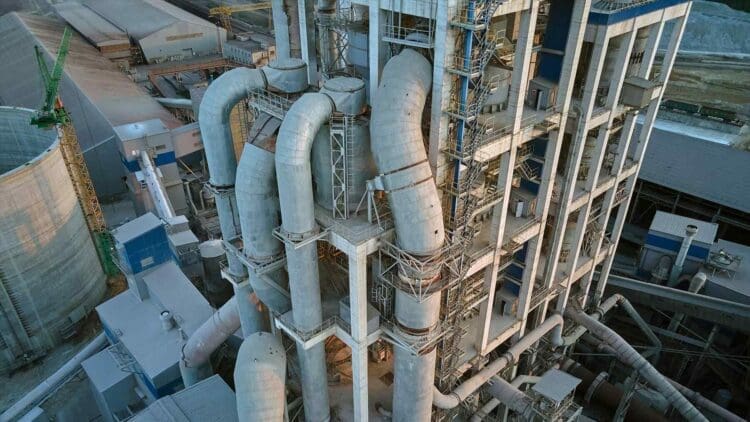

As we discuss Canada’s natural gas transportation system on a macro level (the scale), there are micro-level factors that impact the overall reliability. TC Energy’s upgrades to the Canadian Mainline represent those micro-factors. Instead of developing larger capacity pipelines to address increasing production levels, the upgrades will support TC Energy’s primary goal of ensuring that the Canadian Mainline can continue to meet future supply and demand trends.
A long-distance and long-horizon natural gas transmission system
The Canadian Mainline is a major natural gas transmission corridor that spans more than 14,000 km. It provides connectivity between Western Canada’s producing areas and natural gas consumers throughout the Prairie Provinces, Eastern Canada, and portions of the U.S.
The system has been a cornerstone of Canada’s natural gas industry since the early days of commercial development; however, as both production source locations and market requirements have changed, so too has the system itself.



TC Energy has continued to reinforce this adaptability with recent upgrades focused primarily on increasing system efficiency and operational flexibility. These upgrades were completed by optimizing pipeline throughput, modernizing aging infrastructure, and improving operational flexibility — rather than building additional long-haul transmission lines.
Targeted upgrades within existing footprints
In many ways, TC Energy’s recent upgrades exemplify an important principle of their upgrades: namely, that they were generally limited to upgrading and replacing specific elements of their infrastructure (e.g., compressor stations, valves, etc.) — largely within existing rights-of-way. An example of this would be TC Energy’s Edson Mainline Expansion project.
As part of the construction of approximately 85 km of large diameter pipeline(s), plus associated infrastructure in order to provide expanded service capabilities on behalf of the larger NGTL System; The Edson Project consisted of enhancements and additions to existing compressor stations and control systems, plus numerous other related components/systems to allow for substantially increased volumes of natural gas to be transported out of the WCSB using alternative routes which would not require extensive lands or obtainment of major regulatory approvals.
Limiting land acquisition impacts and reducing regulatory approval risks enables meaningful increases in system performance.
Why does TC Energy’s optimizations matter today?
There are two fundamental shifts occurring in Canada’s natural gas industry that underpin TC Energy’s focus. Firstly, growing demand for natural gas is expected to continue through at least the next decade — driven primarily by planned liquefied natural gas (“LNG”) export projects, increasing electricity demands from data centers and other end-use applications, and increased electricity demand from industrial customers. Secondly, current market conditions, characterized by high volatility and uncertainty about global events, have made maintaining domestic energy security even more crucial.
Given these two structural changes, TC Energy has reaffirmed its commitment to maintain and upgrade the Canadian Mainline as a reliable, fully contracted asset for long-term energy planning purposes. Upgrades to compression equipment, real-time monitoring systems, and operating control systems enable the Canadian Mainline system to transport natural gas at higher rates without requiring expensive new-builds.
This is a different kind of investment strategy
Unlike large-scale expansions of natural gas transmission corridors that receive broad media coverage, upgrades to the Canadian Mainline tend to occur in smaller increments over time. They consist of targeted replacement of old or deteriorating segments of pipeline, installation of new valves at strategic points along the corridor, and modernizations to operating systems intended to provide greater assurance of safe operation and improved reliability.
Collectively, these types of small-scale enhancements can extend the service life of the corridor and enhance its ability to accept changes in gas flow direction. TC Energy’s capital expenditures are increasingly directed toward similar investment strategies — utilizing existing assets as an opportunity for organic growth rather than taking on project-specific risk.