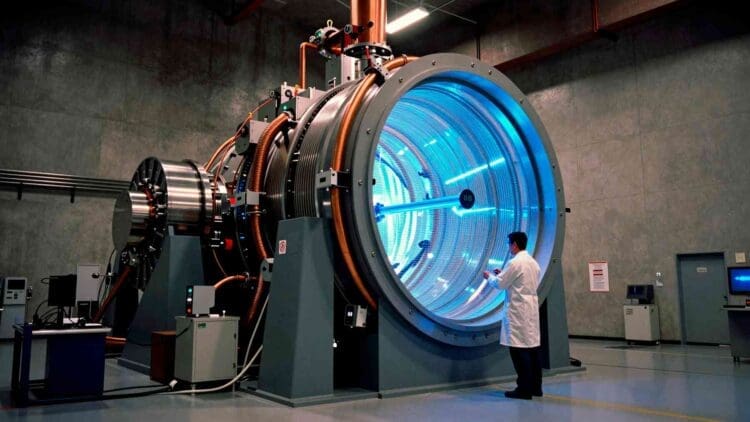

On June 9, Tennessee became the first U.S. state to put its own regulatory framework for nuclear fusion machines into effect. The Tennessee Department of Environment & Conservation assumed responsibility for overseeing the rules — 11 pages covering licensing requirements, personnel standards, and safety provisions for fusion facilities operating in the state.
The timing was deliberate. Type One Energy has been advancing plans for a commercial fusion power plant near Oak Ridge, and state officials anticipate it will be among the first facilities licensed under the new framework.
Tennessee enacts first state-level fusion regulations
The 11-page amendment that created Tennessee’s fusion framework was filed in March 2025 and took effect on June 9 of that year. It amends the state’s Effective Rules and Regulations to establish how fusion machines, processes, and related activities will be registered and licensed. The Tennessee Department of Environment & Conservation serves as the oversight body, handling application reviews and compliance enforcement.




The amendment is compact but substantive. It lays out the foundational requirements any fusion facility must meet before operating — personnel qualifications, safety committee structures, and more.
Why states are now responsible for fusion licensing
The shift of regulatory authority to the state level traces back to a 2023 decision by the Nuclear Regulatory Commission. Rather than classifying fusion machines alongside commercial fission reactors as utilization facilities, the NRC chose to regulate them under the existing byproduct materials program — a distinction that carried real consequences.
Licensing authority transferred to NRC Agreement States — those that have entered into formal agreements with the NRC to regulate certain radioactive materials. Each Agreement State must now determine, on its own terms, how it will handle fusion machine regulation. Tennessee’s March 2025 amendment is a direct response to that federal decision, which made it the first state to act.
What the new rules require of fusion facilities
The rules set clear expectations for any applicant seeking certification. Facilities must demonstrate they have qualified personnel in place, along with a method to retrain and test those personnel at least once per year. Equipment and procedures must be designed to protect public safety, health, and property.
Structural safety oversight is also required. Each applicant must appoint a radiological safety officer and establish a radiation safety committee to advise on safety concerns. Facilities must follow defined operating procedures and meet general safety provisions — requirements that apply to any entity seeking to bring a fusion machine online in Tennessee.
Type One Energy’s fusion plant near Oak Ridge expected to be among first licensees
The new framework was enacted at a meaningful moment for Tennessee’s energy ambitions. Type One Energy is developing Infinity Two, a 400-MWe fusion pilot power plant near Oak Ridge, through a partnership involving the Tennessee Valley Authority, Oak Ridge National Laboratory, and the University of Tennessee.
The Tennessee Department of Environment & Conservation has stated that Type One Energy’s commercial site is anticipated to be among the first licensees under the new framework. The site is also planned to function as a fusion development campus, supporting collaborative work among ORNL, TVA, and UT. Under the new rules, construction could begin as early as 2028.
Industry views state-level licensing as a near-term benefit, with future standardization likely needed
At the 2026 Annual Conference of the American Nuclear Society, fusion regulation came up repeatedly across multiple sessions. During the opening plenary, Alexander Valys – co-founder and president of fusion startup Xcimer Energy – described the NRC’s decision to hand licensing authority to Agreement States as a win for the industry. Companies can now weigh the regulatory environments of multiple states when deciding where to site their pilot plants, a flexibility that a single federal regime might not offer.
Valys also looked further ahead. As the industry scales toward deploying dozens of plants per year, navigating up to 40 different state licensing regimes could become unwieldy. He acknowledged that a more standardized national framework will likely be needed at that stage – while framing the challenge with measured optimism, calling it a “champagne problem”. The phrase signals that the industry expects to reach a scale where such coordination becomes necessary.
Personnel, retraining, and new safety requirements
Tennessee became the first U.S. state with an active regulatory framework specifically for nuclear fusion machines, effective June 9, 2025. The framework emerged from a 2023 NRC decision that placed fusion licensing with Agreement States rather than under federal oversight. Rules require qualified personnel, annual retraining, a radiological safety officer, and a radiation safety committee. Type One Energy’s Infinity Two plant near Oak Ridge is expected to be an early licensee, with construction potentially starting in 2028. Industry observers see state-level licensing as workable for now, with national standardization likely to follow as the sector grows.
Kelly is an experienced writer with 15 years of experience exploring the big stories that shape our world, from tech breakthroughs and space exploration to climate, energy, and the fascinating quirks of science. She has a talent for turning complex ideas into sharp, memorable insights that stay with readers long after they’ve finished reading.