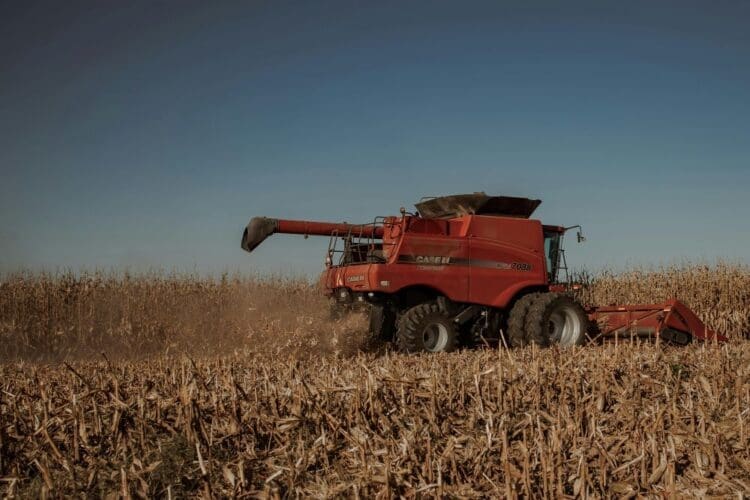

The energy-agriculture nexus affects your farm more than you think.
Which is why it’s important to understand.
Everything you do on the farm — how many tillage passes you make before planting, what equipment you use to seed acres — directly correlates to global energy consumption and emission reduction goals.


Here’s why…
According to the UN Food and Agriculture Organization, agri-food systems account for about 30% of the world’s total energy consumption. That’s from farm to fork. That tractor pass you just made? The irrigation pump you turn on twice a day? Every piece of seeding equipment you run over a field counts towards that number. When governments create clean energy targets, agriculture always factors into the conversation.
In This Article:
- What the Energy-Agriculture Nexus Means
- How Equipment Like the Used Disc Drill Factors Into This Equation
- How No-Till Farming Connects Clean Energy Policy To Crop Production
- What Clean Energy Policy Means for Crop Producers Today
- How Much You Can Really Save
Energy-Agriculture Nexus: What Does That Even Mean?
Put simply, the energy-agriculture nexus is the relationship between food production and energy systems.
Food production needs energy. Think diesel for tractors. But energy also comes from food crops. Corn, soybeans, oats, wheat… they can all be used to create biofuels, biogas, and biomass power.
That might feel overwhelming. But when you break it down at the farm scale, it’s really about one thing:
How you grow food has an impact on the environment. And new clean energy policy is finally holding farming accountable for it.
Take conservation agriculture practices like zero tillage. By limiting the amount of fuel you burn seeding a crop, you’re reducing your carbon footprint on the land. It’s a simple way to reduce input costs, but governments are starting to recognize how valuable these types of practices are at meeting emission reduction goals. That’s why equipment like the used disc drill is about to become even more important to your operation.
Think about it. Farming’s fuel consumption hasn’t meaningfully improved in decades. That’s set to change.
Equipment like the Used Disc Drill Is Important Because…
How much fuel you burn planting a crop directly correlates to equipment selection.
That’s why something as simple as browsing used equipment for sale, like the used disc drill, is going to become increasingly important as clean energy policy evolves.
A disc drill, especially when used for minimum disturbance seed application, can dramatically lower the fuel you use per acre. Here’s how:
By cleanly cutting through the soil and placing seed without the redundant tilling and mixing you get with conventional tillage, you eliminate passes. Fewer tractor passes equals less fuel. Less fuel burned equals less greenhouse gas emissions on your farm. Plus, you’re leaving more soil intact and hydrated, which leads to better yield.
Head over and browse used no-till drills for sale to find quality used disc drills at a fraction of the price of a new machine. This is one of the easiest entry points into low-disturbance seeding available.
When you’re looking at a used disc drill, consider:
- The pattern and condition of the disc openers
- Presence of frame wear or damage
- Depth control of the drill
- What row spacing is available and if that will work with your crops
- Press wheel and closing wheel configuration
You want a used disc drill that has been cared for just as you would a new drill.
No-Till Farming Is the Bridge Between Clean Energy Policy and Crop Production
If there’s one practice that ties the need for clean energy policy to agriculture, it’s no-till farming.
No-till farming can reduce fuel usage by upwards of 50-80% per acre when compared to conventional tillage. That’s huge. Not only are you reducing the amount of diesel fuel you burn every year, but you’re also cutting down on the amount of carbon dioxide those tractors emit into the atmosphere.
According to USDA research, farms using continuous no-till methods report using approximately 3.6 fewer gallons of fuel per acre annually than their conventional tillage counterparts. For an operation planting 1,000 acres of cropland, that equates to 3,600+ gallons of diesel saved per year. And that’s just fuel. Labor requirements and equipment maintenance costs are cut significantly with no-till systems as well.
No-till farming isn’t just about cutting down on fuel usage either.
Some of the other benefits to adopting a no-till practice include:
- 50 to 90 percent less soil erosion than conventional tillage
- Improved water infiltration and drought relief in fields
- Builds organic matter over time reducing dependency on fertilizer inputs
- Labor requirements decrease by 30 to 50 percent each season
Everything points back to one thing.
Without minimum disturbance seeding equipment like the used disc drill, converting from conventional tillage to something like no-till is near impossible.
Clean Energy Policy Is Already Impacting Crop Producers
You don’t have to look far to see how clean energy policy is affecting ag producers.
By now, most of you have heard about the major push to get farmers to adopt some form of no-till or reduced disturbance planting method. Fewer tractor passes = less fuel burned = less emissions. It’s that simple. Governments and regulatory bodies around the world are starting to take agriculture’s place in the clean energy puzzle seriously. That means incentives for minimum disturbance planting, grant programs to help cover the cost of used equipment like no-till drills, and in some areas, downright mandates to limit tillage by a certain date.
It all starts with the fuel you burn planting a crop.
If you want to understand how clean energy policy is affecting your business, follow this chart.
- Your fuel costs don’t get paid back
They go into your pocket. At $.50 a litre, cutting your fuel usage by half has a major impact on your bottom line.
- Transitioning to minimum disturbance seeding is already being incentivized
The trend toward farming with less fuel and less emissions is just getting started.
- Clean Energy Policy Is Giving Producers a Financial Reason To Act Now
Shifting your farm’s focus to clean energy principles improves your bottom line…and may qualify you for additional incentive programs down the road.
Where Do We Go From Here?
Here’s one final thought:
The energy-agriculture nexus isn’t changing how we farm. Farmers are just changing how they farm.
Less tillage, used equipment to fit your budget, and a focus on reducing fuel consumption are all realistic solutions to a largely theoretical problem. Especially if you farm in an area not immediately impacted by the shift to clean energy.
Here are the biggest takeaways from this article:
- Agriculture accounts for ~30% of total global energy consumption
- No-till farming has been proven to decrease fuel usage by up to 80% per acre
- Buying used equipment like the used disc drill is an easy way to reduce your carbon footprint with minimal investment
- What you do on your farm today could qualify you for future incentive programs aimed at lowering agriculture’s fuel consumption numbers
- Clean energy policy is creating financial incentives for producers who take action now
Want to learn more about clean energy solutions on the farm? Visit the blog every week for the latest tips to help you improve your operation.