
Top 3 Challenges to Mitigating Gas Flaring & Why ESG Investors Should Care
Here’s why institutional investors, private equity firms and oil and gas companies facing ESG challenges should take a closer look into how they can take an active part in mitigating gas flaring.
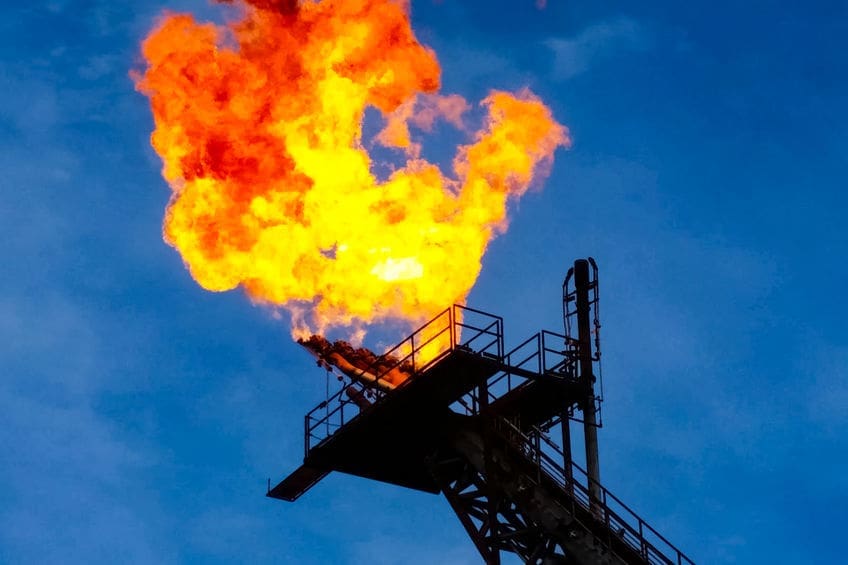
Natural gas flaring (the controlled combustion of natural gas utilizing a flare stack) continues to be a central focus for Environmental, Social and Governance (ESG) investors involved in the upstream oil and gas industry. Flaring has been a lightning rod for criticism of the upstream oil and gas sector due to the greenhouse gas (GHG) emissions it creates, as well as the perceived wastefulness by the companies who flare. What some may not realize is that the alternative, known as “venting”, is even more damaging as it releases unburned, odorless methane—the main component of natural gas and many times more potent as a GHG.
To many, natural gas flaring is a black and white issue—flaring is bad, no flaring is good. The mere sight of a flare stack burning on a well pad can create negative public opinion and erode shareholder value. Similar imagery and negative press are one of the reasons investments in the upstream oil and gas sector has recently fallen out of favor with many ESG-focused investors. In fact, some asset managers, investment banks and even private equity firms have seized upon natural gas flaring and the GHG emissions it creates as a reason to minimize their portfolio’s exposure to energy. Investors, now more than ever, expect to see meaningful progress towards the goal of zero emissions through reducing or eliminating flaring.
Because GHG emissions, most notably, carbon dioxide (CO2), are used as a key metric of environmental performance—the “E” in ESG—unlocking value in sustainable investment opportunities creates a huge potential upside for the upstream oil and gas sector to both minimize flaring and generate goodwill with the investment community. While most ESG investors would ultimately agree eliminating flaring is the right goal, there are certain challenges to reducing or eliminating flaring in pursuit of reduced GHG emissions.
Below are three challenges upstream oil and gas companies face in pursuit of mitigating or eliminating natural gas flaring:
- Lack Of Gathering & Transportation Infrastructure: One of the major challenges in remote basins or in basins where exploration and production activities have increased in recent years, such as in the Bakken and Permian, is the availability of pipeline takeaway capacity for the associated gas flowing from these oil wells. Within the midstream sector, the gathering systems, which connect directly to individual wells, require large capital investments with long breakeven periods. In these oil-rich plays, midstream entities may proceed cautiously with a gathering system buildout due to the risk of the basin falling out of favor, the upstream operator’s volumetric projections prove to be overly optimistic or simply due to higher-yielding projects in more established basins. Without the necessary takeaway capacity, operators have been unable to install economically viable methane-capture devices. Examples of these include gas-to-liquids (GTL) conversions, microgrid generation, as well as other innovative technologies to limit flaring. These technologies have all stumbled in the past due to the cost of installation and maintenance. Until recently, these technologies have proven uneconomic, especially considering the historically low natural gas prices.
- Drilling, Completions & Routine Maintenance: This contributor to flaring is often underreported by mainstream news, due in part to its complexity. When a well is hydraulically fractured, the operator must “flowback” immense amounts of water, proppant, and other material from the wellbore for production to commence. This process has historically overwhelmed the gas/liquids separators creating a challenge between balancing worker safety against fugitive methane emissions. Oilfield services technologies are rapidly creating solutions to traditional completions using reduced emissions completions (or RECs), which can better manage the high flow rates created during flowback. Additionally, routine well maintenance may require a temporary well shut-in. When this occurs, lines running from the wellhead to the various surface-mounted equipment, including the tank batteries, must be depressurized, and vented to prevent possible explosions during maintenance on the well or its associated surface-mounted equipment. When this occurs, the natural gas is burned in one or more flare stacks to ensure that fugitive methane emissions are minimized.
- Gas Treatment Costs: Certain basins are plagued with the presence of hydrogen sulfide (H2S), CO2 and other volatile compounds that require treatment. H2S is a colorless and odorless gas at concentrations above 5-10 parts per million (ppm). Certain wells in the Permian Basin can have levels more than 5,000 ppm. For perspective, pipeline specification natural gas is approximately 4 ppm H2S or lower and anything over 100 ppm can be lethal to workers within minutes. While some may argue that burning natural gas to make power (microgrid) represents a more sustainable use compared to flaring or venting, it’s the presence of H2S that complicates this otherwise thoughtful approach. Without first treating (e.g., amine treating), the acidity created by H2S combustion can quickly damage equipment. Amine treaters are expensive and require extensive maintenance, and as a result, in the absence of a gathering system that’s equipped to handle H2S treatment, there’s generally no economic use for this gas. The least hazardous method for removing H2S is through controlled combustion. As technology improves, skid-mounted treaters are becoming more economical, but they require a substantial amount of maintenance and upfront investment by operators.
Summary
While the goal towards zero emissions will no doubt take center stage under a new administration, weighing the costs and benefits of how best to handle stranded natural gas and turn it into a viable monetization opportunity will continue to evolve with new technology and additional investments in gathering and transportation. By selectively directing capital towards the oil and gas industry’s onshore shale assets, ESG-conscious investors can have an immediate impact, decarbonize, create value, and accelerate the energy transition.

Reid Brooks is a Director in Opportune LLP’s Complex Financial Reporting practice based in Tulsa, Oklahoma. Reid has over 12 years of experience providing clients across energy sectors with a full range of advisory services. Most recently, Reid has been focused on helping his clients with their ESG processes and reporting. Before joining Opportune, Reid held positions of increasing responsibly at ONEOK Inc. in Tulsa. Reid is a Certified Public Accountant (CPA) licensed in the State of Oklahoma and is member of the American Institute of Certified Public Accountants.
