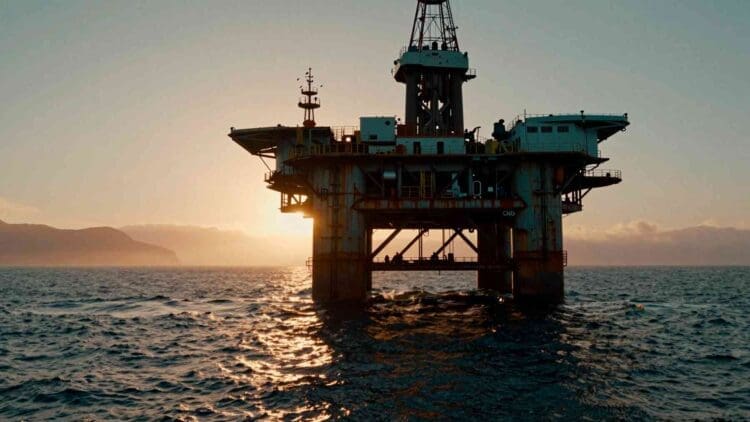

For the first time in decades, the federal government under President Donald Trump is moving to open California’s coastal waters to new oil and gas drilling.In January 2026, the U.S. Department of the Interior issued formal Calls for Information and Nominations to consider offshore lease sales in federal waters off Central and Southern California—the most significant such push since the 1980s. The administration, citing energy security and domestic production goals, has already invited industry nominations, with the first potential lease sales projected as early as 2027.
Federal Government Opens Process for New California Offshore Lease Sales
The Bureau of Ocean Energy Management (BOEM) launched the formal leasing process in January 2026, inviting oil and gas companies to nominate areas they would consider for future development. Those nominations are now under federal review. A revised leasing program is expected later this year, with first sales possibly arriving as early as 2027.
The scale of this shift is considerable. California still has active offshore platforms, but they date to earlier decades—no major new federal lease sales have occurred off the state’s coast in a very long time. This initiative is part of Trump’s broader “American Energy Dominance” agenda, which targets federal lands and offshore areas for expanded fossil fuel production while pushing to streamline permitting and regulatory approvals.


Administration Cites Energy Security and Economic Benefits as Justification
Federal officials argue that expanding offshore production would strengthen U.S. energy security, increase domestic oil supplies, and reduce reliance on foreign imports—particularly during periods of geopolitical instability. Federal revenue from lease sales and royalties, along with job creation in the energy sector, rounds out their case.
The resource potential may also be substantial. Estimates suggest California’s offshore basins could hold billions of barrels of recoverable oil and several trillion cubic feet of natural gas. The administration frames expanded offshore development as both an economic opportunity and a national security priority, consistent with its broader strategy to reduce regulatory friction for fossil fuel projects across the country.
State Officials, Environmental Groups, and Military Leaders Oppose the Plan
Opposition has been swift and unusually broad. California Governor Gavin Newsom, joined by Oregon Governor Tina Kotek and Washington Governor Bob Ferguson, submitted a formal joint opposition letter to federal regulators, citing threats to coastal tourism, commercial fisheries, marine ecosystems, and coastal communities. More than two dozen members of California’s congressional delegation have also formally opposed new offshore leasing.
Environmental organizations including the Natural Resources Defense Council and Earthjustice warn that expanded drilling would increase spill risk and undermine climate policy goals.
Perhaps the most notable opposition has come from retired military officials. They warn that proposed drilling areas overlap with testing and training ranges used by the U.S. Navy, Air Force, Marine Corps, and Space Force off Southern California. Permanent offshore platforms, they argue, could interfere with weapons testing and military readiness—a concern that cuts across typical political lines and has complicated the administration’s framing of the issue as straightforwardly pro-security.
Federal Review of California’s Coastal Regulatory Authority Adds Another Dimension
The dispute has expanded beyond drilling itself. The Trump administration announced a review of California’s coastal regulatory agencies, including the powerful California Coastal Commission, contending that the state’s regulatory framework may obstruct federal offshore energy development interests.
Critics read the move differently—as an effort to limit California’s ability to block or shape offshore energy projects, effectively stripping away a key layer of state oversight. California officials have pledged to use “every legal tool available” to challenge both the drilling proposal and the regulatory review, signaling that this fight will play out on multiple fronts at once.
Timeline and Next Steps: Final Decision Expected by Late 2026, Lawsuits Anticipated
BOEM has completed its initial public scoping periods for both the nominations and the environmental impact reviews and is currently evaluating the feedback. A revised leasing program is expected later in 2026, with additional public comment periods planned before any plan is finalized. Federal officials are aiming to complete the next offshore leasing program by fall 2026.
That timeline faces real uncertainty. Legal challenges, mandatory environmental reviews, and sustained political opposition could all cause delays. Environmental organizations and California’s state government are already preparing litigation should lease sales move forward—and given California’s track record of challenging federal offshore energy initiatives in court, lawsuits appear likely.
No leases have been issued yet. The federal leasing process is underway but not complete; opposition spans state governments, Congress, environmental groups, and military voices, and a final decision is not expected before late 2026. The coming months will determine whether this initiative advances or stalls under the weight of legal and political resistance.
Kelly is an experienced writer with 15 years of experience exploring the big stories that shape our world, from tech breakthroughs and space exploration to climate, energy, and the fascinating quirks of science. She has a talent for turning complex ideas into sharp, memorable insights that stay with readers long after they’ve finished reading.