
At a Massachusetts ski resort, one 1.5 megawatt turbine named Zephyr has spun above the slopes for almost two decades, so snow guns run on mountain wind
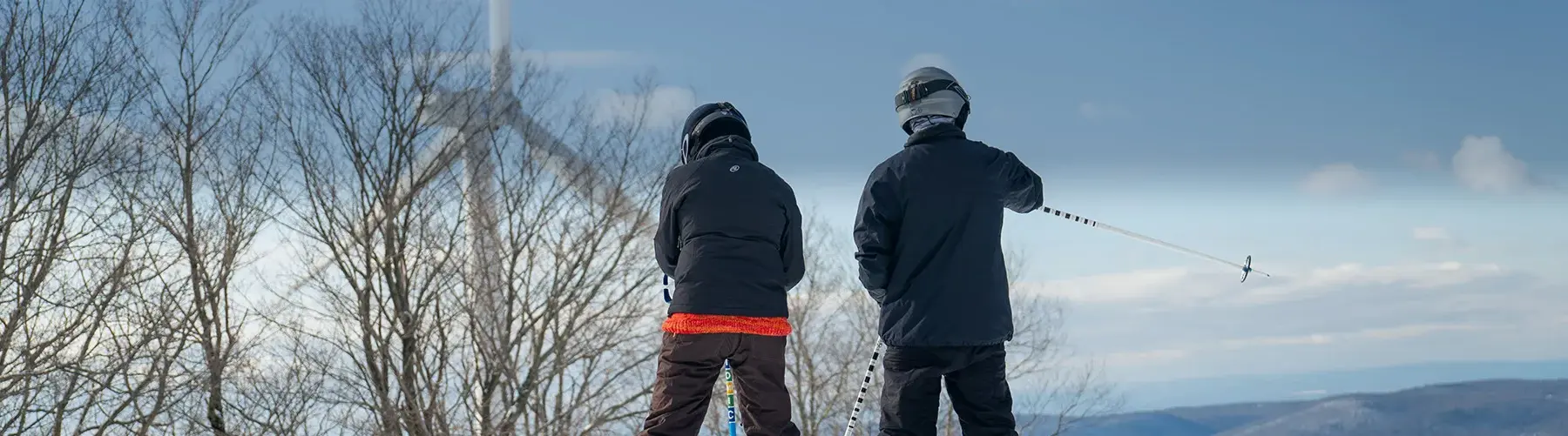
On the western flank of a Berkshires ski mountain, a single white tower catches the last of the afternoon wind while snow guns hiss somewhere below it.
The tower is taller than the Statue of Liberty.
It has a name, not just a serial number.
The turbine is named Zephyr, after the Greek god of the west wind, and it sits roughly two thirds of the way up the slope rather than at the summit or the base.
Skiers glide past its base without slowing down.
For nearly two decades, that one machine has quietly run a piece of the mountain nobody expects wind power to touch.
So how does a single turbine end up keeping a ski resort’s snowmaking machines fed through the coldest months of the year?
Why winter wind and snowmaking demand arrived at the same time
The trick is not clever engineering so much as a lucky coincidence of timing. Snowmaking is the single biggest electricity drain at any ski resort, and it runs hardest exactly when outdoor temperatures drop and the mountain wind picks up strongest.
That overlap is why the resort’s own engineers call the turbine a near perfect match for the load. It has been an exceptional and dependable power producer, handling 33 percent of energy needs annually, up to 66 percent in winter when the winds blow hardest.
So the same storm system that buries the trails in powder is also spinning the blades hardest, feeding the compressors that turn water into more snow.
The machine itself, planted two thirds of the way up the mountain
The turbine is named Zephyr, after the Greek god of the west wind, and it sits roughly two thirds of the way up the slope rather than at the summit or the base. It rises on a 253 foot tower, with each of its three blades reaching approximately 123 feet into the air, making the machine taller than the Statue of Liberty.
Getting hardware that size to a working ski mountain took specialized cranes, closed trails and a construction window squeezed between ski seasons. The resort’s president, Brian Fairbank, had chased the idea for years before it went up.
At the dedication he told the crowd gathered under the blades, “You can follow dreams and make them a reality.” The blades turned for the first time in a weak August breeze, with hundreds of Berkshire County residents watching from the grass below.
What the numbers actually show after years of real operation
The resort calls itself the first privately held company in the country to install a megawatt class turbine for its own use, a 1.5 megawatt machine installed in 2007. It generates 4.6 million kilowatt hours of energy, enough to light up the TVs, DVDs, microwaves and refrigerators in 613 homes for a year.
A decade in, the mechanical record held up better than many expected for a single machine exposed to mountain weather year round. Rotor bearings were replaced about 45 days into its service life, but since then the turbine has run without major issues, a track record most single machines of this age cannot match.
Availability has stayed remarkably high. On an annual basis, Zephyr is north of 98 percent, according to the staffer who oversees it.
Where the arrangement runs into its own limits
The setup is not a perfect loop, and the resort’s own sustainability staff have been candid about where it falls short. A university study of the site found that the resort cannot use all the electricity Zephyr produces, because its output schedule rarely lines up with real time demand, and the infrastructure needed to connect buildings directly to the turbine is costly.
So surplus power gets exported to the grid, in an arrangement similar in spirit to how Alaska’s Kotzebue wind project balances intermittent output against steady demand. The resort draws credit back when the turbine is idle or the slopes need more than Zephyr alone can give, a net metering setup the resort’s own sustainability page says now lets it consume every kilowatt hour Zephyr generates.
Even so, the financial case closed fast. The turbine paid for itself in seven years, and combined with a solar field and a cogeneration unit at the resort’s inn, the property counts itself among the few resorts generating all its electricity from renewable sources.
What one aging turbine still has left to prove
Nearly twenty years on, Zephyr has become something closer to a landmark than a piece of equipment, the kind of machine skiers point out to their kids on the chairlift ride up. The resort’s vice president of environmental sustainability has said the project succeeded less because of any single breakthrough and more because conditions on that mountain happened to fit.
Fairbank has said the resort has no plans to add a second turbine, since one machine already supplies all the wind power the property needs. Instead, attention has shifted toward other fuel use on site, from diesel in snowcats to propane heating.
None of that undoes what Zephyr has already shown. A single turbine, timed to a wind pattern nobody designed on purpose, has spent two decades proving a resort’s hardest energy problem and its biggest energy resource can sit less than a mile apart, a lesson that keeps echoing in other unlikely corners of the wind industry.
Hugo is an engineer with strong technical expertise. Multilingual from an early age, his writing combines technical clarity with a strong interest in science and energy.
