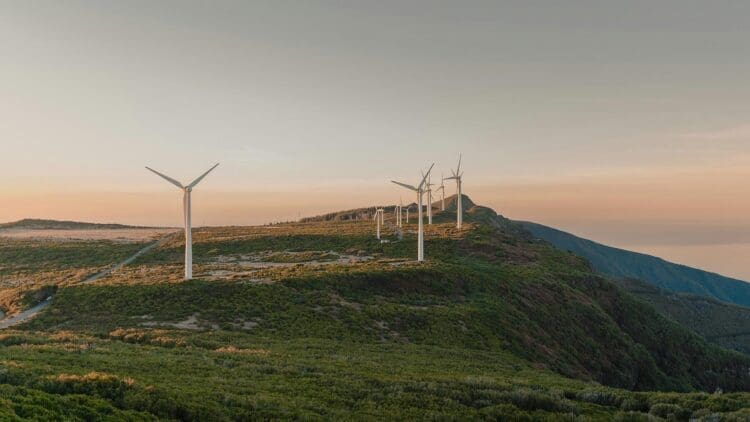

Vestas is among the few corporations that have gotten off to a flying start in 2026, as they are tasked with the responsibility of handling and executing different projects. The company has established its presence in countries like Australia and, since then, has gone on to Asia. In the latest news revealed to the world, Vestas won a 31 MW turbine supply deal for South Korea’s Uljin Giseong wind farm, giving citizens something to look forward to with excitement.
Spreading its wings: A brief examination of Vestas’s evolution and impact
The energy industry, just like any other economic dealings, is one of the many that drive globalization and demonstrates the interdependence among countries. There is no harm in countries assisting one another with energy projects because all countries have a single objective, which stands above all the other ones, and that is to preserve the earth for as long as possible, undoing the harm already caused by fossil fuels.
Interestingly, Vestas is a name that has appeared multiple times on different projects, which makes the company worth reviewing. Firstly, it is a Danish-based corporation that was founded in 1945 and officially began pursuing wind projects in 1979. As things stand, it is the largest wind turbine manufacturer in the world, holding a massive gap over other nations. Its present-day strategy is to operate globally with widespread manufacturing and service. What is most recognizable is that technology has helped amplify its abilities now that 2026 is fully underway.
South Korea’s Uljin Giseong wind farm: Analyzing the country’s energy landscape
South Korea is a country that now has a bad reputation stemming from its over-reliance on imported fossil fuels. The country falls among the world’s largest importers of LNG, which is a nuclear power sector that generates 30% of its electricity. As such, the Uljin giseong wind farm comes as a saving grace for the Asian country, providing it with an opportunity to reduce its carbon emissions.
The wind farmis expected to have five V162-6.2 MW wind turbines that have the ability to generate 6.2 MW, resulting in a 31 MW overall capacity. This is massive for the population because they will be receiving consistent and reliable energy rather than imported fossil fuels. Luckily, the turbines are said to be materializing in 2026, and the entire wind farm itself will be fully built in 2027.
Unpacking the further details of Vestas’s 31 MW wind farm development
The standout headline following Vestas’s victory is that it has won a 31 MW turbine supply deal, but there’s more to the story than that. Vestas also agreed to a 20-year Active Output Management (AOM5000) service agreement. As such, the Uljin Giseong joins the list of contracts that combine turbine supply and service agreements.
Tapping into modern-day technology: How has Vestas pushed boundaries?
Contemporary technological innovation allows countries to execute ambitious projects that would have otherwise seemed impossible. Vestas’s VI62-6.2 MW turbine model has a rotor diameter of 120 meters and is specifically designed for high energy capture, particularly in diverse regions. South Korea is not one of the windiest countries, but because of the technology, it will still be able to generate a massive amount of electricity for its citizens. Vestas has publicly displayed that there are no limitations on future energy projects because almost anything can be developed with the available resources today.
The period 2026 to 2027 is when Vestas hopes to complete the project, which is a quick turnaround. This speaks volumes of Vestas, which is familiar with being in such a spot after successfully executing many projects, such as the Waddi wind farm in Australia. There will be many observers of the South Korean wind farm who are keen to assess how Vestas manages it this time.