
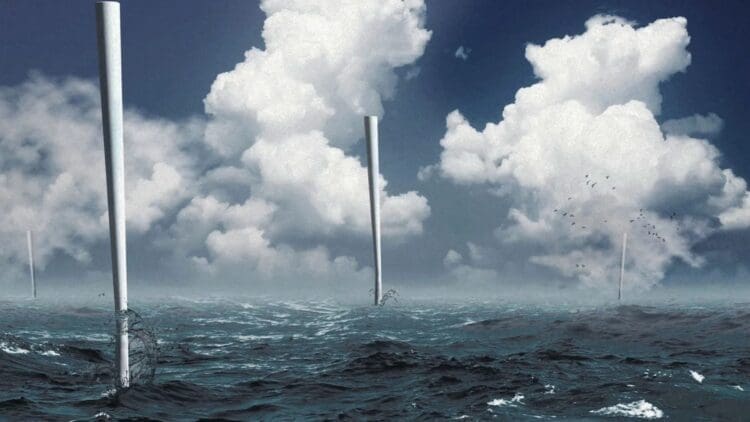
Wind power is one of the most popular renewable energy solutions worldwide, and its global capacity has significantly increased over the past decade. However, despite this substantial growth, the technology has not yet been widely accepted by the public. Now, the first-ever bladeless wind turbine developed by Spanish researchers may finally win over the public. This particular design proves that transitioning from traditional wind power to aeroelasticity is truly the future of clean power production.
From wind power to aeroelasticity: What’s next in the energy industry?
According to the International Energy Agency (IEA), wind power plays a crucial role in the global transition to renewable energies to achieve global climate goals. Global capacity grew by 170 GW in 2025, and experts predict that capacity is set to increase by another 160 GW in 2026. Of course, traditional wind power heavily relies on the blades of the wind turbine.
It is due to these blades that traditional wind power technologies are still facing criticism, as they cause:

- Visual impact
- Noise pollution
- Loss of valuable land due to the need for vast installation space
- Impact on wildlife, such as birds and bats
- High production costs
- High maintenance costs
- Difficulty in recycling
Fortunately, Spanish researchers have shifted their focus from traditional wind power to aeroelasticity by developing the first-ever bladeless wind turbine.
Spanish researchers develop first-ever bladeless wind turbine
No blade, no problem. It is such a simple solution, but how would a wind turbine produce wind power without a blade? The answer is also simple. A Spanish start-up company, known as Vortex Bladeless Ltd., believed that a concept called “aeroelasticity” was the next best thing when it came to generating clean power from wind. The company’s bladeless turbine design is ideal for this concept.
Several researchers have been seeking alternatives to traditional designs due to the significant disadvantages of turbine blades. However, unlike the Japanese 20 MW clustered tower turbine design, the Spanish design literally has no turbine blades and is just a vertical cylinder that produces power through dynamic aeroelasticity.
How does this wind power system deliver?
In a nutshell, as wind moves over the cylinder and creates vortices on each side, this is known as vortex shedding. The cylinder vibrates in the moving wind, and the vortices vibrate at the same frequency, resulting in a back-and-forth swaying, producing kinetic energy. This is known as aeroelastic resonance. Internal magnets and coils harness the kinetic energy. The moving magnets then produce electricity.
Targeting a massive 100 MW prototype in 2026
Vortex Bladeless has developed three models based on this concept, and the Vortex Tacoma will be an ideal model for small-scale home and rural applications. The Vortex Tacoma is 9 feet in height and can produce up to 100 W of power. Just like the other models, this one offers consumers the following advantages compared to traditional turbine designs:
- Easier installation due to lightweight (15 kg/33 pounds)
- Decreased production and maintenance costs
- Increase operational life expectancy (between 32 and 96 years)
- Lower visual impact
- Minimal noise levels (below 20 Hz)
- Decreased impact on wildlife
- Energy efficient
- Can operate in maximum wind speeds of 35 m/s
- Equipped with safety features for high wind speed conditions
The technology still has a long way to go before becoming commercially available. The company is targeting a massive 100 MW prototype this year and is actively seeking stakeholders to invest in the technology to scale up.
As Vortex Bladeless Ltd. continues developing and testing its prototype models, the technology is undoubtedly becoming increasingly popular in the market. By offering consumers a more eco-friendly and cost-effective alternative, access to clean power generation has blown wide open, all thanks to these bladeless wind turbine models. However, competition is fierce, as the U.S. has launched the bladeless Nemoi W turbine, which can produce 2,400 W of clean power.
Disclaimer: Our coverage of events affecting companies is purely informative and descriptive. Under no circumstances does it seek to promote an opinion or create a trend, nor can it be taken as investment advice or a recommendation of any kind.

