
German wind farm routes electricity from 12,000 solar panels through its grid connection like a fifth turbine
 Vattenfall
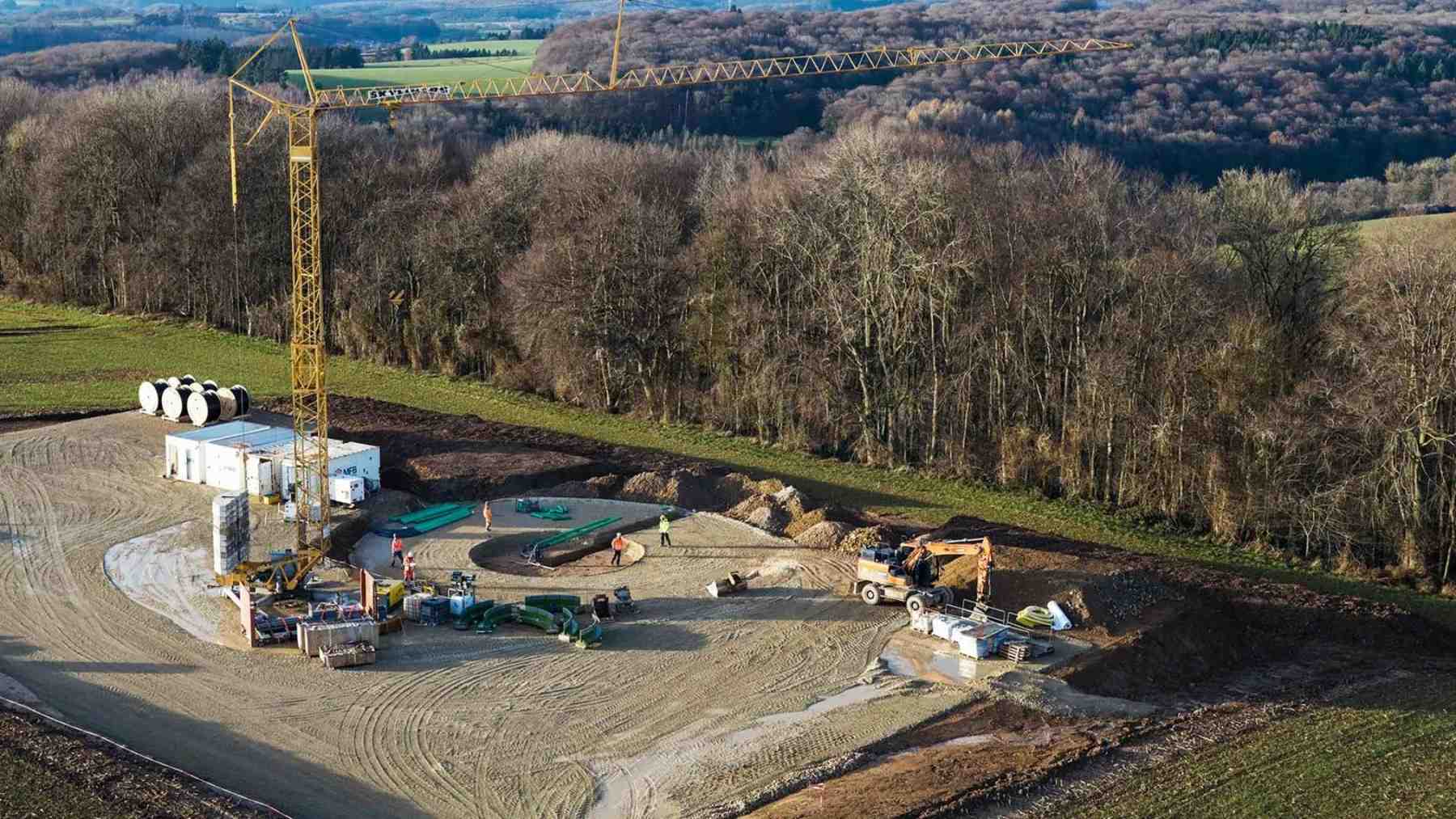
Within the fields spanning the villages of Hommerdingen and Biesdorf, in the secluded region of Südeifel, which is located close to the borders of Luxembourg, in Germany, there is a construction site working on an odd project, not falling under the scope of any one kind of structure. There will be four wind turbines installed there. Twelve thousand solar panels will also be installed in this location.
What is intriguing here is that Vattenfall will not construct two separate power stations that just so happen to coexist in the same space.
One site, two technologies, one plug in the wall
As far as the technical design of the plant goes, it is fairly simple. Four Enercon wind turbines are being erected in Hommerdingen, with a total capacity of 17 MW. About a field’s distance away, in Biesdorf, more than 12,000 solar modules are being erected, with a rated capacity of 7.6 MWp. The total capacity of the facility reaches 24.6 MW.
When both sources require separate connections to the power grid, the distribution network will need to be adjusted to the most adverse conditions of both.
Where it gets interesting is with how everything is connected together with a single wire.
Instead of requesting two separate grid connections, Vattenfall decided to integrate the output of the solar field into the connection of the wind farm already existing with the grid operator Westnetz. In a technical sense, the solar field is considered an extra wind turbine. Westnetz treats the wind farm as having five generation units connected via one connection, instead of four turbines connected via one connection and a solar park connected via another.
It is important that Westnetz agreed to such a configuration, as grid operators are under no legal obligation to accept non-standard layouts. It means that the approach of treating a solar field as “the fifth turbine” is gaining favor with regulators and network operators.
Why the grid breathes easier when wind and solar share a connection
Solar and wind electricity have different schedules. The highest output is achieved in sunny daytime hours when it comes to solar energy, while the opposite is true for wind, which runs better in the evening or winter periods. This difference leads to increased efficiency and more balanced electricity output compared to either source alone.
When both sources require separate connections to the power grid, the distribution network will need to be adjusted to the most adverse conditions of both. Complementary generation profiles allow reducing the burden on the distribution system compared to the single-source connection.
As Philipp Heucke, Head of Onshore Wind Development at Vattenfall Germany, pointed out, “The complementary generation profiles of wind and solar relieve the distribution grid compared to individual generation technologies. This causes an increased efficiency in the usage of grid infrastructure and reduces the risks of grid overload. Moreover, the costs for the grid connection are reduced significantly compared to stand-alone plants. In this way, the cost of renewable electricity is reduced.”
Cost efficiency becomes obvious since there is one grid connection instead of two, and this economy goes into renewable electricity costs in general.
A blueprint already tested across the border in the Netherlands
It is important to mention that Vattenfall did not come up with such a strategy just for Germany. Indeed, the company has been implementing it in the Netherlands in a project called Haringvliet for several years now.
The combination in Haringvliet exceeds the one presented in Hommerdingen-Biesdorf. Indeed, the Haringvliet complex includes 6 wind turbines, 115,000 solar panels, and 12 sea containers of batteries connected via one grid and generating some 140 GWh of electricity annually. As stated by Vattenfall, this is “a blueprint for future projects.” Indeed, one substation, one set of cables, roads, and maintenance services are used for all three energy sources, which reduces expenses and environmental impacts in comparison with the separate construction of each facility.
Thus, the Hommerdingen-Biesdorf project is Vattenfall’s first attempt to implement the idea of Haringvliet in Germany.
What comes next: Batteries, scale, and a broader shift
Battery storage is not part of the plans for Hommerdingen-Biesdorf. As Vattenfall has communicated, battery storage will be incorporated into new solar parks that will be built in Germany under favorable circumstances, gradually approaching the complete hybrid park that exists in Haringvliet.
The time for commissioning the park is set in autumn 2026, which would mark a definite date for the industry to look out for.
The broader context is hard to ignore. Hybrid renewable projects are multiplying across Europe as developers look to maximize generation while minimizing reserved grid capacity. Germany, with its ambitious expansion targets and constrained grid infrastructure, has particular reason to pay attention. If Hommerdingen-Biesdorf proves replicable and grid operators elsewhere follow Westnetz’s lead, the way Germany plans grid connections for new renewable projects could shift in a meaningful direction. Not two plugs in the wall, but one—smarter, cheaper, and easier for the grid to absorb.

Kelly is an experienced writer with 15 years of experience exploring the big stories that shape our world, from tech breakthroughs and space exploration to climate, energy, and the fascinating quirks of science. She has a talent for turning complex ideas into sharp, memorable insights that stay with readers long after they’ve finished reading.
