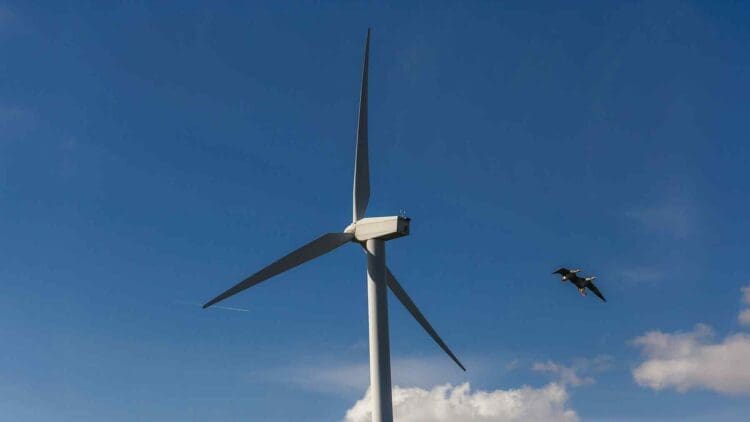

When it comes to wind, sharing is caring, but this care should extend to all living organisms.
The habit of adopting cleaner energy is key to survival, but the specific method must be mindful of everyone’s needs.
Remember that both the land and the sky are shared with wildlife, and they also deserve to be heard.


This thus raises the question: Is the world’s pursuit of endless clean power truly eco-friendly?
How some aspirations can be morally misaligned
Ambition is what sets the world apart and is needed to accelerate action and growth.
Without it, the global energy transition would certainly have remained stuck in a rut.
However, caution is advised, as too often the pursuit of great aspirations has clouded judgment.
This is quite common in the world of renewable energy. Many people are convinced that merely adopting these technologies automatically results in a moral victory.
This is also where many are mistaken. The world has set very ambitious climate targets, and their deadlines are rapidly nearing.
In these desperate times, nations are rushing to achieve zero-carbon without considering all the consequences.
Globally, the environmental impact of fossil fuels is common knowledge. However, less is known about the impact of renewable energy technologies.
It seems that some designs are less eco-friendly than initially thought.
By keeping a score of emissions, have we completely missed the point?
Not so kind to the environment after all
Researchers are giving the world a sobering reality check regarding green technologies.
The main purpose of adopting clean power is to lower the impact of a warming climate. However, the presence of infrastructure harnessing these energies actually causes environmental friction.
Wind turbines are among the main culprits that have a hidden footprint. Offshore, turbines have been discovered to alter whale movement.
However, the impact is not limited to low surrounding wildlife. The species that once dominated the skies are now in trouble.
It has become evident that rotating turbine blades raises the mortality risk for birds and bats.
A United States Geological Survey (USGS) 2022 survey found that approximately 50% of bird species observed could experience declining populations.
However, the blade collisions are not the only environmental consequences to our sky neighbors.
USGS Energy and Wildlife studies have unveiled that there is more to the story than meets the eye.
Facing the lesser-known wildlife impacts of wind turbines
Just because you cannot immediately see something, it does not mean that it is not there.
Have you ever noticed that there is a significant absence of animals at giant commercial onshore wind farms?
They are absent due to the “invisible” habitat loss and displacement caused by wind turbines, which includes the sky.
USGS researchers’ aeroecology findings
Adding 500-foot-tall turbines with 200-foot blades disrupts the neighborhood skies for many flying species.
This sudden and unfamiliar “clutter” results in the abandonment of these regions. As a result, these animals lose access to vital migration routes and hunting areas they have used for generations.
The raptor is among the bird of prey species highly affected. Its population is significantly dropping due to the long turbine lifespan and its slow reproduction rate.
The loss of breeding space is also a factor, and this is worsening as wind projects expand.
However, these risks were much higher during certain seasons.
By monitoring wildlife behavior and routines, the operational periods of the turbines can align with their schedules. This is known as “seasonal mapping” and “operational curtailment.”
With great power comes even greater responsibility. These methods will help align our green aspirations with the needs of wildlife.
Perhaps combining this knowledge with next-generation bladeless wind turbine technology could solve it all?
Disclaimer: Our coverage of events affecting companies is purely informative and descriptive. Under no circumstances does it seek to promote an opinion or create a trend, nor can it be taken as investment advice or a recommendation of any kind.