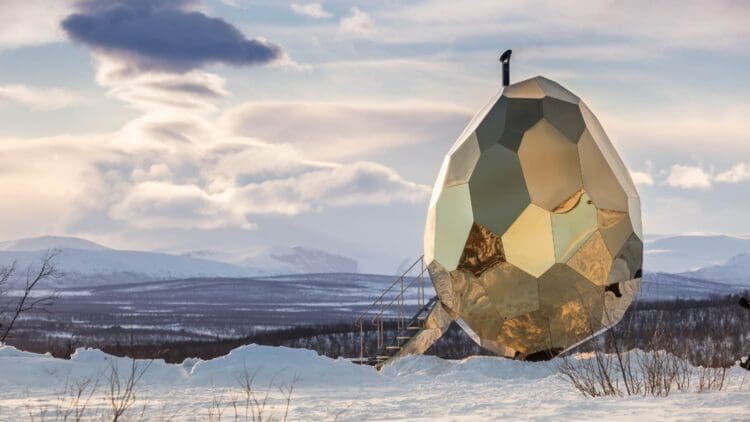

It is the golden egg of sustainable living. To live sustainably is no longer a mere trend. No, it has become an escape to a simpler life while maintaining a low carbon footprint. Of course, there are some prices to pay when embracing this lifestyle. Now, as the homes of the future emerge, we may have to live inside golden eggs soon. Is it crazy, or just crazy enough to work?
From trending to simply living
Trends come and go, but sustainable living has proven to be a timeless lifestyle. People are growing tired of the hustle and bustle and living it up in the city. Climbing the corporate ladder while exploiting every available resource is no longer what we seek or need. It is about time that we start saying goodbye to the consumerist lifestyle and hello, slow, intentional living.
So, what does a sustainable lifestyle look like? Living simply today differs from the way our predecessors lived. We have advanced, smart technologies that enable us to embrace sustainability more comfortably. With the unpredictable and extreme weather patterns that we have experienced of late, this technology becomes lifesaving.



Renewable energy technologies, in particular, have evolved to meet the varying needs of homesteads. A Swiss town has given a glimpse of the future of homesteads, and it is the golden egg of sustainability.
The golden egg of sustainability
Solar power has been the top-tier renewable energy for decades. Fortunately, technological breakthroughs have taken this energy source far from its heyday. We no longer need flat, dark solar panels to generate clean power. Sweden’s golden egg has proven that solar power technology is ready to move forward to more unique, aesthetic designs
In 2017, the Stockholm-based artist duo Bigert & Bergström created the Solar Egg for Riksbyggen. This egg-shaped building consists of 70 gold panels that generate power in Sweden’s snow. The building itself is actually a mobile solar sculpture with a sauna. It is located in Kiruna’s ski resort, Luossabacken. Its goal is to serve as a key meeting place for conversation and reflection.
Riksbyggen approached the artist duo for the project after Kiruna had to be relocated due to mining activities. As Kiruna is embracing the changes associated with urbanization, Solar Egg symbolizes “rebirth” and “new opportunities.”
The “rebirth” of architecture: Zero-energy homes
The way Solar Egg has been designed and its functions are very innovative. However, it also previews the future of sustainable architecture. Solar Egg‘s exterior consists of gold-plated mirror panels, integrating inner reflection with the reflection of the environment. The interior consists of pine wall panels and floors, and an aspen bench. Central to the interior is the heart-shaped wood-burning sauna stove.
Temperatures inside the Solar Egg remain between 167 and 185 degrees Fahrenheit, giving literal meaning to heated conversations. Now, imagine future homes and buildings resembling Sweden’s golden egg. The shape will increase solar absorption and output. They also do not have to be gold, as solar panels now come in colors of red, green, and even orange.
Combining aesthetics with renewable technologies has made architectural designs limitless, and zero-energy homes a reality. From eccentric shapes to colorful styles, thanks to innovation, we can have it all.
High-tech renewable energy solutions mean that we no longer need grit to go off the grid. We are now given the choice to make slow, intentional living just the way we like it. The future of homes and several other buildings is now greener than ever before. Soon, buildings could be wrapped with Cornell’s bio-inspired HelioSkin. Our options are becoming more by the day. The important question is, what will you end up choosing?