
RWE just installed an offshore turbine with a low-carbon steel tower and recyclable blades at the same time, and the wind industry has never done that before
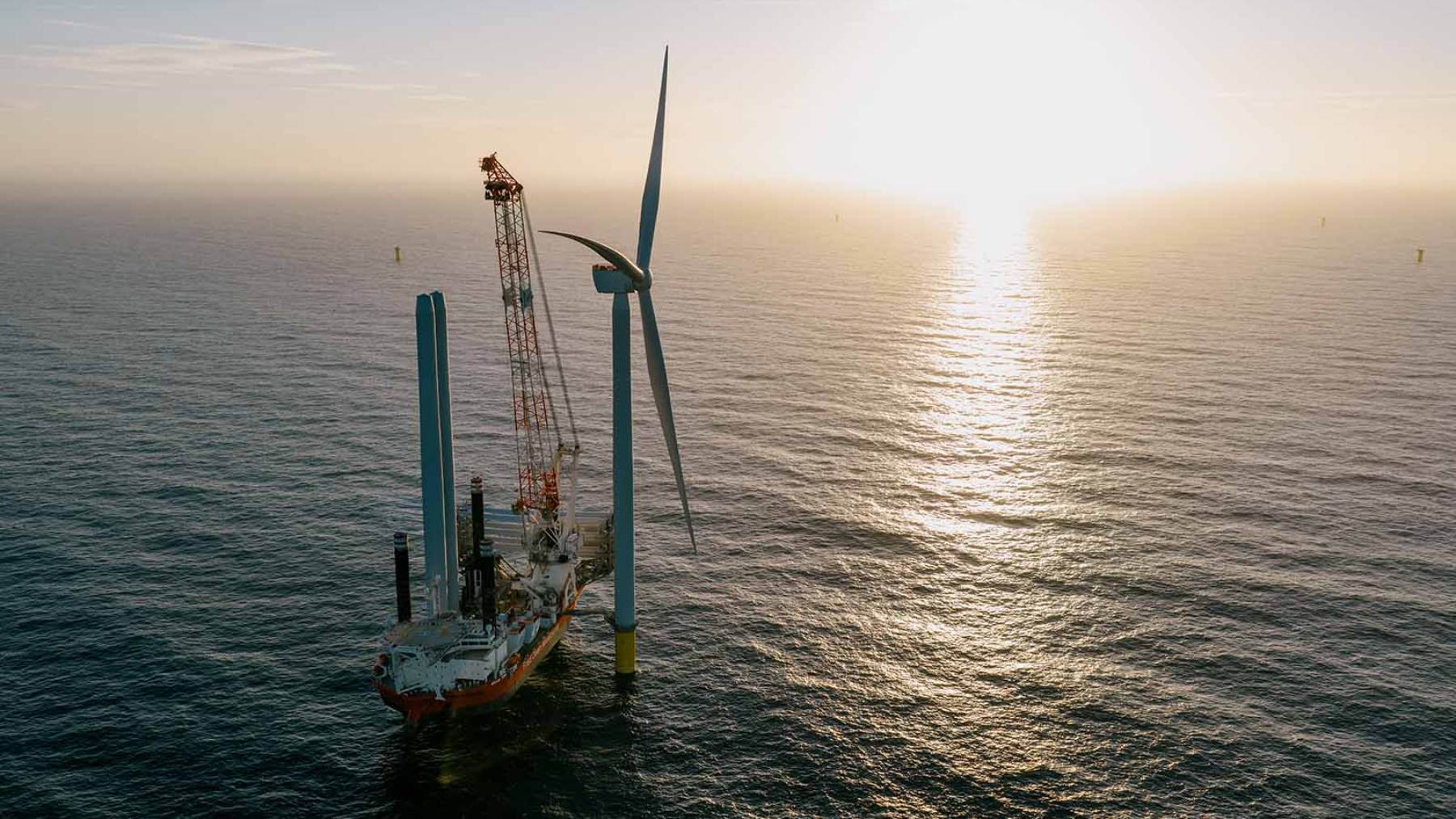 Credits: RWE
RWE has created an offshore wind turbine with significantly higher sustainability.
Large-scale offshore wind projects play a vital role in the global net-zero mission. Additionally, their high-capacity power outputs are essential to ensure long-term energy security.
Nevertheless, critics argue that these giant installations are part of an open-ended cycle, defeating their purpose in the world.
It proves that offshore wind infrastructure is set to achieve a fully sustainable lifecycle, making the wind sector effectively green.
Is renewable energy infrastructure truly “green” if its beginning and end processes are effectively non-sustainable?
How offshore wind became a high-yielding asset
Today, modern infrastructure is being developed with the primary goal of generating zero carbon emissions.
This is to curb the greenhouse effect and lower Earth’s average temperature.
However, global energy demand continues to surge. This means transitioning to a decarbonized grid is the only long-term way to mitigate climate change.
For this reason, renewable energy sources are now more important than ever.
Conventional solar and wind projects have provided substantial quantities of clean electricity.
Unfortunately, these terrestrial installations face limitations to ideal land layouts and community zoning tensions.
That is why offshore wind evolved into the flagship of the world’s net-zero strategy.
Stronger, steadier, and highly predictable wind patterns enable higher capacity factors.
Furthermore, by building at sea, developers no longer face strict size constraints.
This immense scaling capability led to outputs similar to those of fossil fuel plants. But it also had unprecedented consequences.
The hidden costs of ocean infrastructure
The different phases of a wind turbine’s cycle have significant invisible impacts.
During the construction stage of utility-scale offshore wind farms, the disruptions to local marine wildlife can be unpredictable.
Extreme underwater acoustic noise alters communication and migration routes. Localized changes disrupt benthic organisms.
However, ecological issues are not the only hidden consequences.
Long before a wind turbine begins operating, it already has a heavy footprint.
Its manufacturing process is incredibly carbon- and energy-intensive.
Fabrication requires between 4 and 5 GWh of energy and produces nearly 3,000 tons of carbon dioxide emissions.
Additionally, a turbine’s end-of-life cycle is mainly unsustainable. The rotor blades present a major waste crisis.
The fiberglass and epoxy resins are tightly fused and difficult to separate. As a result, decommissioned blades end up in landfills instead.
The German energy developer, RWE, decided to address these unsustainable characteristics directly.
Major engineering breakthroughs deployed at sea
RWE achieved two significant accomplishments at Denmark’s Thor offshore wind farm.
A Siemens Gamesa turbine was successfully installed 14 miles off the coast of Thorsminde in the North Sea.
The 15 MW turbine is the first in the sector to have a closed-loop turbine cycle.
Overcoming two obstacles with one turbine
GreenerTower’s specialized technology was used to build the tower.
Traditional manufacturing relies on coal-burning blast furnaces. Instead, the scrap steel was melted by using electric arc furnaces powered by green electricity.
This alternative method reduces the total carbon footprint of the steel by 63 percent.
The end-of-life blade waste was also addressed by utilizing newly developed blades called Recyclable Blades.
The specialized resin can be dissolved by submerging the rotor blades in a mild acidic solution.
This clean separation ensures that the recovered materials can be safely recycled. They are then used for consumer goods or automotive products.
It could significantly reduce the number of decommissioned blades that end up in landfills.
These remarkable features are the beginning of a bigger sustainability mission.
RWE aims to have 72 Siemens Gamesa turbines installed at the Thor wind farm by the end of 2026. Half of the units will have low-carbon towers, while 40 units will have recyclable blades.
These innovative turbines are fully scalable over the open ocean. It proves that offshore wind infrastructure is set to achieve a fully sustainable lifecycle, making the wind sector effectively green.
Anke Maree is a writer with a clear and engaging editorial style. Her work focuses on making complex topics accessible, informative, and relevant for readers across different areas of interest.
