
Egypt’s PM tours West Delta Deep Marine gas facilities and meets Shell, Petronas, and KUFPEC on new investment plans
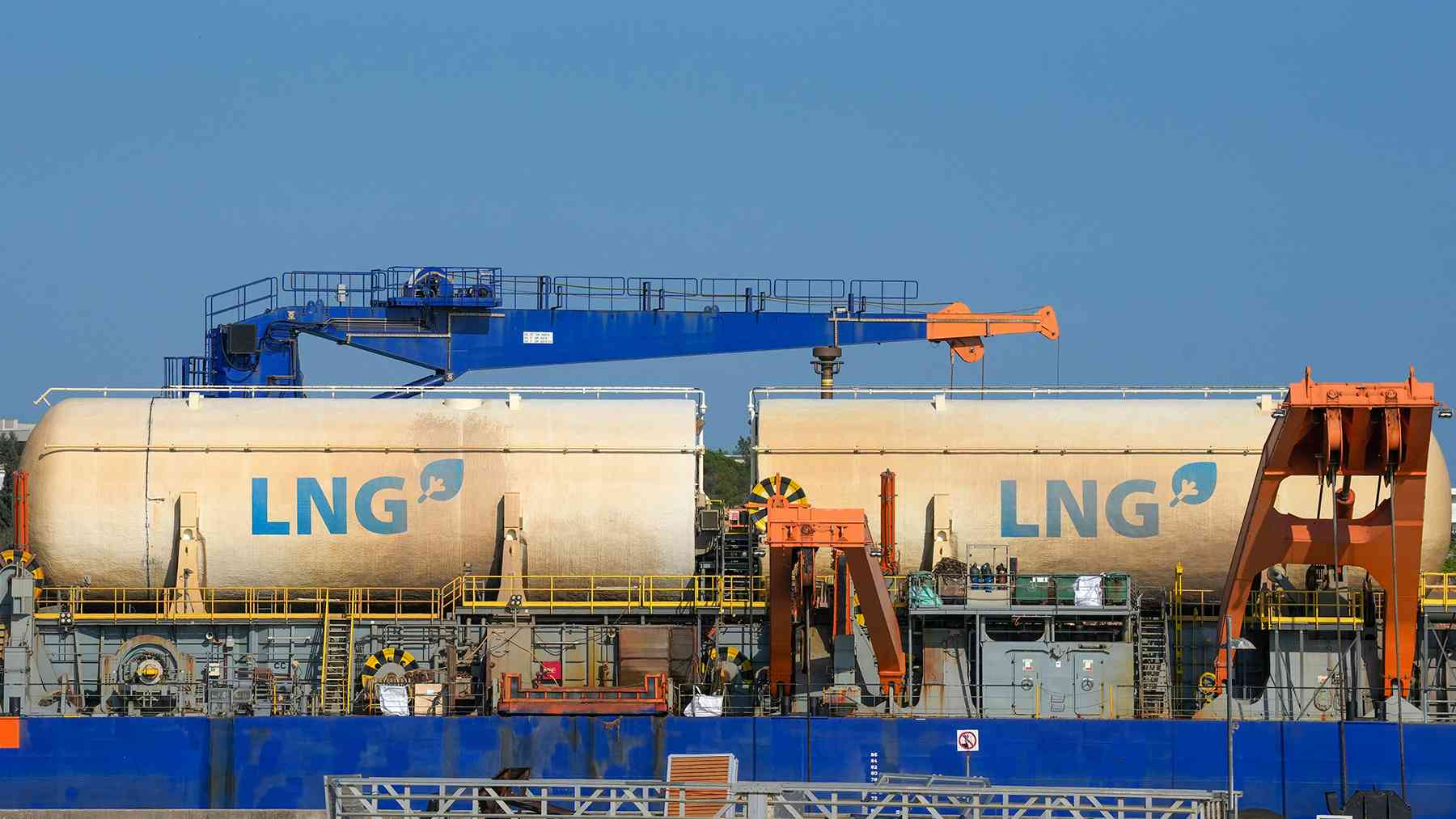 AI-made
Egypt’s Prime Minister Mostafa Madbouly toured natural gas production facilities in the West Delta Deep Marine area of Beheira Governorate this week, accompanied by Petroleum Minister Karim Badawi and senior executives from Shell, Petronas, and KUFPEC. The visit focused on expanding investment in one of Egypt’s most productive offshore gas regions—and on the government’s plans to make the sector more attractive to international partners.
PM Madbouly Visits WDDM Facilities with International Energy Executives
The West Delta Deep Marine area is operated by Rashid Petroleum Company, known as Rashpetco—a joint venture between the Egyptian General Petroleum Corporation, Shell, and Petronas. Madbouly’s visit brought together the key stakeholders of that partnership, a move that signals the government views the WDDM as a working model for Egyptian-international energy collaboration.
During the tour, Madbouly emphasized the petroleum sector’s importance to Egypt’s broader economy and reaffirmed the government’s commitment to introducing incentives designed to attract new capital. “Our goal is to attract more investments into this vital sector and encourage global partners to inject new capital into exploration and development activities,” he said.
Clearing those arrears restored confidence among international partners and helped accelerate development timelines in ways that are already visible on the ground.
Sector Reforms and Debt Settlement Drove Renewed Investor Confidence
Petroleum Minister Karim Badawi described the WDDM area as one of Egypt’s most significant natural gas-producing regions in the Mediterranean, framing the visit as evidence of a broader improvement in the sector’s investment climate.
Two drivers stand out. Recent sector reforms and investment incentives have made Egypt more competitive for international energy capital, and more concretely, Egypt completed its program to settle outstanding dues owed to foreign partners by June 10, 2026. Clearing those arrears restored confidence among international partners and helped accelerate development timelines in ways that are already visible on the ground.
Phases 10 and 11 of the WDDM development project were successfully implemented in 2024 and 2025, adding production capacity that reinforces domestic gas supplies and offsets natural decline in mature fields. Badawi also noted that the WDDM area’s integrated infrastructure for gas production and processing reduces development costs, allowing newly discovered reserves to come online quickly — an advantage he argued gives Egypt a competitive edge when courting international partners.
West Mina Gas Field Set to Reach Full Phase 1 Production Volume in Q4 2026
The most concrete near-term milestone discussed during the visit is the West Mina offshore gas field. Discovered in October 2023, it is scheduled to begin production in the fourth quarter of 2026, placing it among the fastest-tracked developments in the region’s recent history.
Once tied into the existing WDDM infrastructure, West Mina is projected to produce 160 million cubic feet per day. Shell and KUFPEC are developing the field using a subsea tie-back to established infrastructure — leveraging existing capacity rather than building entirely new facilities.
That approach reflects the broader logic Badawi outlined. Egypt’s infrastructure base makes it possible to move from discovery to production relatively quickly, and West Mina is a direct test of that proposition, with its 2026 target sitting on a roughly three-year timeline from discovery to first gas. New phases of WDDM development also serve a structural purpose, adding capacity at a time when older fields are experiencing natural production decline—sustaining overall output levels rather than simply growing them.
Shell, Petronas, and KUFPEC Outline Their Egyptian Investment Commitments
Following the facility tour, Prime Minister Madbouly met with executives from all three international partners to review current activities and future investment plans.
Dalia El Gabry, Vice President and Country Chair of Shell Egypt, highlighted the company’s more than 110-year presence in the country. She outlined Shell’s role across the full energy value chain: gas production in the WDDM, exploration in the Nile Delta and Herodotus Basin, and liquefaction and export operations at the Idku LNG plant. El Gabry reaffirmed Shell’s commitment to developing those assets responsibly in partnership with the Ministry of Petroleum and Mineral Resources.
Hany Esmat, CEO and Country Chair of Petronas Egypt, discussed the company’s partnership with Shell in offshore gas production and its involvement with the Idku LNG plant, expressing interest in expanding Petronas’ investments in Egypt’s gas sector going forward. Abdulaziz Al-Mousawi, Country Manager of KUFPEC, detailed assets in the Gulf of Suez and a Mediterranean partnership with Shell and noted KUFPEC’s role in the West Mina development. All three companies reaffirmed ongoing collaboration with Egypt’s Ministry of Petroleum and Mineral Resources as the sector moves toward the 2026 production milestone.
Kelly is an experienced writer with 15 years of experience exploring the big stories that shape our world, from tech breakthroughs and space exploration to climate, energy, and the fascinating quirks of science. She has a talent for turning complex ideas into sharp, memorable insights that stay with readers long after they’ve finished reading.
